

Herniated Disc Leg Pain Relief in Yuba City: Non-Surgical Solutions for 2026
Why does your leg throb with sharp, radiating pain when your doctor says the real problem is located in your lower back? It’s a confusing and exhausting experience, especially when sciatica prevents you from getting a good night’s sleep or walking comfortably. If you’re struggling with numbness or tingling in your feet, you’re likely searching for herniated disc leg pain relief Yuba City specialists can provide without resorting to invasive spinal surgery. Many of our neighbors feel the same fear regarding long recovery times and surgical risks, but there’s a clear path forward that doesn’t involve a hospital stay.
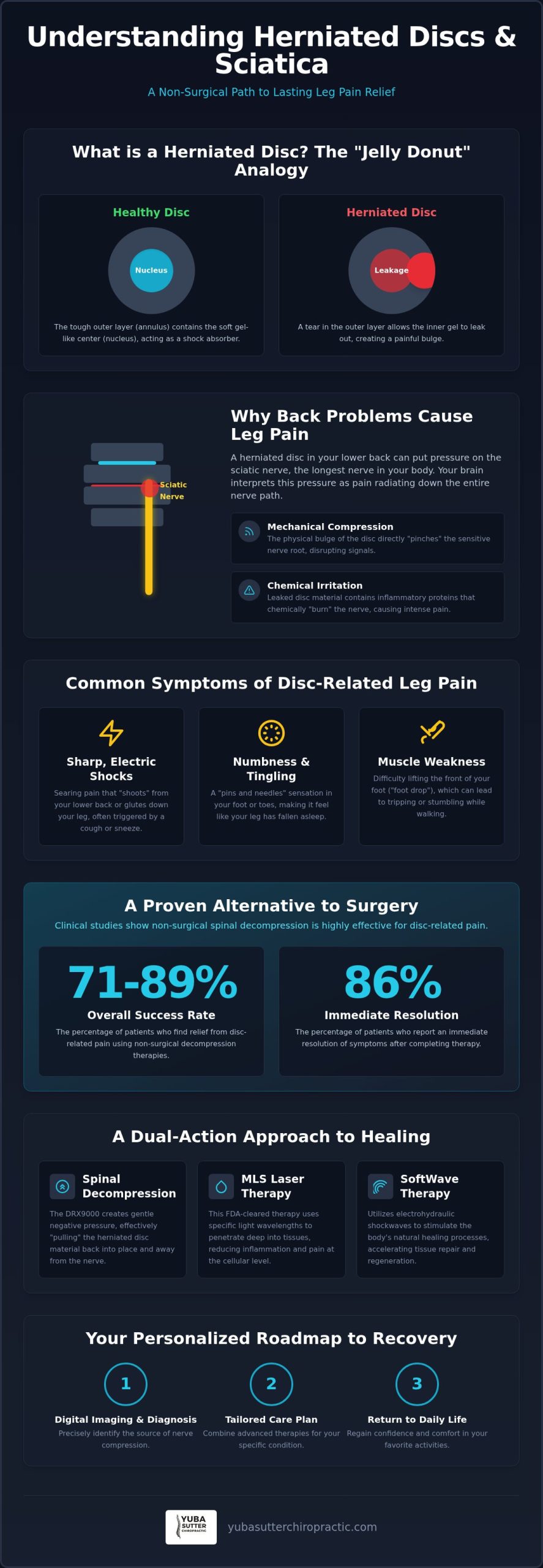
The good news is that modern care focuses on a dual approach: mechanically decompressing the disc while regenerating the irritated nerve tissue. Clinical studies show that non-surgical spinal decompression has a success rate between 71% and 89% for disc-related pain. In fact, research highlights that 86% of patients reported immediate resolution of symptoms after completing their therapy. In this article, we’ll explore how advanced technology like the DRX9000 and SoftWave therapy can help you understand the link between your spine and leg nerves. You’ll learn how these non-invasive solutions help you return to your favorite daily activities with confidence and lasting comfort.
Key Takeaways
- Understand how a herniated disc acts like a “jelly donut” to physically pinch the sciatic nerve and trigger radiating leg pain.
- Discover advanced options for herniated disc leg pain relief Yuba City residents can access to avoid the risks and recovery times of spinal surgery.
- Learn how DRX9000 spinal decompression creates gentle negative pressure to pull disc material away from sensitive nerves.
- Explore how FDA-cleared MLS Laser therapy and SoftWave technology work together to reduce deep inflammation and accelerate tissue repair.
- See how a personalized “Roadmap to Recovery” uses digital imaging and tailored care plans to help you return to your favorite daily activities.
What is a Herniated Disc and Why Does it Cause Leg Pain?
Your spine is a complex structure designed to support your weight while allowing for a wide range of motion. Between each of your vertebrae sits a specialized shock absorber called an intervertebral disc. To understand how these work, think of a jelly donut. Each disc has a tough, fibrous outer layer called the annulus fibrosus and a soft, gel-like center known as the nucleus pulposus. When these discs are healthy, they cushion your movements and keep your spine flexible. However, age, repetitive stress, or sudden injury can cause the outer ring to weaken or tear.
A Spinal Disc Herniation occurs when that inner gel escapes through a crack in the outer ring. This is more than just a physical bulge; the gel inside the disc is actually chemically irritating to your nerves. When this material leaks out, it often puts direct pressure on the nearby nerve roots. Most herniations occur in the lower back, specifically at the L4-L5 or L5-S1 levels. These are the “workhorse” areas of your spine that bear the most weight, and they sit right next to the nerves that travel down your legs.
When a disc presses against these nerves, your brain doesn’t just feel the pain in your back. It interprets the signals as coming from the entire length of the nerve. Since these specific nerves bundle together to form the sciatic nerve, the symptoms often travel through your hip, down your thigh, and into your foot. This is why finding effective herniated disc leg pain relief Yuba City specialists can provide is so critical; the source of your leg agony is actually a mechanical issue in your spine.
Common Symptoms of Disc-Related Leg Pain
Leg pain caused by a disc injury is rarely a dull ache. It is usually distinct, disruptive, and changes based on your posture. Many patients report the following sensations:
- Sharp, electric shocks: A searing pain that “shoots” from the glutes down to the calf, often triggered by sneezing or coughing.
- Numbness and tingling: A “pins and needles” sensation in the foot or toes that can make it feel like your leg has fallen asleep.
- Muscle weakness: Difficulty lifting the front of your foot, which might cause you to trip or stumble while walking.
The Difference Between a Bulging and Herniated Disc
While these terms are often used interchangeably, they describe different types of disc failure. Think of a bulging disc like a flat tire. The sidewall is sagging and pushing outward, but the “air” or gel is still contained within the outer ring. A herniated disc is more like a rupture where the gel has actually spilled out. Both conditions can compress the sciatic nerve and leave you searching for herniated disc leg pain relief Yuba City solutions. Even a minor bulge can cause major leg pain if it happens to be positioned perfectly against a sensitive nerve root. Our goal is to identify exactly where that pressure is occurring so we can help the body heal the tissue naturally.
The Science of Sciatica: Understanding the Nerve Connection
The sciatic nerve is the primary communication highway for your lower body. It’s the longest and widest nerve in the human anatomy, originating in your lower spine and extending all the way down to your toes. When you’re searching for herniated disc leg pain relief Yuba City options, it’s usually because this massive nerve is under distress. This distress isn’t just a simple pinch; it involves two distinct types of irritation that most people don’t realize are happening simultaneously.
First, there’s the mechanical compression. This is the physical “pinch” where the disc material pushes against the nerve root. According to clinical data on Disk Herniation, this physical pressure disrupts the nerve’s ability to send signals correctly. Second, there’s chemical irritation. The gel inside your disc contains inflammatory proteins. When this gel leaks out, it acts like a chemical burn on the nerve. This causes intense, searing pain even if the physical pressure from the disc is relatively light.
This combination leads to the referred pain phenomenon. Your brain receives signals from the nerve root in your back, but it interprets those signals as coming from the area the nerve serves, which is your leg. It’s a biological trick that makes you feel like your calf or foot is injured when the true problem is miles away in your lumbar spine. Similar nerve compression patterns can also occur in the cervical spine, where patients seeking pinched nerve in neck treatment Yuba City specialists offer experience radiating pain and numbness traveling down the arm instead of the leg.
How Spinal Pressure Travels to Your Legs
Each nerve root exits the spine through a small opening called a foramen. These roots are protected by a “nerve sleeve” that’s incredibly sensitive to changes in pressure. In Yuba City, many of our patients find that sitting for long commutes or standing for hours on hard surfaces increases this pressure. When you sit, the load on your discs increases. This pushes the herniation further into the nerve sleeve and intensifies the signals sent down your leg.
Identifying Sciatica vs. Muscle Strain
It’s often difficult to tell if your leg pain is a simple muscle pull or a true nerve issue. One common clinical indicator is the Straight Leg Raise test. If you lie on your back and have someone slowly lift your straight leg, and you feel sharp, radiating pain between 30 and 70 degrees, it’s a strong sign of disc-related nerve compression. Muscle strains usually feel like a dull ache that stays in one spot, whereas sciatica feels like an electric current. If you’re unsure about the source of your discomfort, consulting with a specialist can help clarify your diagnosis and start your recovery.
Evaluating Relief Options in Yuba City: Non-Surgical vs. Surgical
Many patients in our community begin their journey by following a traditional medical path. This usually involves a combination of rest, physical therapy, and anti-inflammatory injections. While these methods can temporarily mask Herniated Disk Symptoms, they don’t always fix the physical displacement of the disc. If these conservative measures fail, the next recommendation is often surgery. Surgical options like microdiscectomy or spinal fusion aim to remove the offending disc material or stabilize the spine. Surgery comes with inherent risks, including long recovery periods, potential infection, and the possibility of “Failed Back Surgery Syndrome.”
In contrast, non-surgical spinal decompression is becoming the preferred first step for those seeking herniated disc leg pain relief Yuba City residents can rely on. Clinical studies show that decompression therapy has a success rate between 71% and 89%. Unlike surgery, which involves cutting into tissue, decompression uses precise technology to gently separate the vertebrae. This creates a vacuum effect that encourages the disc to pull back into its proper place. A four-year follow-up study on patients who underwent this therapy found that 91% were able to resume their normal daily activities without returning to chronic pain.
The Risks of Delaying Herniated Disc Treatment
Putting off treatment isn’t just about enduring pain for a few more weeks. Prolonged compression of the nerve can lead to permanent neuropathic damage, where the “electric shock” sensations become a chronic part of your life. You might also find yourself limping or shifting your weight to one side. These compensatory movements often trigger secondary issues in your hips and knees. Over time, the psychological toll of losing your mobility can be just as heavy as the physical pain itself.
Why Surgery Isn’t Always the Answer
Surgery should be a last resort rather than a first choice. Once spinal tissue is cut or vertebrae are fused, the natural biomechanics of your back are permanently altered. This often leads to increased stress on the discs above and below the surgical site. We focus on preserving your natural spinal integrity. By using advanced tools like the DRX9000, we help you avoid the operating table and the months of rehabilitation that follow. Our approach is about restoring function while keeping your body’s natural structures intact. This technology-driven care provides a clear path to herniated disc leg pain relief Yuba City patients can trust for long-term results.
A Comprehensive Approach to Disc Recovery and Tissue Repair
While mechanical decompression is a vital piece of the puzzle, achieving the long-term herniated disc leg pain relief Yuba City patients deserve requires a multi-faceted strategy. We don’t just focus on the physical “pinch” in your lower back. Our team addresses the biological environment surrounding the nerve and the structural foundation of your entire body. By combining mechanical decompression with advanced regenerative therapies, we create the optimal conditions for your body to repair itself without the need for drugs or scalpels. This integrated method ensures that we aren’t just masking symptoms but actually fostering a healthier spinal environment.
How the DRX9000 Heals the Disc from Within
The DRX9000 is our primary tool for addressing the mechanical failure of the disc. During a session, the system uses high-speed sensors to monitor your body’s muscle guarding response. It bypasses these reflexes to gently distract the specific vertebrae where the herniation is located. This creates a vacuum effect, often referred to as negative intradiscal pressure. This force encourages the protruding “jelly” to migrate back toward the center of the disc. It also draws in oxygen, water, and healing nutrients. Because discs are avascular, meaning they lack a direct blood supply, this pumping action is often the only way to get vital resources into the damaged tissue. Most patients find the process so relaxing that they fall asleep during their 30-minute session.
SoftWave and Laser: The Biological Boost
Once the mechanical pressure is reduced, we turn our attention to the biological damage. Even after the disc is moved away from the nerve, the area often remains inflamed and the nerve tissue may be weakened. We integrate SoftWave shockwave therapy and FDA-cleared MLS Laser therapy to bridge this gap. SoftWave uses electro-hydraulic acoustic waves to trigger the body’s natural stem cell response. It effectively signals the body to restart the healing process in chronic, stagnant tissues that have struggled to recover on their own.
The MLS Laser complements this by using specific wavelengths of light to penetrate deep into the tissue. It stimulates the mitochondria in your cells to produce more ATP, which is the essential fuel cells use for repair. This combination significantly reduces deep-seated inflammation and speeds up the recovery of the irritated sciatic nerve. Finally, we look at your foundation. We use custom-scanned orthotics to ensure your feet are properly supporting your spine. If your arches are collapsed, it creates an uneven load on your lower back that can lead to recurring injuries. If you’re ready to see how this integrated technology can help you, schedule your initial assessment today to begin your journey toward lasting relief.
Starting Your Path to Pain-Free Living at Yuba Sutter Chiropractic
Deciding to address chronic discomfort is the most significant step toward reclaiming your quality of life. When you visit us for herniated disc leg pain relief Yuba City specialists provide, your journey begins with a focused and thorough evaluation. We don’t believe in one-size-fits-all solutions. Instead, we use comprehensive physical exams and digital imaging to see exactly how your spine is affecting your nerves. This clarity allows us to move past the surface symptoms and identify the precise location of your disc injury.
Once we have a clear picture of your spinal health, we create a personalized “Roadmap to Recovery” tailored to your specific lifestyle and goals. This plan isn’t just about temporary comfort; it’s a strategic path toward structural healing. During your first 30 days of treatment, the primary focus is on reducing acute inflammation and initiating the decompression process. You’ll likely begin sessions on the DRX9000 to start creating that vital negative pressure within the disc. Our team monitors your progress closely during this foundational month to ensure your body is responding optimally to the therapy.
The ultimate goal of our care is long-term wellness and the prevention of future recurrence. As your leg pain diminishes and your mobility returns, we shift our focus toward stabilizing the spine. This often involves integrating SoftWave or MLS Laser therapy to reinforce tissue repair. We also provide guidance on ergonomics and daily movements to help you protect your progress. By the end of your initial treatment protocol, you should feel empowered with the tools and physical strength needed to return to your favorite activities without the constant fear of a relapse.
Our Welcoming Yuba City Community Environment
We pride ourselves on maintaining a clinical but warm atmosphere where you feel like a person, not just a patient. You’ll meet Dr. Smith and a specialized therapeutic team dedicated to your individual progress. Our office is designed for your comfort, providing a steady hand and a calm environment during every visit. We are honored to serve residents from Marysville, Live Oak, and the greater Sutter County area, acting as a local partner in your health journey.
Taking the First Step Toward Relief
Scheduling your initial disc evaluation is simple and transparent. We understand that navigating insurance and payment options for advanced therapeutic care can feel overwhelming, so our staff is here to help you verify your benefits and understand your options. You don’t have to live with radiating pain or the fear of invasive surgery. Contact us to find out if our technology-driven approach is the right fit for your needs. Schedule your herniated disc evaluation today!
Reclaiming Your Active Lifestyle in Yuba City
Understanding the connection between your spine and radiating leg pain is the first step toward lasting wellness. You’ve seen how mechanical pressure and chemical irritation combine to create the searing discomfort of sciatica. By choosing non-invasive protocols like DRX9000 decompression and MLS Laser therapy, you’re addressing the root cause rather than just masking the symptoms. These drug-free solutions help you avoid the long recovery times and risks associated with spinal surgery while preserving your body’s natural biomechanics.
At Yuba Sutter Chiropractic, we’ve built over 20 years of community trust by focusing on results-oriented, personalized care. Our team is ready to help you navigate your journey toward the herniated disc leg pain relief Yuba City neighbors have relied on for decades. You don’t have to let a back injury dictate your mobility or your future. Take the next step toward a more comfortable, active life today.
Book Your Non-Surgical Disc Consultation in Yuba City and start your personalized roadmap to recovery. We look forward to helping you return to the activities you love with confidence and ease.
Frequently Asked Questions
Can a chiropractor actually fix a herniated disc?
Chiropractors don’t physically “pop” a herniated disc back into place, but we use specialized equipment to encourage the body to heal itself. By using the DRX9000, we create negative pressure that helps pull the escaped disc material away from the nerve. This mechanical shift, combined with targeted adjustments, restores spinal function and reduces the pressure causing your pain. It’s a non-invasive way to resolve the underlying structural issue.
How many sessions of spinal decompression are needed for leg pain relief?
A typical treatment protocol involves 20 to 28 sessions delivered over a five to seven-week period. This frequency is necessary to achieve the cumulative vacuum effect required to rehydrate the disc. While some patients notice a change within the first few visits, completing the full series is vital for lasting herniated disc leg pain relief Yuba City patients need to prevent the injury from returning.
Is SoftWave therapy painful for someone with a herniated disc?
Most patients describe SoftWave as a deep, pulsing sensation rather than a sharp or distressing pain. The technology uses acoustic waves to identify areas of inflammation and trigger a regenerative response. If an area is particularly sensitive, you might feel a brief throb during the session. We always communicate with you throughout the process to ensure the intensity stays within your personal comfort level.
Will my insurance cover non-surgical spinal decompression in Yuba City?
Insurance coverage varies significantly depending on your specific PPO plan and provider. It’s important to note that Medicare does not cover non-surgical spinal decompression therapy at this time. However, many private insurance plans do cover standard chiropractic adjustments. Our office team is happy to help you verify your specific benefits and discuss our transparent payment options for advanced therapeutic technologies.
What is the success rate of the DRX9000 for sciatica?
Clinical studies show that the DRX9000 has a success rate between 71% and 89% for patients struggling with disc-related issues. Research specifically indicates that 86% of patients report an immediate resolution of symptoms after completing their full therapy protocol. This high success rate makes it a gold-standard choice for those seeking herniated disc leg pain relief Yuba City specialists provide as an alternative to surgery.
Can I drive myself home after a spinal decompression session?
Yes, you can drive yourself home or return to work immediately after your appointment. Since the treatment is entirely non-invasive and does not require any sedation or anesthesia, there’s no recovery period needed between sessions. Most of our patients actually feel more relaxed and mobile after their treatment. It easily fits into a busy schedule without disrupting your daily responsibilities or independence.
What happens if I ignore the leg pain from my herniated disc?
Ignoring radiating leg pain can lead to permanent nerve damage and chronic muscle weakness. When a nerve is compressed for too long, the protective sheath can degrade, leading to a condition called neuropathy. You may also start walking differently to avoid the pain, which creates secondary problems in your hips and opposite leg. Early intervention is essential to stop this cycle and preserve your long-term mobility.