
Auto injury relief in Yuba City Find and treat the injuries a crash can hide.
Adrenaline can mask pain for a day or more after a collision, and strained muscles, ligaments and nerves can take days or weeks to make themselves known. Dr. Kalay examines you, documents what he finds, and builds a plan of gentle adjustments, therapy and exercise to help you heal.
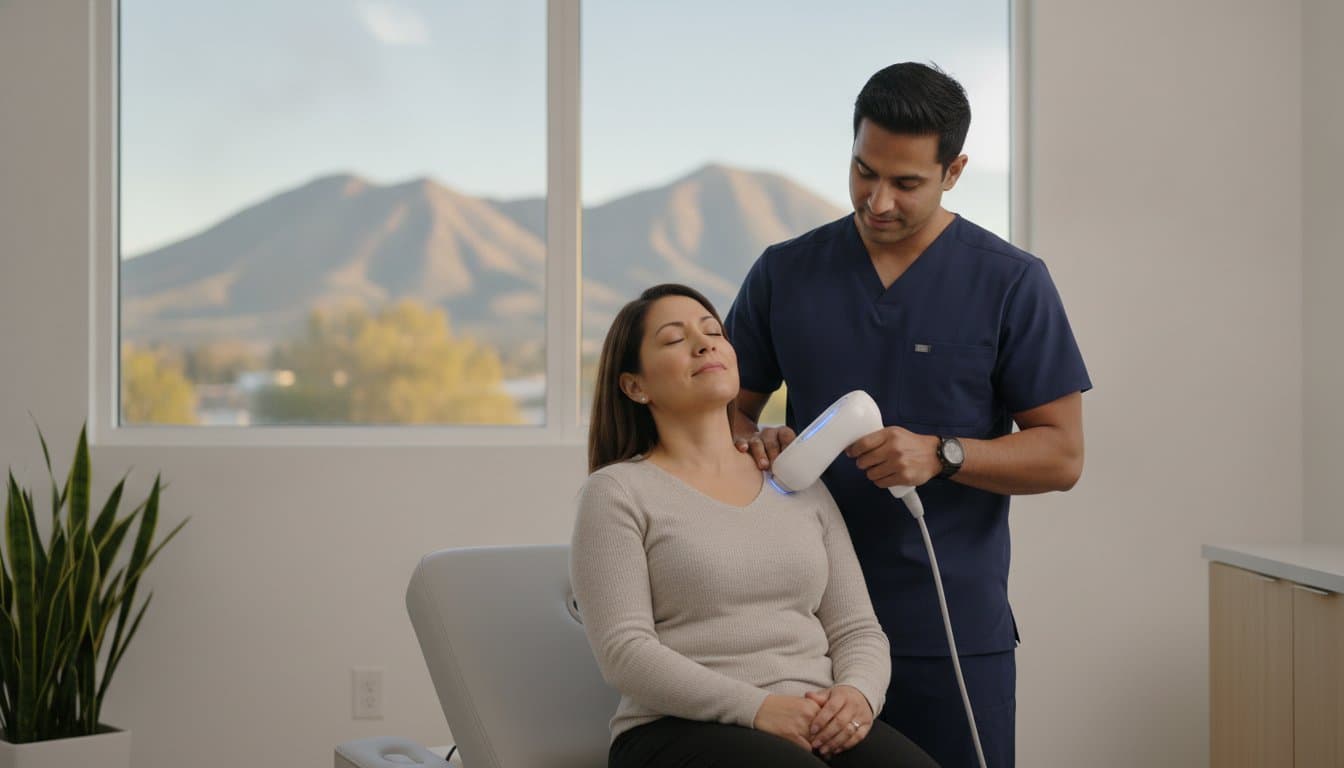
- Get checked early
- Within 72 hours of a crash, even if nothing hurts yet.
- Even at low speed
- Impacts under 10 mph can be enough to cause whiplash.
Should you get checked after a crash?
Yes, even after a minor one. A bumper can absorb a low-speed hit with little to show for it, but the force still travels through you. Dr. Kalay starts with a full physical and neurological exam, checking your strength and reflexes, before any treatment begins.

Come in if you notice
- 01A stiff, sore neck that makes it hard to check your blind spot, a common sign of whiplash.
- 02Headaches that start at the base of your skull, sometimes with dizziness or blurred vision.
- 03Neck pain that spreads into your shoulders or arms, sometimes with tingling or numbness.
- 04An ache between your shoulder blades or in your lower back.
- 05Nothing hurts yet, but you were in a collision in the last few days.
- 06An accident months ago still shows up as stiffness or headaches.
Go to the ER first if
- You may have a broken bone, a dislocation or a deep cut.
- You hit your head, feel confused, or have a sudden, severe headache.
- You have new weakness in an arm or leg, or changes in bladder or bowel control.
- There’s any chance of internal bleeding.
The ER is built to rule out emergencies like these. Its X-rays show broken bones, not strained ligaments and muscles, so once you’ve been cleared, come in and bring your discharge papers.
The first days and weeks after a crash.
A collision doesn’t always hurt right away. Here’s how injuries tend to show up as the days pass, and what to do at each point. Once the pain has arrived, we’ve written up how long whiplash usually lasts.
The first hours
Adrenaline can hide an injury.
Adrenaline and stress hormones can block pain signals, so many people feel fine at the scene. Broken bones, cuts and dislocations show right away. Strained muscles, ligaments and nerves often don’t.
What to do: Get any emergency checked first, at the ER or urgent care.
24 to 72 hours
Pain and stiffness surface.
As the adrenaline wears off, often one to three days later, the real extent of an injury starts to show. Some people wake up unable to turn their head.
What to do: Get examined within 72 hours, even if you still feel fine.
Up to 10 days
Symptoms can keep arriving.
Even after a minor accident, pain can take up to 10 days to appear. Headaches, dizziness, blurred vision, shoulder or arm pain and a stiff lower back can all start late.
What to do: Write down when each symptom starts, even slight stiffness.
Weeks to months
Some injuries take weeks, or longer.
Muscle, ligament and tendon injuries can take weeks to show, and some aren’t noticed for months. Muscles tighten around an injury to protect it, which is normal, but if motion isn’t restored within 4–8 weeks, scar tissue can form and make a full recovery harder.
What to do: If the crash was months ago and something still isn’t right, it’s not too late to get checked.
Records worth keeping
Bring whatever you have to your first visit. It helps us check your coverage and keep an accurate record from day one. After that, every appointment is documented in detail: your symptoms, the exam findings, Dr. Kalay’s assessment and the plan.
- The police report, or the details you exchanged at the scene
- Your auto insurance information and claim number
- ER or urgent care discharge papers, which show what was ruled out
- Your own notes on when each symptom started
What’s covered depends on your policy, and nothing on this page is legal advice.
What your first visit is like.
Expect questions and a thorough exam before any treatment. Adjustments after a crash are gentle, tailored to how sensitive your neck and back are right now.
On arrival
The story of your crash.
We ask how the collision happened, from a rear or side impact to where your headrest sat, and when each symptom began. The mechanics shape the injury.
The exam
More than a quick look.
Dr. Kalay checks your alignment, range of motion, strength and reflexes, looking for the soft-tissue injury an X-ray isn’t designed to show.
Your plan
Care for the injury you have.
Gentle adjustments to restore motion, with therapy and exercises for home. Depending on the injury, MLS laser, SoftWave or spinal decompression may be added.
As you heal
Relief first, then strength.
Early visits ease pain and swelling. As you move more freely, care shifts to restoring alignment and strengthening the muscles that support your neck and back.
Questions after a car accident

Reviewed by
Dr. Gurj Kalay, DC
Doctor of Chiropractic, Palmer College of Chiropractic West (2014)
General information, not medical advice. Your own exam decides your care.
Will my auto insurance pay for chiropractic care?
Often, yes. Many California auto policies include Medical Payments coverage (MedPay), which can pay for care no matter who was at fault, and we can bill it directly. If another driver caused the crash and you have an attorney, we can treat you on a medical lien. We don’t bill the other driver’s insurance. Our staff will walk through the options at your first visit.
Do I need a referral to see a chiropractor after an accident?
No. In California, chiropractors are primary-contact providers for musculoskeletal injuries, so you can book an evaluation directly. If you’re also seeing a medical doctor or specialist, we’re glad to coordinate with them.
How long does recovery take?
It depends on the injury. Many people notice some relief within the first few weeks, but injured ligaments and muscles keep remodeling for months, and even a minor injury can take up to three months of regular care to settle. Dr. Kalay will outline your timeline after the exam.
Should I use ice or heat?
Ice first. For the first 48 to 72 hours, an ice pack for 15 to 20 minutes at a time, several times a day, can help limit swelling, while heat can add to inflammation in a fresh injury. Once the early swelling settles, moist heat can help tight muscles relax.
Is it better to rest and wait it out?
Usually not. Gentle movement keeps blood flowing to injured tissue, while a foam collar worn for more than a day or two can let the neck muscles weaken. Pain relievers like ibuprofen can take the edge off but don’t treat the injury, and masking pain makes it easy to overdo things. Hold off on heavy lifting, contact sports and cracking your own neck until you’re cleared.
How should my headrest be set?
The top should reach at least as high as the tops of your ears, and it should sit no more than about four inches (10 cm) from the back of your head. A headrest set too low can act as a pivot point in a rear-end collision, throwing the head back further.

Walked away feeling fine? Get checked anyway.
Call or book online, and bring any papers from the scene or the ER. Your first consultation with Dr. Kalay is complimentary.
New patient? Send the new patient form and the team will contact you to set up your first visit.
New patient special437 Century Park Dr Ste A · Yuba City, CA