MLS laser therapy in Yuba City Light aimed at pain and inflammation, with no needles and no downtime.
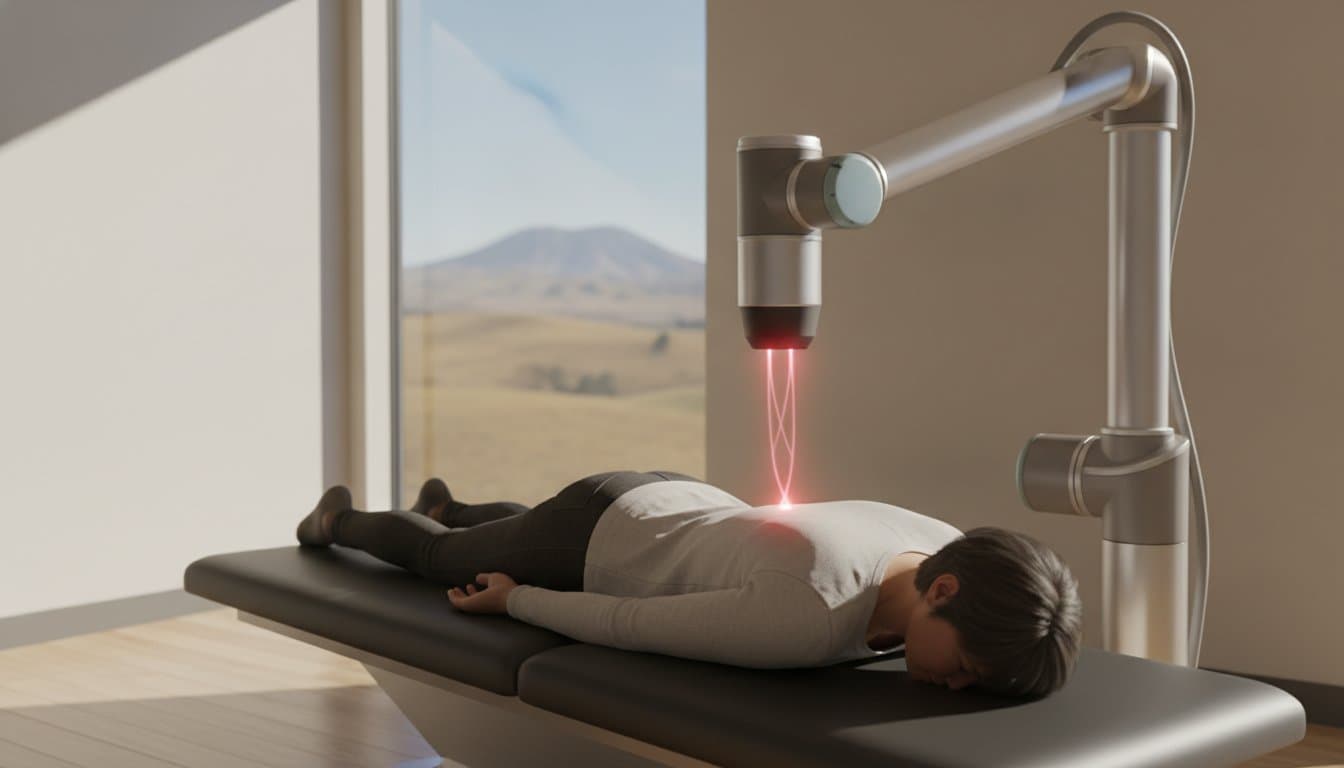
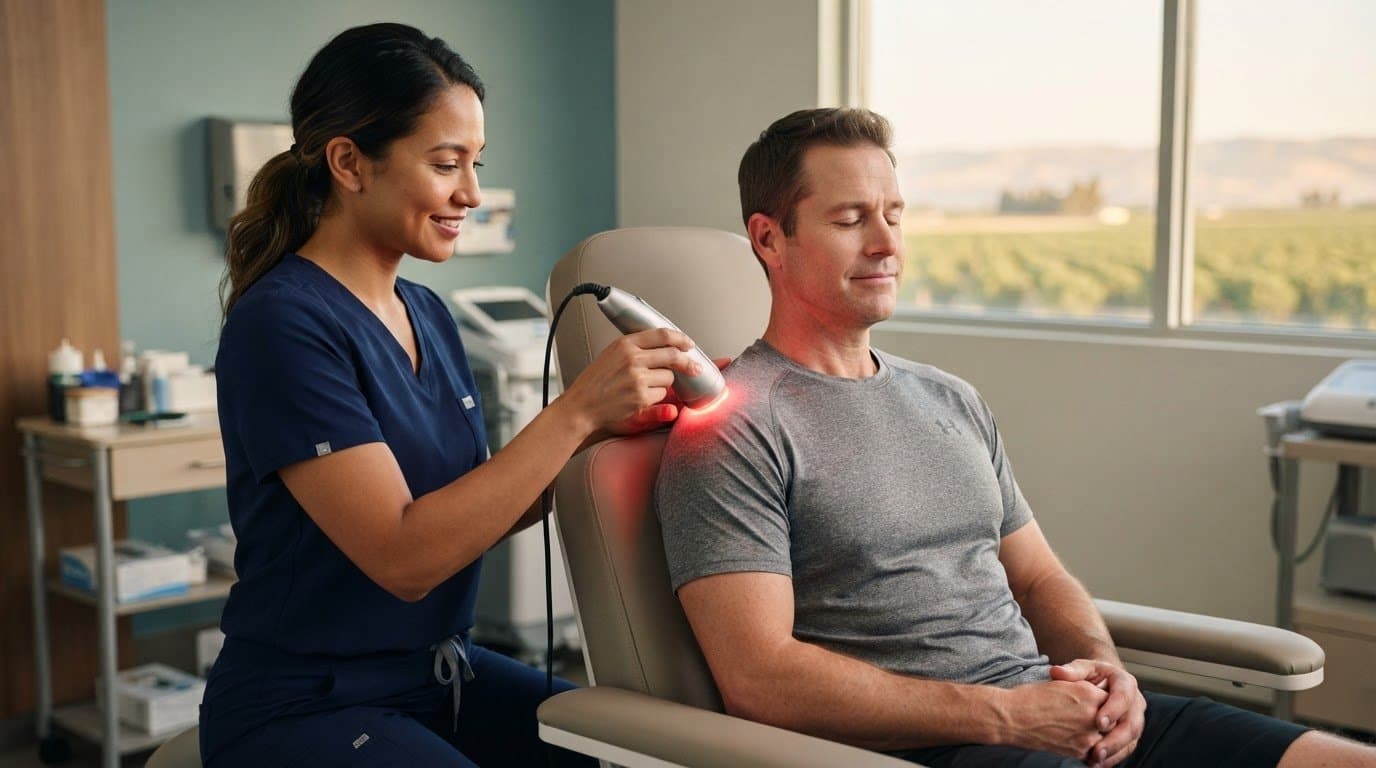
A robotic arm moves a therapy laser over the sore area while you rest, sending two synchronized wavelengths of light deep into the injured tissue. The light is designed to calm inflammation, improve circulation and support the body’s own repair. Sessions take minutes, and you can go straight back to your day.
- FDA-cleared
- An FDA-cleared treatment, with no medication, injections or surgery.
- Hands-free
- A robotic arm guides the laser a few inches above the skin.
- Often used for
- joint painback painneck painsports injury
Is laser therapy right for you?
MLS laser is aimed at pain that comes with inflammation: tissue that is swollen, irritated or slow to heal. It’s a treatment, not a diagnosis, so Dr. Kalay first works out what’s behind your pain, then whether laser belongs in your plan, on its own or alongside adjustments and other care. Asking about nerve symptoms? Read what the research says on laser therapy for neuropathy. For a sore lower back, see what a course of laser therapy for back pain involves.
Worth asking about if
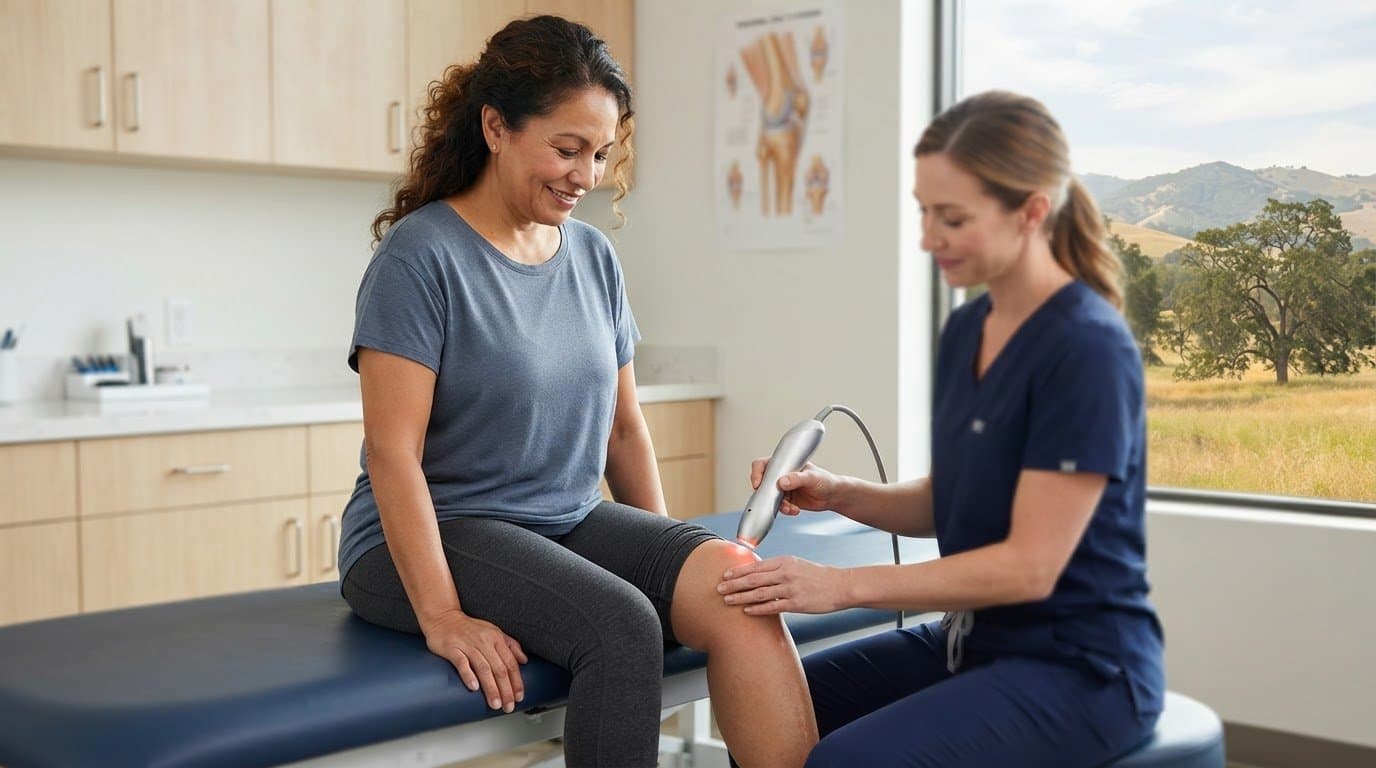
- 01A knee, shoulder or other joint stays sore, stiff or swollen.
- 02Tendinitis or bursitis flares when you reach overhead, climb stairs or train.
- 03A sprain, strain or overuse injury from sport or work is slow to settle.
- 04Low back or neck pain keeps coming back.
- 05A bulging or herniated disc irritates a nerve and sends pain into an arm or leg.
- 06You’d rather avoid injections, surgery or more pain medication.
Two wavelengths, locked in step.
MLS stands for Multiwave Locked System. Many therapy lasers work with a single wavelength. This one emits two and synchronizes them, so pain and inflammation can be addressed in the same treatment.
808 nm, continuous
A steady, unbroken beam. This is the wavelength aimed at swelling and inflammation.
905 nm, pulsed
Delivered in short bursts. This is the wavelength aimed at pain.
808 + 905 nm, synchronized
Pain and swelling can keep each other going: a sore area gets guarded and used less, which makes it harder to get moving again. Delivering both wavelengths in step is designed to work on both sides of that loop at once.
Delivered hands-free.
The laser head rides on a robotic arm. It sits a few inches above the treatment area and moves on its own along a programmed path, so every part of the area gets the same dose instead of depending on a steady hand. No gels, no needles.
Sensors built into the system guard against overexposure while it runs.
What a session is like.
Most people feel very little: a gentle warmth or a slight tingle, if anything. Some patients find it relaxing enough to drift off.
Before you start
Tell us your history.
Share your symptoms, diagnoses, medications and supplements, and any reaction you’ve had to treatment before. Loose clothes or shorts make a knee or shoulder easy to reach.
On the table
Glasses on, settle in.
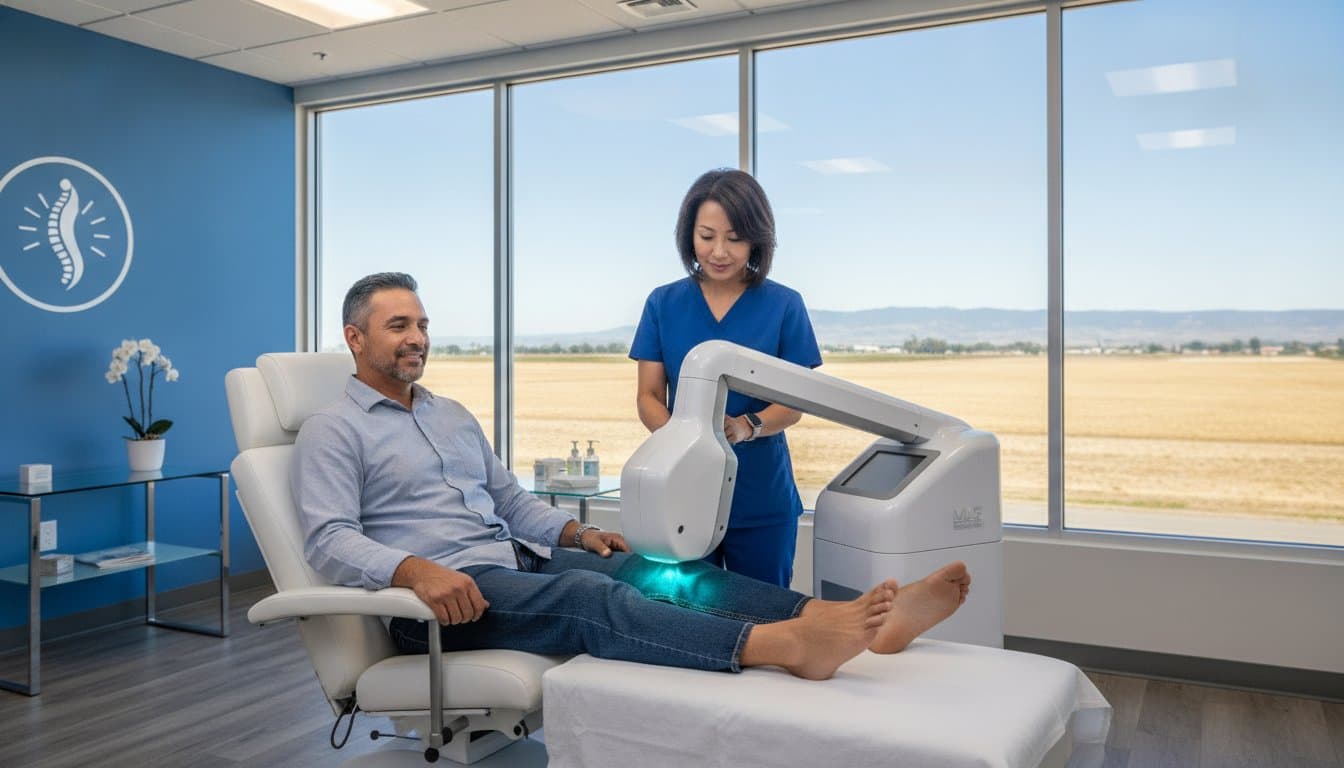
You sit or lie comfortably and put on protective glasses. The laser head is positioned just above the area being treated.
About 15 minutes
Rest while it works.
The head moves over the area on its own. If you feel uncomfortable heat or pain at any point, say so straight away rather than waiting it out.
Afterward
On with your day.
There’s no downtime, so work or errands can come next. Notice how the area feels over the next day or so and mention it at your next visit.
6 to 12 sessions often more than once a week to start
The effect is meant to build from one session to the next, which is why laser runs as a course rather than a single visit. Your number depends on the problem, how long you’ve had it and how you respond, and progress is reviewed as you go.
Some people notice a change within the first few sessions; others take longer. One quiet visit doesn’t tell you much either way, so keep a short note of what feels easier or harder day to day and bring it along.
Questions about MLS laser therapy

Reviewed by
Dr. Gurj Kalay, DC
Doctor of Chiropractic, Palmer College of Chiropractic West (2014)
General information, not medical advice. Your own exam decides your care.
Is MLS laser therapy FDA-cleared?
Yes. MLS laser therapy is an FDA-cleared treatment. Clearance applies to a specific device and its stated uses, so it doesn’t mean the treatment is cleared for every condition, risk-free or guaranteed to work.
Does MLS laser therapy have side effects?
Some people notice temporary warmth, redness or mild tingling where they were treated, or a brief increase in soreness. These responses are generally described as mild and short-lived, and no long-term side effects are known. A burn is never an expected response: if you feel uncomfortable heat or pain, or see a change in your skin, tell the clinician right away. Report anything that persists or worsens, and seek medical care promptly if a symptom feels severe or urgent.
Does insurance cover MLS laser therapy?
Often not, and it varies by plan. Many insurers treat therapeutic laser as non-covered, though auto injury and workers’ compensation claims can be different. Check your benefits with your insurer before you start; a health savings or flexible spending account may also be an option. If you’re not using insurance, you’ll get a Good Faith Estimate of the cost before care begins.
Can laser therapy help arthritis?
It may be used alongside your existing care to ease symptoms like pain and stiffness. It doesn’t cure arthritis, reverse joint changes or rebuild cartilage, and it isn’t a reason to stop medication or exercise your doctor has prescribed. Bring your diagnosis and one or two goals, such as walking farther, and Dr. Kalay can tell you whether it’s worth adding.
Can it be combined with adjustments or spinal decompression?
Often, yes. Laser is usually one part of a plan that can include chiropractic adjustments, and for disc problems it’s sometimes paired with spinal decompression. Some patients have laser first to ease tight, guarded muscles before an adjustment. Combining treatments doesn’t guarantee a better result, so the mix is decided case by case.
How is MLS different from other lasers?
Surgical lasers are built to cut, reshape or remove tissue, and cosmetic ones target the skin. MLS is a therapeutic laser: it applies light to an area without cutting anything. The proposed way it works is called photobiomodulation, in which light energy may influence activity inside cells, including the mitochondria that supply their energy. That explains the reasoning behind it, not a guaranteed result.
Bring the pain that won’t settle. Leave knowing if light can help.
Call or book online. Your first consultation with Dr. Kalay is complimentary. Bring a list of your medications, any imaging reports you have, and your questions.
New patient? Send the new patient form and the team will contact you to set up your first visit.
New patient special437 Century Park Dr Ste A · Yuba City, CA