What’s the difference between a bulging, slipped and herniated disc?
Discs don’t actually slip; “slipped disc” is a common name for a bulging one. In a bulging disc, the tough outer layer hasn’t broken open, but the disc pushes past the space it should occupy and can press on nearby nerves. In a herniated disc, the outer layer ruptures and the gel-like center pushes outward. The most severe kind, an extrusion, is when the gel balloons well outside the vertebrae or breaks off from the disc.
Can a disc injury get better without surgery?
Often, yes. Even an acute disc bulge can heal over time, and care is aimed at helping that happen more efficiently. How each disc responds varies, and if Dr. Kalay finds at any point that you need a spinal surgeon, he will refer you.
Will Dr. Kalay pop the disc back into place?
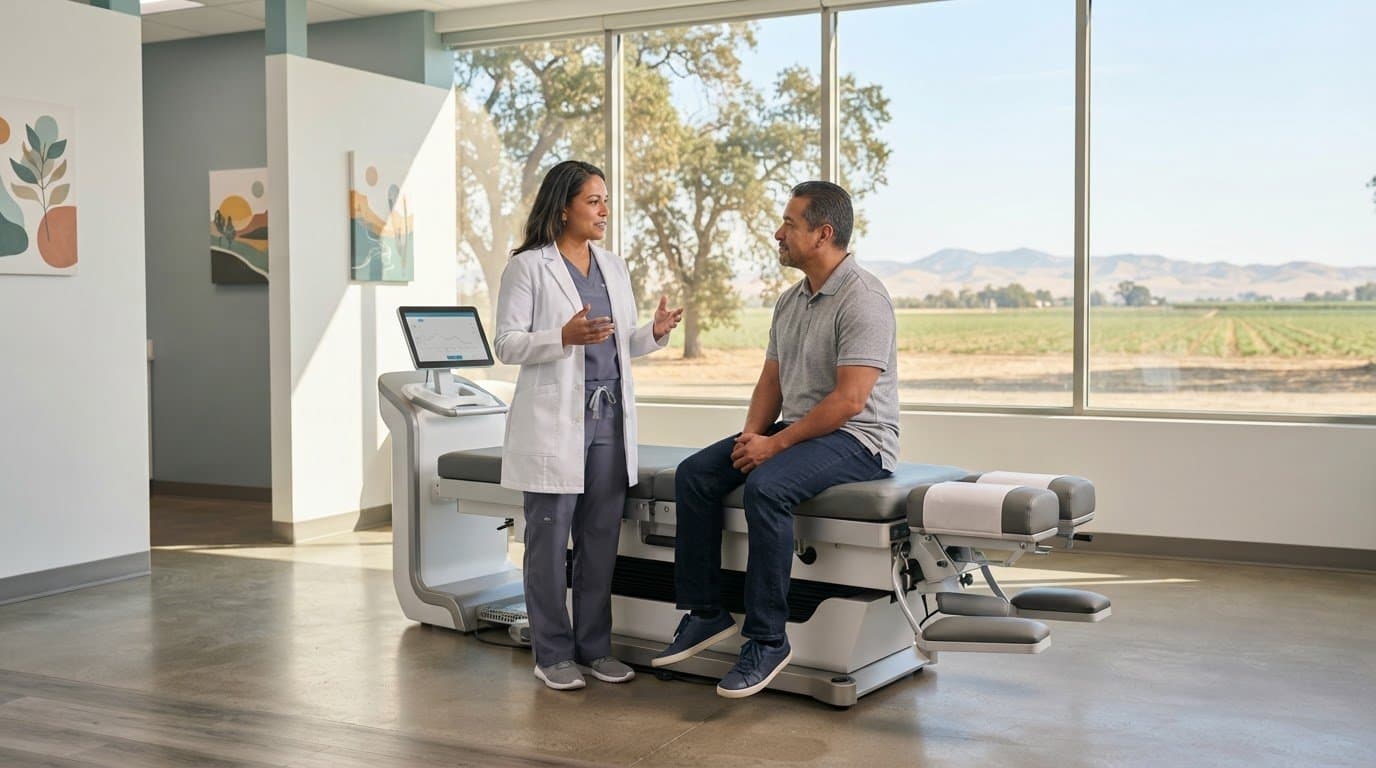
No. Chiropractors don’t force a disc back into place, and a few quick treatments won’t fix a disc injury. Care uses gentle, usually painless techniques and works over time, often alongside spinal decompression on the DRX9000.
Is spinal decompression painful?
Most patients find it relaxing and comfortable. The DRX9000 moves slowly between a gentle pull and rest, and it eases off if your muscles start to tense. There’s no recovery time, so you can go straight back to your day.
How many spinal decompression sessions will I need?
It depends on the disc and how long the problem has been there. After your exam, Dr. Kalay recommends a number of sessions and walks you through the plan before you start, so you know the commitment up front.
When is back or leg pain an emergency?
Get emergency medical care right away for new trouble controlling your bladder or bowels, numbness around the groin or inner thighs, or weakness that is quickly getting worse. Those signs shouldn’t wait for a chiropractic appointment.