

Chiropractic for TMJ in Colusa: Non-Invasive Jaw Relief
A nightguard might protect your enamel from grinding, but it cannot fix the structural dysfunction pulling your jaw out of alignment. If you deal with persistent jaw tightness, painful clicking every time you chew, or stubborn tension headaches radiating into your neck, you know how exhausting temporomandibular joint issues can be. With limited specialized care directly inside Colusa County, it is easy to feel stuck between temporary mouthguards and invasive medical procedures. Fortunately, choosing a targeted chiropractic adjustment for TMJ Colusa residents can rely on provides a safe, non-invasive approach that addresses the mechanical source of your discomfort.
In this guide, you will discover how precise chiropractic care and advanced therapeutic technologies resolve the root causes of TMJ pain for Colusa residents. We’ll examine the critical biomechanical connection between your upper cervical spine and jaw movement, while outlining how a personalized, non-surgical treatment plan can eliminate facial muscle spasms and deliver lasting relief.
Key Takeaways
- Discover how upper cervical spine misalignment directly influences jaw mechanics, triggering chronic facial pain, clicking, and tension headaches.
- Learn how a precise chiropractic adjustment for TMJ Colusa residents can gently restore proper jaw tracking and alleviate muscle spasms without forceful pressure.
- Understand the limitations of dental nightguards and muscle-relaxing injections, which often manage surface symptoms rather than correcting structural joint displacement.
- Explore how advanced modalities like FDA-cleared MLS laser therapy reduce acute joint inflammation and accelerate soft tissue recovery.
- Find out what to expect during a comprehensive diagnostic evaluation conveniently accessible to Colusa County patients just a short drive along Highway 20.
Understanding TMJ Disorder and the Cervical Spine Connection
Your temporomandibular joints connect your lower jaw to the temporal bones at the base of your skull. When these joints or their controlling muscles fall out of sync, the result is clinically recognized as temporomandibular joint dysfunction. This mechanical imbalance disrupts smooth joint motion and irritates the trigeminal nerve pathways shared between your jaw and upper neck. That is why a comprehensive chiropractic adjustment for TMJ Colusa residents choose targets both the jaw mechanics and the cervical spine.
Recognizing Common TMJ Symptoms Beyond Jaw Clicking
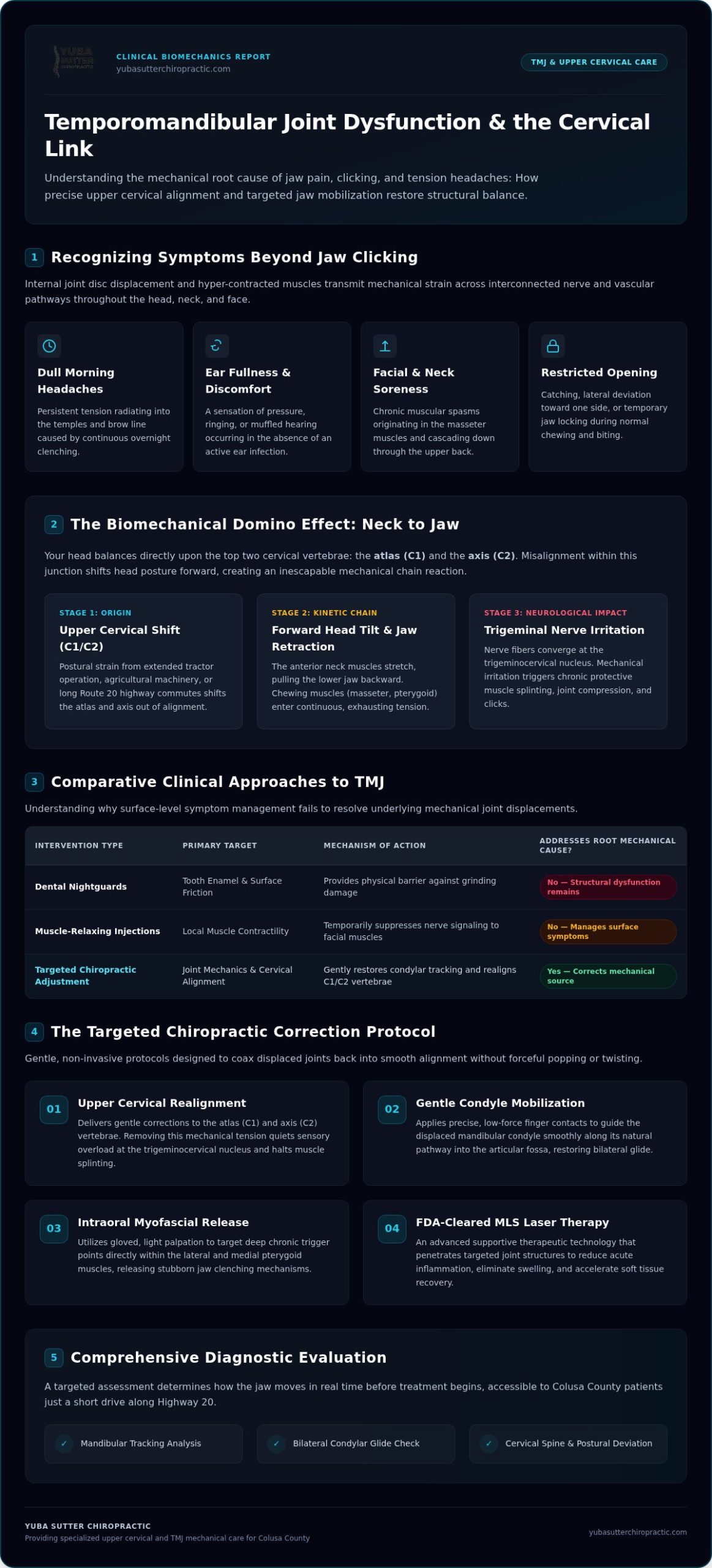
Audible pops or clicks when chewing are classic warning signs, but TMJ issues rarely stay confined to the jaw. When internal joint discs slip or muscles remain hyper-contracted, symptoms radiate across nearby nerve and vascular networks:
- Dull, morning headaches: Waking up with tension radiating into your temples and brow line from clenching overnight.
- Ear pain and fullness: Experiencing muffled hearing, pressure, or ringing without an active ear infection.
- Facial and shoulder tightness: Soreness spreading from the masseter muscles down through the neck and upper back.
- Limited mouth opening: Experiencing catching, deviation to one side, or temporary locking when biting into food.
The Biomechanical Link Between Neck Posture and Jaw Alignment
Your head balances directly upon the top two cervical vertebrae, the atlas (C1) and axis (C2). When these bones lose optimal alignment, your posture shifts forward. This forward head tilt stretches the anterior neck muscles, pulling the lower jaw backward and forcing the chewing muscles to work under continuous strain.
For Colusa County residents, daily routines often accelerate this strain. Spending long hours in tractor cabs during planting season, operating heavy agricultural equipment, or making regular highway commutes along Route 20 encourages postural fatigue. Treating the jaw in isolation ignores this structural domino effect. By evaluating the upper cervical spine alongside the mandible, a targeted chiropractic adjustment for TMJ Colusa patients receive restores natural resting posture, relieving pressure on the joint discs and calming inflamed facial nerves.
How Chiropractic Adjustments Correct Temporomandibular Joint Dysfunction
Restoring jaw balance requires looking past surface soreness to assess how your joints move in real time. Clinical care begins with a meticulous evaluation of mandibular tracking, jaw deviation, and bilateral condylar glide. Many patients fear that a jaw correction involves forceful popping or twisting. In clinical practice, an extremity adjustment targeting the jaw is exceptionally gentle, utilizing precise, low-force contacts that coax displaced joints back into smooth alignment.
Because structural alignment directly influences overall nervous system function, experiencing the benefits of regular chiropractic adjustments helps stabilize your entire skeletal frame. When your upper neck and cranial bones maintain balance, the chewing apparatus can finally relax.
Upper Cervical Realignment to Relieve Trigeminal Nerve Pressure
The trigeminocervical nucleus serves as a major sensory relay station where nerve fibers from the upper neck and the jaw converge. When the atlas vertebra shifts, it creates localized neurological tension that triggers chronic muscle splinting. By utilizing gentle cervical corrections, a clinician removes this mechanical irritation. As outlined in the MedlinePlus overview of TMJ disorders, resolving muscular tension and postural strain is fundamental to halting chronic facial discomfort. Aligning the neck quiets the constant sensory feedback feeding into the masseter and temporalis muscles, preventing painful spasms before they start.
Direct Mandibular and Intraoral Soft Tissue Mobilization
Once spinal mechanics are stable, direct care focuses on the temporomandibular joint capsule itself:
- Gentle Condyle Mobilization: Applying light, controlled finger pressure guides the condyle back toward its proper tracking pathway inside the articular fossa.
- Intraoral Myofascial Release: Using gloved, gentle palpation to release chronic trigger points directly inside the lateral and medial pterygoid muscles.
- Cranial Balancing: Relieving subtle tension across the temporal and sphenoid bones to ensure unrestricted jaw translation.
These specialized protocols don’t just reduce clicking; they re-educate your nervous system to move the mandible evenly. If you are experiencing chronic jaw stiffness, exploring a personalized chiropractic adjustment for TMJ Colusa patients can access at Yuba Sutter Chiropractic & Wellness provides a gentle path back to effortless chewing.
Chiropractic Care vs. Dental Mouthguards and Injections
When jaw pain disrupts daily routines, people often turn to their dentist for an acrylic nightguard or seek medical injections to numb the ache. While each intervention serves a specific purpose, they address completely different aspects of jaw health. A custom mouthguard cushions bite force, but it can’t realign a displaced joint disc or rebalance the cervical spine. Choosing a targeted chiropractic adjustment for TMJ Colusa residents count on resolves the structural cause of the problem instead of simply buffering the impact.
To help determine the best path forward, consider how these standard approaches differ in scope:
- Dental Splints: Ideal for protecting tooth enamel against nighttime grinding, but they don’t correct underlying joint or spinal displacement.
- Medical Injections: Offer temporary symptom relief by dulling overactive jaw muscles, but they require repeated appointments and leave joint mechanics unaddressed.
- Chiropractic Adjustments: Directly restore upper neck alignment and mandibular tracking, offering a lasting, drug-free mechanical solution.
Why Dental Splints Often Leave Underlying Dysfunction Unresolved
Nightguards serve an important purpose by shielding teeth from chips and premature wear. However, biting down on a plastic barrier doesn’t stop the jaw joints from compressing or tracking unevenly. Many patients discover that their morning headaches, ear pressure, and neck stiffness persist even after wearing a guard religiously. Dentistry protects the teeth, while chiropractic care restores joint mechanics. Pairing the two creates a complete recovery strategy where structural alignment stops the clenching cycle at its source.
Comparing Non-Invasive Adjustments to Prescription Medications and Injections
Prescription muscle relaxants and anti-inflammatory drugs mute pain signals, but the underlying joint dysfunction remains unchanged once the dosage clears your system. Muscle-relaxing injections have also gained popularity for quieting hyperactive masseters. While they temporarily reduce muscle tension for three to six months, recurring injections carry potential risks like localized muscle atrophy or changes in mandibular bone density over time.
A specialized chiropractic adjustment for TMJ Colusa practitioners deliver provides a drug-free alternative that respects your body’s natural biomechanics. By correcting cervical positioning, mobilizing the mandibular condyles, and releasing tight pterygoid muscles, chiropractic care resolves the root reason your muscles locked up in the first place. This structural focus delivers sustainable relief without ongoing needle procedures or medication dependencies.
Advanced Supportive Therapies for Fast TMJ Pain Relief
When acute inflammation flares inside the jaw joint, even routine movements like talking or chewing can trigger sharp discomfort. While manual adjustments re-align structural mechanics, pairing them with restorative modalities speeds up soft tissue recovery. Exploring how modern clinics utilize advanced chiropractic technology demonstrates how targeted energy therapies resolve localized swelling and cellular irritation far faster than rest alone.
MLS Laser Therapy: Accelerating Cellular Repair in the Jaw Joint
FDA-cleared Multiwave Locked System (MLS) laser therapy represents an exceptional leap forward in conservative pain management. Unlike single-wavelength devices, MLS technology delivers two synchronized light wavelengths simultaneously. One continuous wavelength penetrates deep into the temporomandibular joint capsule to drain localized edema and calm inflammatory pathways. The second pulsed wavelength targets sensory nerve endings to dull acute discomfort.
This dual action stimulates mitochondrial activity, accelerating natural tissue regeneration across strained joint ligaments and overworked masseter muscles. Sessions are brief, non-invasive, and completely painless, producing only a soothing, gentle sensation. Patients typically notice reduced jaw stiffness and improved range of motion within their initial visits.
Postural Guidance and Stress Management for Sustainable Jaw Health
Clinical therapies work best when supported by protective daily habits. Because workplace positioning directly affects neck and jaw stability, small ergonomic modifications make a substantial difference:
- Agricultural Equipment Adjustments: Adjusting tractor cab mirrors and seat lumbar supports keeps the neck upright, preventing forward head tilt during long hours in the fields.
- Daytime Jaw Resting Position: Practicing the simple cue “lips together, teeth apart, tongue resting gently behind upper teeth” stops unconscious clenching.
- Supportive Home Stretches: Performing gentle chin tucks and controlled jaw opening exercises maintains condylar flexibility between clinic appointments.
Pairing these proactive home strategies with a restorative chiropractic adjustment for TMJ Colusa residents depend on provides lasting relief. If you are ready to eliminate jaw tension and restore comfortable bite function, schedule an evaluation with Yuba Sutter Chiropractic & Wellness to begin your customized recovery plan.
Accessing Premier TMJ Chiropractic Care for Colusa Residents
Living in Colusa County often means traveling outside town for specialized musculoskeletal care. While local clinics handle primary medical needs, patients coping with chronic jaw clicking, facial spasms, and tension headaches often require targeted mechanical solutions. Located directly east in Yuba City, Yuba Sutter Chiropractic & Wellness serves as the regional center for advanced joint and spinal restoration. Receiving a focused chiropractic adjustment for TMJ Colusa residents can easily access bridges the gap between basic symptom management and lasting structural correction.
What to Expect During Your Initial TMJ Examination
Your first appointment centers on uncovering the precise mechanical triggers behind your discomfort. We evaluate the jaw and spine as an integrated system through several clear steps:
- Posture and Cervical Analysis: Evaluating head tilt, neck curvature, and upper cervical alignment to assess mechanical stress on the jaw joints.
- Mandibular Motion Testing: Measuring vertical mouth opening range and tracking any lateral deviation or joint catching during movement.
- Targeted Palpation: Identifying painful trigger points throughout the masseter, temporalis, and pterygoid muscle groups.
Following this examination, we walk you through your findings and outline a transparent, personalized care plan. Every recommendation combines gentle manual corrections with therapeutic technologies designed to achieve steady, measurable progress.
Convenient Care Along the Highway 20 Corridor
High-level care shouldn’t create travel headaches. Our Yuba City clinic sits directly off California State Route 20, providing an easy, straightforward 30-minute commute from Colusa. Agricultural workers, busy parents, and commuting professionals can conveniently schedule visits that fit into their weekly routines without losing entire workdays.
Our team takes pride in offering community-centered care that puts your long-term comfort first. If persistent jaw tightness or clicking interferes with your daily life, you don’t have to navigate it alone. Contact us to schedule your personalized TMJ evaluation today and take your first step toward effortless, pain-free movement.
Reclaim Pain-Free Jaw Movement and Lasting Comfort
Living with chronic jaw popping, muscle spasms, and radiating neck tension doesn’t have to be your daily reality. While nightguards shield your teeth, restoring true joint function requires resolving the mechanical link between your cervical spine and mandibular motion. At Yuba Sutter Chiropractic & Wellness, we focus on root-cause recovery by pairing gentle upper cervical adjustments with specialized extremity care. When combined with FDA-cleared MLS laser therapy, this comprehensive approach calms acute joint inflammation and accelerates cellular repair to help you heal faster.
You don’t need to spend hours in traffic or rely on temporary injections to find relief. Our modern facility sits just a short drive down Highway 20, making a targeted chiropractic adjustment for TMJ Colusa families can depend on readily accessible. If you’re ready to chew comfortably and wake up without persistent headaches, schedule your TMJ consultation and jaw alignment today. Pain-free, natural movement is within reach, and our team is here to support you at every stage of your recovery.
Frequently Asked Questions
Can a chiropractic adjustment really help with jaw popping and TMJ pain?
Yes, targeted chiropractic care directly reduces jaw popping and pain by correcting joint mechanics and cervical alignment. When the articular disc displaces or tracking veers off balance, clicking occurs during movement. A clinical adjustment gently coaxes the mandibular condyle back into smooth motion while rebalancing upper neck vertebrae. This dual approach removes nerve irritation, balances chewing muscle pull, and allows inflamed joint tissues to recover naturally.
Is a chiropractic adjustment for TMJ painful or dangerous for the jaw?
No, a clinical jaw correction is exceptionally gentle and completely safe when performed by a trained chiropractor. Adjustments targeting facial structures never involve aggressive popping or forceful twisting. Instead, practitioners utilize precise, low-force contacts and slow mobilization to ease the joint back into position. Most patients experience rapid tension relief during the procedure, finding that intraoral soft-tissue work and external mobilization feel quite relaxing.
How many chiropractic sessions are typically required to feel TMJ relief?
Most patients notice measurable improvements in jaw movement and reduced facial soreness within three to six visits. The total duration of care depends on whether your condition is acute or a long-standing chronic issue. An initial treatment phase focuses on calming muscle spasms and realigning the cervical spine. Once tracking stabilizes, appointments taper into supportive care designed to maintain joint mobility during demanding work periods.
Do I still need to wear my dental mouthguard if I see a chiropractor for TMJ?
Yes, you should continue wearing your custom nightguard unless your dentist specifically advises otherwise. Dental splints and chiropractic adjustments serve complementary roles in your recovery. Your mouthguard protects tooth enamel from nighttime friction, while chiropractic adjustments address the underlying structural misalignment and nerve irritation that trigger clenching in the first place. Combining both therapies provides comprehensive protection for your teeth and joints.
Why should Colusa residents travel to Yuba City for specialized TMJ chiropractic care?
Traveling to Yuba City gives Colusa residents direct access to advanced therapeutic modalities and specialized extremity care not available locally. Receiving a chiropractic adjustment for TMJ Colusa residents can trust often requires advanced technology like FDA-cleared MLS laser therapy alongside manual corrections. Located just a smooth 30-minute drive down Highway 20, Yuba Sutter Chiropractic & Wellness provides comprehensive diagnostic testing and integrated solutions under one roof.
Can a neck injury or whiplash from an auto accident cause chronic TMJ symptoms?
Yes, whiplash and cervical injuries are leading mechanical causes of delayed TMJ dysfunction. The rapid whipping motion during a collision hyperextends the delicate ligaments holding your jaw joints in place. Sudden trauma to the upper cervical spine also shifts resting head posture forward. This structural change forces the masseter and pterygoid muscles to overcompensate, creating chronic facial tightness, clicking, and headaches weeks after the accident.
What makes MLS laser therapy an effective complement to manual jaw adjustments?
MLS laser therapy speeds up healing by targeting acute joint inflammation that manual adjustments cannot reach directly. While a chiropractic adjustment for TMJ Colusa patients receive restores structural bone alignment, laser energy works at the cellular level. The synchronized dual wavelengths penetrate the joint capsule to drain localized edema, soothe nerve pain, and stimulate cellular repair. Combining both methods delivers rapid symptom relief alongside lasting structural stability.