

Headache and Migraine Care by Pain Stage in Plumas Lake
Chronic headache pain lasts longer than 12 weeks, while acute pain usually lasts a few days to a few weeks and subacute pain can recur over 4 to 12 weeks. Stress, posture, diet, and sleep patterns may all play a part, so a headache and migraine chiropractor in Plumas Lake can assess how symptoms and possible triggers fit together and whether chiropractic care may help.
If headaches keep returning, disrupt daily activities, or seem connected to neck discomfort, it’s understandable to seek more than short-term relief. This article explains common headache and migraine patterns, how symptoms can guide care, and when chiropractic evaluation may be relevant, particularly if neck tension or spinal factors are involved.
You’ll also learn how everyday habits, including screen use, posture, and sleep routines, can relate to symptoms. The goal is to make the patterns easier to recognize and help you understand practical next steps.
Key Takeaways
- Track how often headaches occur, how long they last, and whether they interfere with daily activities. Acute, subacute, and chronic patterns can help frame the next steps.
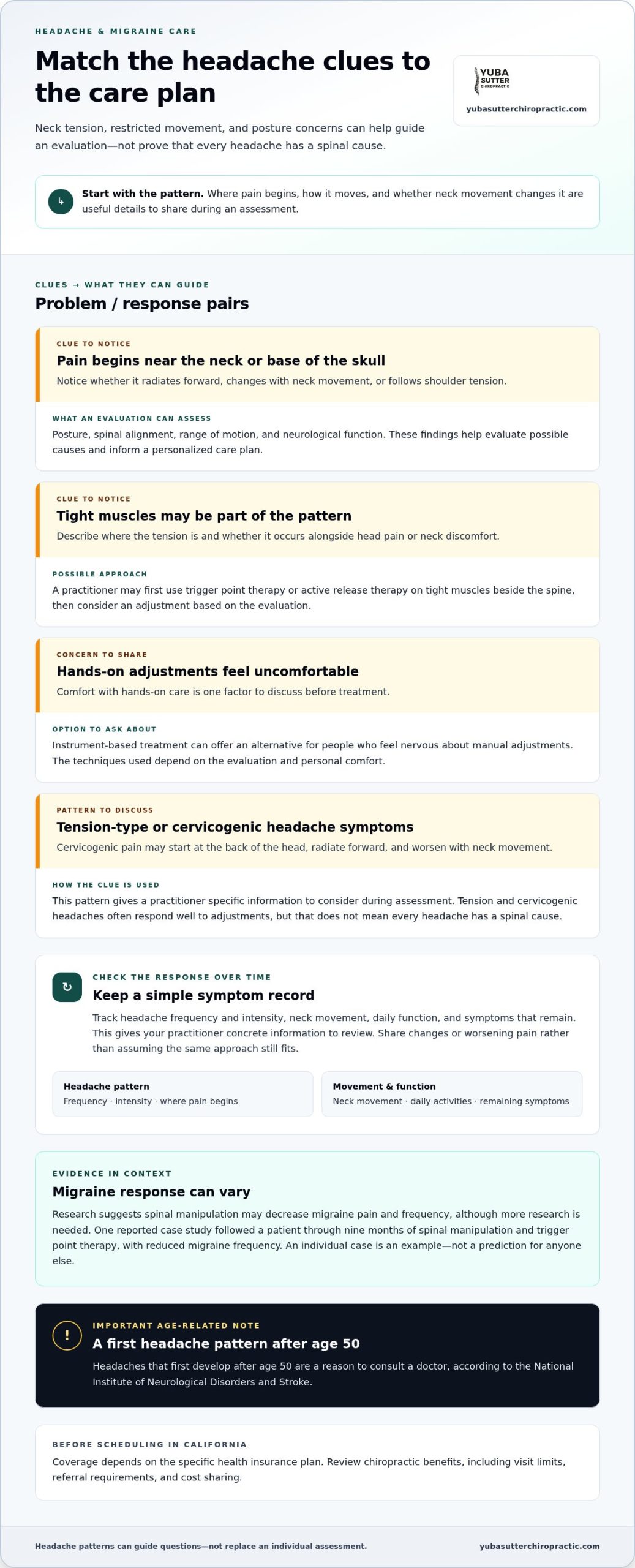
- Notice whether pain starts near the neck or base of the skull, changes with neck movement, or follows tension in the shoulders.
- Posture, screen habits, sleep, stress, and other daily patterns may offer useful clues about headache triggers.
- A chiropractic evaluation can assess posture, range of motion, spinal alignment, and neurological function to inform a personalized care plan.
- Headaches that first develop after age 50 are a reason to consult a doctor, according to the National Institute of Neurological Disorders and Stroke.
How do chiropractic adjustments help headaches?
Chiropractic care starts by connecting headache patterns with possible neck, posture, and spinal factors. An evaluation helps distinguish when adjustments may fit from when another cause needs attention.
Chiropractic Evaluation
At an appointment, describe where the pain begins, how it moves, and whether neck movement changes it. Mention symptoms such as light sensitivity, neck pain, or headaches that interrupt work or sleep. An examination may assess posture, spinal alignment, range of motion, and neurological function. These details help evaluate possible causes and inform a personalized care plan.
California health insurance coverage depends on the specific plan. Review your policy’s chiropractic benefits, including visit limits, referral requirements, and cost sharing, before scheduling care.
Adjustment-Based Pain Relief
Spinal adjustments use manual techniques to address areas of restricted movement and relieve pressure on muscles and nerves that may contribute to headaches. Reducing tension in the neck may also ease discomfort beyond the head. The approach should match the evaluation findings, including where pain starts and whether neck movement aggravates it.
What chiropractic treatments are used for headaches and migraines? Options can include manual spinal adjustments, trigger point therapy, active release therapy, and instrument-based treatment. The techniques used depend on the evaluation and the person’s comfort with hands-on care.
For example, a practitioner may first work on tight muscles beside the spine with trigger point or active release therapy, then consider an adjustment. This sequence addresses muscle tension before spinal movement is treated. Instrument-based options can offer an alternative for people who feel nervous about manual adjustments.
Tension headaches and cervicogenic headaches often respond well to adjustments. Cervicogenic pain may start at the back of the head, radiate forward, and worsen with neck movement. That pattern gives the practitioner specific information to consider during assessment. It doesn’t mean every headache has a spinal cause.
Research suggests spinal manipulation may decrease migraine pain and frequency, although more research is needed. A reported case study followed one patient through nine months of spinal manipulation and trigger point therapy, with reduced migraine frequency. That individual result is an example, not a prediction for anyone else.
Track your response over time. Note headache frequency and intensity, neck movement, daily function, and any symptoms that remain. This record gives your practitioner concrete information to review. If pain worsens or symptoms change, share those details rather than assuming the same approach still fits.
Why Choose Chiropractic for Your Headaches and Migraines?
Chiropractic care may be worth discussing when headache symptoms occur alongside neck tension, restricted movement, or posture concerns. Migraine symptoms can also include intense, often one-sided throbbing, nausea, vomiting, fatigue, and sensitivity to light or sound. Describing the pattern can help guide the next step.
For migraine care, a primary care doctor can review your overall health and symptoms. A neurologist focuses on neurological concerns, while a chiropractor evaluates spinal and musculoskeletal factors. Choose based on your symptoms and the kind of assessment or treatment you need; these roles can complement one another.
The POUND checklist offers a way to organize migraine symptoms for discussion. It describes a severe untreated migraine attack as potentially lasting one day. Track whether pain throbs, whether nausea or visual disturbances occur, and whether light or sound sensitivity accompanies the attack. Bring those observations to an appointment.
Migraine warning signs can include aura, such as visual disturbances, before head pain begins. About 20% of migraines begin with one or more neurological symptoms called an aura. Record what you notice and when it occurs, including spots in your vision or trouble concentrating, to make the symptom pattern clearer.
Cluster headaches have a different pattern. They can cause extremely severe pain, often around one eye, and may occur one to eight times a day during a cluster period. Individual episodes usually last between 15 minutes and three hours, and cluster periods may recur for one to three months each year.
Headache risk factors vary by type and pattern. Migraine factors can include family history, hormonal changes, shifts in sleep patterns, alcohol, and certain medications. Stress and environmental triggers may also matter. Keep a record of symptoms, sleep, meals, and possible triggers to share during care.
A new headache pattern deserves attention, especially if it changes daily function or brings unfamiliar symptoms. Headaches that first develop after age 50 are a reason to consult a doctor, according to the National Institute of Neurological Disorders and Stroke. This age-related warning helps distinguish a new concern from a familiar recurring pattern.
To find a licensed chiropractor in California for migraine care, look for a practitioner who identifies their California license and explains how they evaluate headache symptoms. Ask how spinal findings relate to the proposed treatment, and share your migraine history, medication use, and any visual symptoms before care begins.
For headache and migraine care around Plumas Lake, compare options by travel distance and the kind of assessment you need. A local chiropractic evaluation can help assess whether spinal or muscular factors fit your symptom pattern and inform a care plan.
Common posture and sleep-related headache triggers
Leaning toward a screen for long periods can strain the neck and upper back. Posture, demanding work tasks, and injuries to upper spinal structures may be associated with common headaches. Notice whether discomfort follows a long drive, laptop work, or looking down at a phone. These patterns help connect daily routines with symptoms and give a practitioner useful details when discussing care.
Workstation setup can matter, especially when you repeatedly turn to view screens. In one patient case study, a desk worker used three monitors. The clinic’s advice was to swivel the chair toward each monitor instead of repeatedly turning the head. Keep screens within easy viewing range, then notice whether neck tension changes during the workday. Small adjustments can help identify which tasks coincide with headaches.
Sleep habits may also be part of the pattern. The page recommends avoiding screen time for an hour before bed as part of a healthy sleep routine. Note whether late-night device use coincides with poor sleep or headaches the next day. Record your usual sleep position and how your neck feels on waking. A short log can help identify recurring links between sleep and symptoms.
Posture and sleep are not the only possible triggers. Diet, stress, lack of sleep, environmental factors, and hormonal changes may contribute to headaches or migraines. Other possible triggers include sinus pressure and food intolerances. Record meals, stressful events, sleep quality, and surroundings when symptoms appear. Include nausea or light sensitivity, if present. A clear record can show whether several factors tend to overlap.
Muscle tension beside the spine can be addressed with hands-on techniques such as trigger point therapy or active release therapy. These methods focus on tight muscles before an adjustment is considered. Notice where the tension sits, whether it spreads toward the head, and which movements feel restricted. That detail helps connect the location of muscle discomfort with the headache pattern, rather than treating every episode as identical.
Use a practical daily checklist to make observations consistent:
- Record the task or posture underway when pain starts, such as laptop work or driving.
- Note sleep quality, bedtime screen use, and neck stiffness upon waking.
- Track meals, stress, environmental changes, and symptoms such as nausea.
- Write down which breaks or ergonomic changes coincide with a different headache pattern.
Regular breaks during the day can support recovery between visits. Pair them with ergonomic and postural adjustments, hydration, balanced nutrition, stress management, and regular exercise. If headaches become severe or more frequent, share the symptom record during an appointment. Someone seeking a headache and migraine chiropractor in Plumas Lake can bring those observations to discuss how daily routines relate to symptoms and care.
What Causes Chronic Headaches and Migraines?
Tension headaches are common, occurring in about three of every four adults. Persistent tightness in the neck, shoulders, and scalp often accompanies chronic tension headache pain. Stress, posture, diet, sinus pressure, and food intolerances can also contribute. A useful first step is to record when pain begins and which factors appear alongside it.
Muscles between the head and neck can become tense during long periods of sitting, screen work, or stress. That tension may spread discomfort toward the temples or scalp. Notice whether headache pain follows a demanding workday, a stressful event, or prolonged forward posture. These examples help distinguish a recurring pattern from an isolated episode.
Cervicogenic headaches are associated with the neck. Pain may begin at the back of the head and radiate forward, often on one side. Neck movement can aggravate it. During an evaluation, describe where the pain starts, how it travels, and which movements affect it. These details help assess whether the neck is involved in the headache pattern.
A reported pattern at the clinic is pain beginning near the base of the skull and moving toward the temple region. If your symptoms follow that route, note whether neck stiffness or limited movement occurs at the same time. Neck tension or spinal factors may contribute for some people, but headaches can have other causes too. The overall symptom pattern matters.
Migraines have a different set of possible influences. Research indicates an association with genetic and environmental factors, while fluctuations in brain chemicals are suspected to be linked. A person is 50% more likely to develop migraines if one parent has them, and 75% more likely if both parents do. These figures describe risk, not a diagnosis.
Hormonal changes, sleep-pattern changes, alcohol, and certain medications may also play a part in migraines. Women are more likely than men to experience migraines, and some attacks are triggered by estrogen fluctuations. Track medication changes, sleep disruptions, and hormonal timing alongside headache symptoms. A record can give a clinician clearer context than memory alone.
Massage may relieve muscle tension. Gentle massage around the neck and shoulders can be one part of care, alongside approaches that address posture or movement. Don’t assume massage alone identifies the cause. If headache pain persists, an assessment can help relate muscle symptoms to the wider pattern.
Use a simple headache record: note the pain location, possible stress or food triggers, neck movement, and any relief after massage or rest. Reviewing these entries can help identify recurring clues and support a focused discussion about care. If the pattern changes, record what changed rather than relying on the previous explanation.
Acute, subacute, and chronic headache pain
How long headaches last and how often they return can help describe their pattern. Acute headache pain usually lasts a few days to a few weeks. Subacute headache pain can occur routinely over a period of 4 to 12 weeks. Chronic headache pain lasts longer than 12 weeks. These stages give patients a useful way to organize symptoms and explain changes over time.
Write down when the headache started, how long it lasted, and which days it affected you. For example, note whether pain appeared for several days, settled, then returned routinely over several weeks. Record whether it interrupts work, sleep, or other daily activities. This timeline gives a clinician a clearer picture than the label “headache” alone and helps show whether the pattern is changing.
Frequency matters alongside duration. More than 4% of the population experiences headache pain at least 15 days each month. These figures describe population patterns, not an individual diagnosis. For your own record, count headache days and note whether separate episodes blend into persistent pain.
Migraines can last for several hours despite common pain relievers. Track the beginning and end of each episode, medication use, and effects on daily activities. If medication provides only temporary relief, that detail helps explain the pattern during an assessment. Don’t change medication use based only on a headache log; share it with a healthcare professional.
The stage alone doesn’t explain the cause. Also note pain location, neck stiffness, posture, sleep, and possible triggers. If pain starts after an injury, include when it happened and which movements affect symptoms. If neck tension occurs alongside headache pain, record that connection too. These details help distinguish timing from factors that may contribute to discomfort.
Care can consider both symptom duration and physical findings. Chiropractic care is a commonly used, non-invasive approach for reducing inflammation and pain associated with chronic headaches and severe migraines. A practitioner may evaluate spinal alignment, movement, and muscle tension before discussing adjustments or other suitable care. The pattern of pain, physical assessment, and effect on daily function all help inform that discussion.
Soft tissue treatments have been reported to reduce the need for pain medication and decrease migraine frequency, intensity, and duration. Massage or other soft tissue techniques may be considered when muscle tension is part of the presentation. Record whether care changes headache days, pain intensity, or ability to complete daily tasks. Comparing these observations gives follow-up visits practical information to review.
Use your timeline to make the next conversation specific: bring headache dates, duration, medication use, and changes in daily function. To discuss how chiropractic care may fit your headache pattern, schedule a chiropractic evaluation.
Yuba Sutter Chiropractic & Wellness: Auto Injury Relief
Yuba Sutter Chiropractic & Wellness offers Auto Injury Relief and Chiropractic Care for people seeking help after an accident or with ongoing discomfort. If headaches began after a collision, note when they started, how often they occur, and whether neck movement affects them. Share these details at an appointment to help explain your symptoms and guide a discussion about next steps.
For headaches unrelated to an accident, Chiropractic Care may be a useful starting point for discussing spinal and muscular factors. The practice also offers DRX9000 Decompression and DOT Physicals, which address different needs. A clear account of your symptoms helps keep the conversation focused on the care relevant to you.
Contact Yuba Sutter Chiropractic & Wellness or visit yubasutterchiropractic.com to learn more.
Move Forward With a Clearer Care Plan
Your next step can be simple: decide what you want help with and describe how headaches affect your routine. Note changes in work, sleep, or movement, then prepare questions about assessment and treatment options. This gives your appointment a practical focus and helps you take an active role in care.
For anyone seeking a headache and migraine chiropractor in Plumas Lake, Yuba Sutter Chiropractic & Wellness offers Chiropractic Care. If symptoms began after a collision, Auto Injury Relief may be relevant to discuss. The practice also offers DRX9000 Decompression for other spinal care needs. The right conversation starts with your history, current symptoms, and what you hope to address.
Reach out to contact Yuba Sutter Chiropractic & Wellness to take the next step. A thoughtful discussion can help you approach care with greater clarity and confidence.
Frequently Asked Questions
Who is a good candidate for headache chiropractic care?
Someone with recurring headaches and neck discomfort may benefit from an evaluation of possible spinal or muscular factors. Note whether turning your head or holding one posture affects symptoms. Bring a short record of headache timing, activities, and effects on work or sleep. This helps distinguish patterns that may be relevant to chiropractic care from symptoms that need another type of assessment at Yuba Sutter Chiropractic & Wellness.
Does Chiropractic Care Help With Migraines?
Chiropractic care may help reduce migraine pain or frequency for some people, particularly when neck tension or spinal factors contribute. Research on spinal manipulation and migraines still needs to develop, so findings don’t establish the same outcome for everyone. Before an appointment, write down what you hope to improve, such as fewer interruptions to work or greater comfort with daily movement.
How many sessions are needed for headache relief?
The number of visits depends on the headache pattern, examination findings, and how symptoms respond to care. Useful measures include headache days, intensity, medication use, and ability to complete normal activities. Compare these observations during follow-up rather than relying on memory alone. If symptoms remain unchanged or affect daily function differently, share that information so the care plan can be reviewed.
Is chiropractic treatment safe for migraines?
Start with an evaluation and a conversation about the techniques being considered. Share relevant medical history, previous neck injuries, medications, and any new or unusual symptoms. Ask why a particular approach fits your findings and what alternatives are available. Instrument-based treatment may be an option for people nervous about manual adjustments. Understanding the plan helps you make an informed decision about care.
Does health insurance cover chiropractic headache treatment in California?
Coverage depends on your specific California health insurance plan. Review its chiropractic benefits, including visit limits, referral requirements, and cost sharing, before scheduling care.