

Chiropractic Care for Kids: A Parent’s Guide
When considering chiropractic care for kids, the first question may not be which adjustment a child needs, but whether an evaluation is appropriate at all. It’s understandable to want clear answers before bringing your child to an appointment, especially if you’re unsure what the visit involves or whether the approach will suit their age and needs.
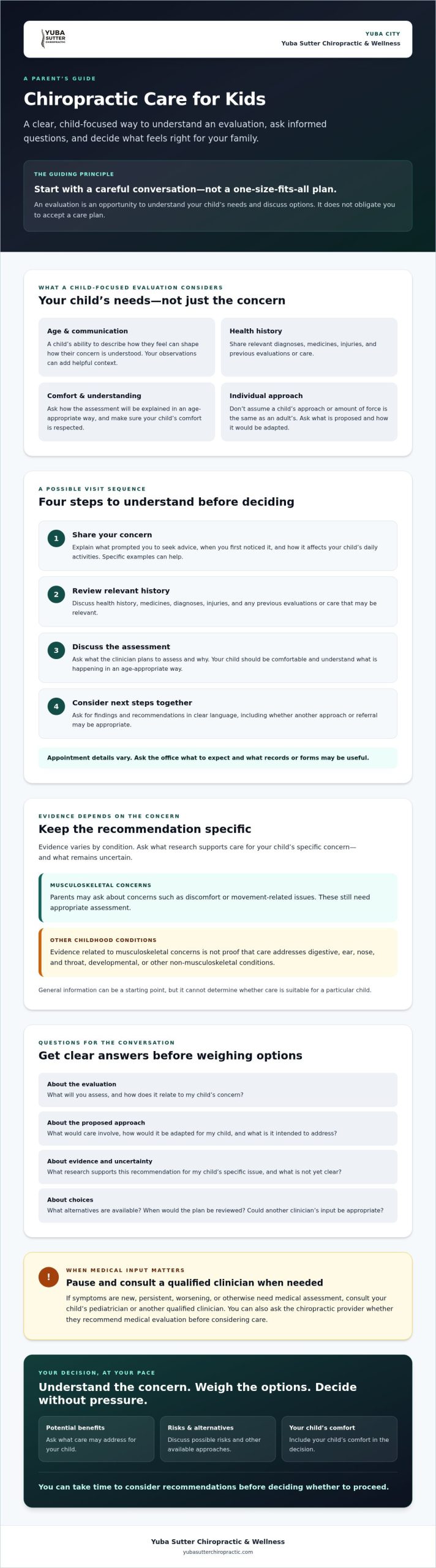
Good decisions start with a careful conversation, not broad promises or a one-size-fits-all plan. Evidence varies depending on the concern, so ask what a provider believes care may address, what alternatives are available, and how your child’s comfort and safety will guide the approach.
This guide explains what a pediatric chiropractic visit may involve, suggests practical questions for an initial conversation, and outlines how to weigh the information before deciding whether to seek an evaluation. Yuba Sutter Chiropractic & Wellness offers chiropractic care for kids in Yuba City, giving local families an opportunity to discuss their child’s individual needs and ask questions before deciding.
Key Takeaways
- Ask how an evaluation will account for your child’s age, concerns, and relevant health history before discussing possible next steps.
- For chiropractic care for kids, request a clear explanation of the proposed approach and what it is intended to address.
- Evidence differs by concern, so ask what research supports care for your child’s specific issue and what remains uncertain.
- Compare potential benefits, risks, and alternatives, and consider your child’s comfort before deciding whether to proceed.
- An evaluation doesn’t obligate you to accept a care plan. You can take time to consider the recommendations.
Chiropractic Care for Kids: What Parents Need to Know
Before considering hands-on care for your child, find out what an appointment may involve, what the provider is assessing, and whether the proposed approach fits your child’s needs. A clear explanation gives you a chance to weigh the options before making a decision.
Concise definition: Pediatric chiropractic care is a chiropractic evaluation or care adapted to a child’s age, health history, communication, and individual needs.
Chiropractic care can involve different approaches. The Chiropractic overview describes the practice and its techniques, but it can’t determine whether care is suitable for a particular child. A consultation is a chance to share concerns and ask questions, not a reason by itself to proceed. Any recommendation should follow an individual assessment, with the provider explaining the findings and options in language your family understands.
How Is Chiropractic Care for Children Different from Adult Care?
A child’s age, ability to describe how they feel, comfort with an examination, and health history all matter. A young child may not explain discomfort as clearly as an older child, so your observations can help provide context. Don’t assume the approach or amount of force is the same as for an adult. Ask the clinician to explain what they propose, how it would be adapted, and what alternatives are available. Parents or guardians should be included in questions and decisions, and your child’s comfort should be respected.
What Concerns Might Prompt a Parent to Ask About Care?
Parents may ask about care for musculoskeletal concerns, such as discomfort or movement-related issues. These concerns still need appropriate assessment. Ask what the chiropractor can evaluate and when input from another clinician may be needed.
Claims about unrelated childhood conditions call for careful scrutiny. Evidence for chiropractic care varies by condition. Evidence related to musculoskeletal concerns should not be treated as proof that care can address digestive, ear, nose, and throat, developmental, or other non-musculoskeletal conditions. Ask what evidence supports a recommendation for your child’s specific concern and what remains uncertain.
If symptoms are new, persistent, worsening, or involve complex developmental or neurological issues, consult your child’s pediatrician or a specialized practice such as Blue Cactus Neurology for expert diagnosis. You can also ask the chiropractic provider whether they recommend medical evaluation before considering care. First understand the concern, then weigh appropriate options without feeling pressured to proceed.
How a Child-Focused Chiropractic Evaluation and Visit May Work
Knowing the likely sequence can help you and your child feel more prepared. Appointment details vary, so ask the office what to expect and what to bring. A thoughtful discussion should leave room for questions, explain any proposed assessment, and make clear that you can consider recommendations before deciding.
- Share your concern. Describe what prompted you to seek advice, when you first noticed it, and how it affects your child’s daily activities. Specific examples can help explain what you’re seeing.
- Review relevant history. Discuss your child’s health history, medicines, diagnoses, injuries, and any previous evaluations or care that may be relevant.
- Discuss the assessment. Ask what the clinician plans to assess and why. Check that your child is comfortable and understands what is happening in an age-appropriate way.
- Consider next steps together. The clinician should explain findings and recommendations clearly, invite questions, and discuss whether another approach or referral may be appropriate.
The National Center for Complementary and Integrative Health provides background on chiropractic practice in Chiropractic: In Depth. Use general information as a starting point, then ask how a specific recommendation relates to your child’s concern.
What Should Parents Share Before the Appointment?
Make a brief list of current concerns, relevant health history, medicines, diagnoses, and past injuries. If your child has already been assessed by another clinician, bring or summarize relevant findings when available. You don’t need to decide on a treatment plan in advance. Contact the office before the visit to ask which records or forms would be useful, since preparation requirements can differ.
What Questions Help Parents Understand the Proposed Approach?
Ask what the clinician observed and how it relates to your child’s specific concern. Clarify what any recommended care would involve, what alternatives are available, and when the plan would be reviewed. For chiropractic care for kids, ask how the approach will account for your child’s age, comfort, and ability to communicate. If an explanation is unclear, pause and ask for simpler terms. You can take time to consider the information or decline a recommendation.
Yuba Sutter Chiropractic & Wellness lists chiropractic care for kids among its services in Yuba City. Families can ask the practice about its evaluation process, the provider’s experience with children, and what information to bring.
Is Chiropractic Care for Kids Safe, and What Does the Evidence Say?
Safety isn’t a yes-or-no answer that applies to every child or every hands-on approach. It depends on the child’s age, health history, concern being assessed, and the specific care proposed. “Chiropractic care should be considered only after weighing the potential benefits, risks, and alternatives for the individual child.” Ask the clinician to explain that balance in terms you can understand. No intervention should be described as risk-free.
Evidence also depends on the condition. Some research supports chiropractic approaches for certain musculoskeletal concerns, but that doesn’t establish effectiveness for unrelated conditions. Evidence for claims involving colic, ear infections, asthma, or other non-musculoskeletal concerns is limited or inconclusive. A general claim about wellness isn’t a substitute for evidence tied to a specific diagnosis or symptom.
What Should Parents Ask About Risks and Alternatives?
Before deciding, ask the clinician to explain risks that may be relevant to your child’s age and health history, as well as what signs would mean you should stop or seek medical advice. Ask whether observation, another approach, or a discussion with your child’s pediatrician may be appropriate. If the answers leave you uncertain, you can defer care, stop, or seek another opinion. Your child’s comfort and your informed agreement matter.
What Claims Should Parents Treat Carefully?
Be cautious about broad promises that chiropractic care can treat childhood conditions unrelated to muscles and joints. Ask what evidence supports the recommendation for your child’s particular concern, how strong that evidence is, and what its limitations are. A confident claim is not the same as reliable, condition-specific research.
Evidence develops over time, so check health claims against current clinical literature and reputable medical guidance. This is especially important when a claim could affect whether a family seeks an established medical assessment or treatment.
- Ask for specifics: What outcome is the proposed care intended to address?
- Check alternatives: Could you wait, speak with your child’s pediatrician, or consider another option?
- Keep medical care in view: Don’t stop or delay recommended medical care based on a chiropractic claim without discussing it with a qualified clinician.
A careful provider should welcome these questions and explain uncertainty without guaranteeing improvement. If the rationale, risks, or alternatives remain unclear, it’s reasonable to pause before moving forward.
How to Decide Whether Chiropractic Care Fits Your Child’s Needs
A useful decision starts with your child’s specific concern, not a general promise about what care might do. Consider whether the issue has been appropriately assessed, what evidence supports the proposed approach, and whether your child feels comfortable. Use this checklist to guide a conversation with a clinician or discuss options with your child’s pediatrician.
- Clarify the concern: What are you hoping to address, and has your child received appropriate medical assessment?
- Understand the recommendation: What did the clinician assess, and how does the proposed care relate to your child’s needs?
- Ask about evidence: What supports this approach for this specific concern? What is uncertain?
- Discuss options: What alternatives are available, including observation or advice from your child’s pediatrician?
- Include your child: Does your child understand what may happen and feel comfortable with the proposed approach?
- Check the plan: How will progress be reviewed, and what would prompt a change or stop?
An evaluation is a chance to gather information. It doesn’t obligate your family to proceed with recommended care. Take time to consider the explanation, ask follow-up questions, or seek another professional opinion if you’re unsure. If your child has a diagnosis, persistent symptoms, or treatment questions, coordinating with their pediatrician can help you understand how different recommendations fit together.
When Should a Parent Seek Medical Advice First?
For concerning, severe, or worsening symptoms, seek prompt assessment from an appropriate medical professional. Don’t use chiropractic care as a substitute for urgent or necessary medical evaluation. Warning signs can vary by age and situation, so ask your child’s pediatrician what symptoms require prompt attention. Any warning-sign guidance should be checked against current, age-appropriate medical information by a qualified clinician.
How Can Families Compare Providers Thoughtfully?
Ask about relevant credentials, experience working with children, examination methods, and how the provider communicates findings. Recommendations should be explained clearly and tailored to your child, not presented as a standard plan for every family. Compare the proposed approach with your goals and any advice from other qualified professionals. You should feel comfortable asking questions and taking time to decide.
If you’re considering a local conversation about chiropractic care for kids, contact Yuba Sutter Chiropractic & Wellness to ask about its evaluation process, the provider’s experience with children, and the questions you’d like answered before deciding.
Exploring Chiropractic Care for Kids in Yuba City
Yuba Sutter Chiropractic & Wellness is based in Yuba City and lists chiropractic care for kids among its services. It may be a local option for families who want to discuss whether an evaluation makes sense for their child. Ask the practice directly about pediatric techniques, provider credentials, and appointment details so you know what to expect before scheduling.
What Can Parents Ask Yuba Sutter Chiropractic & Wellness?
Start with your child’s individual concern and ask how the team would assess it, including how your child’s age and comfort shape the process. Before deciding, you can ask:
- What experience and credentials does the provider have relevant to working with children?
- What would an evaluation involve, and how would findings be explained to both parent and child?
- What care, if any, is being recommended, and what alternatives should we consider?
- How might the provider coordinate with my child’s pediatrician or other clinicians?
Families with questions about activity-related concerns can also read the practice’s article on family chiropractic care in Yuba City. Use it as a starting point for discussion, not as a substitute for advice tailored to your child.
What Should Families Do Before Scheduling?
Write down what concerns you, when you noticed it, and any relevant health history, medicines, injuries, diagnoses, or previous evaluations. Contact the office beforehand to confirm what information or records are useful and ask about appointment details. You can also review the practice’s general article on the benefits of regular chiropractic adjustments for broader context. It isn’t pediatric-specific evidence, so ask a clinician about information relevant to your child’s situation.
There’s no need to arrive with a decision already made. A conversation can help you understand the proposed assessment, ask about alternatives, and decide whether to take another step. Families in Yuba City and nearby Marysville, Live Oak, Gridley, Sutter, Colusa, Plumas Lake, Olivehurst, and Wheatland can contact the practice with questions about its process.
Make an Informed Choice for Your Child
Choosing whether to explore chiropractic care for kids starts with your child’s individual concern, a clear explanation of any proposed approach, and an honest discussion of evidence, risks, and alternatives. An evaluation can help you gather information, but it doesn’t commit your family to care. If symptoms or treatment questions warrant it, involve your child’s pediatrician as you weigh your options.
Yuba Sutter Chiropractic & Wellness is based in Yuba City and lists care for kids among its services. Before deciding, ask about the provider’s experience with children, how your child’s needs will be assessed, and whether another approach may be appropriate.
Contact Yuba Sutter Chiropractic & Wellness to ask about care for your child and get answers to your questions. A thoughtful conversation can help you decide what to do next at a pace that feels right for your family.
Frequently Asked Questions
Is chiropractic care safe for kids?
Safety depends on the child, the concern being assessed, and the specific approach proposed. No intervention should be described as risk-free. Ask about risks relevant to your child’s age and health history, the evidence for the recommendation, and alternatives, including speaking with your child’s pediatrician. Ask about the practitioner’s experience with children, too. Seek medical advice when symptoms need assessment, and have qualified clinical review support any published safety guidance.
Can babies or infants receive chiropractic care?
There isn’t a blanket answer for every baby or infant. Age, health history, and the reason for considering care all need careful professional consideration. Ask what an evaluation would involve and what, if anything, is being proposed before making a decision. Discuss your concerns with the infant’s pediatrician, especially if symptoms need medical assessment. Treat claims that chiropractic care can address unrelated conditions cautiously, and ask for reliable evidence specific to that condition.
What happens during a child’s first chiropractic visit?
A first visit may begin with a discussion of your child’s concerns and relevant health history, followed by questions and a conversation about whether an assessment is appropriate. If the clinician makes recommendations, they should explain the findings and options in terms you and your child can understand. Visits differ by practice, so ask what to expect beforehand. You should have time to consider the information and decide whether to proceed.
What conditions can chiropractic care help with in children?
Whether care may be appropriate depends on your child’s specific concern, and the evidence varies by condition. Ask what evidence supports the proposed approach for that particular issue and what its limits are. Don’t assume chiropractic care treats general childhood illnesses or developmental conditions. Your child’s pediatrician can help clarify symptoms, discuss diagnosis, and review other care options. Avoid recommendations that promise broad benefits without reliable, condition-specific support.
Should I talk to my child’s pediatrician before seeing a chiropractor?
Discussing your concerns with your child’s pediatrician can help you understand symptoms, diagnoses, and possible alternatives. It’s especially useful if your child has a health condition or symptoms that are worsening or need assessment. Share relevant medical history with any provider you consult, and ask whether coordination between clinicians makes sense. A chiropractor and pediatrician have different roles. Families can seek appropriate input from both without treating one as a replacement for the other.
How do I choose a chiropractor for my child?
Ask about professional credentials, experience with children, assessment methods, evidence for the recommendation, potential risks, and alternatives. You should receive clear explanations tailored to your child, without pressure or guaranteed outcomes. Confirm credentials through appropriate official sources, such as the California Board of Chiropractic Examiners, and verify practitioner-specific claims directly. Yuba Sutter Chiropractic & Wellness offers care for kids in Yuba City and serves nearby communities, including Marysville, Live Oak, Gridley, Sutter, Colusa, Plumas Lake, Olivehurst, and Wheatland.