

Is Spinal Decompression Painful? What to Really Expect During Treatment
What if the most effective way to heal your herniated disc wasn’t a forceful adjustment or a painful surgery, but a gentle session where many patients actually fall asleep? If you have spent months or years living with chronic back pain, you are likely skeptical of new treatments. You might have tried traditional traction or physical therapy before, only to find the results underwhelming or even uncomfortable. It is completely natural to wonder, is spinal decompression painful, especially when you feel like your spine is already at its breaking point.
We want to reassure you that modern care is built on comfort. This article will help you discover why non-surgical spinal decompression is designed to be a soothing experience rather than a stressful one. You will learn how to distinguish between the necessary “pulling” sensations of healing and actual pain. We will also preview how the DRX9000 technology works as a biofeedback system to keep you safe throughout the process. By the end, you will understand how our Yuba City team uses advanced tools like MLS Laser Therapy to ensure your journey toward relief is as smooth and relaxing as possible.
Key Takeaways
- Non-surgical spinal decompression is designed to be a relaxing experience, with most patients describing the sensation as a gentle pressure release rather than a painful pull.
- You’ll learn how the DRX9000 technology uses advanced biofeedback to monitor your body’s response and prevent the muscle guarding that often leads to discomfort.
- Discover why the answer to the question is spinal decompression painful is a resounding “no” for the vast majority of people who seek relief from disc issues.
- We explain how to identify normal post-treatment soreness, which feels similar to a mild workout, versus sensations that require professional adjustment.
- Get practical tips on how hydration and specific clothing choices can maximize your comfort and improve the responsiveness of your spinal discs during care.
Is Spinal Decompression Painful? The Short Answer
The short answer is no. For the vast majority of our patients, non-surgical spinal decompression is a deeply relaxing and entirely painless experience. If you are currently struggling with a herniated disc or chronic sciatica, you might have seen images of decompression tables and worried they look like a “medieval rack.” This is a common misconception. Modern technology has replaced simple weights and pulleys with sophisticated computer systems designed to work with your body, not against it. Most people describe the sensation as a gentle, rhythmic stretch or a pleasant release of built-up pressure in their lower back or neck.
The primary goal of this therapy is to create a vacuum effect, known as negative intra-discal pressure, within the spine. This vacuum helps pull bulging disc material back into place and encourages the flow of nutrient-rich fluids into the area to speed up healing. To understand the clinical background of these methods, you can read more about What is spinal decompression and how it differs from surgical alternatives. Because we focus on creating this “vacuum” gently, we avoid the sharp pains often associated with more invasive procedures. It’s a restorative process that prioritizes your comfort from the moment you lie down.
The Difference Between Traction and Decompression
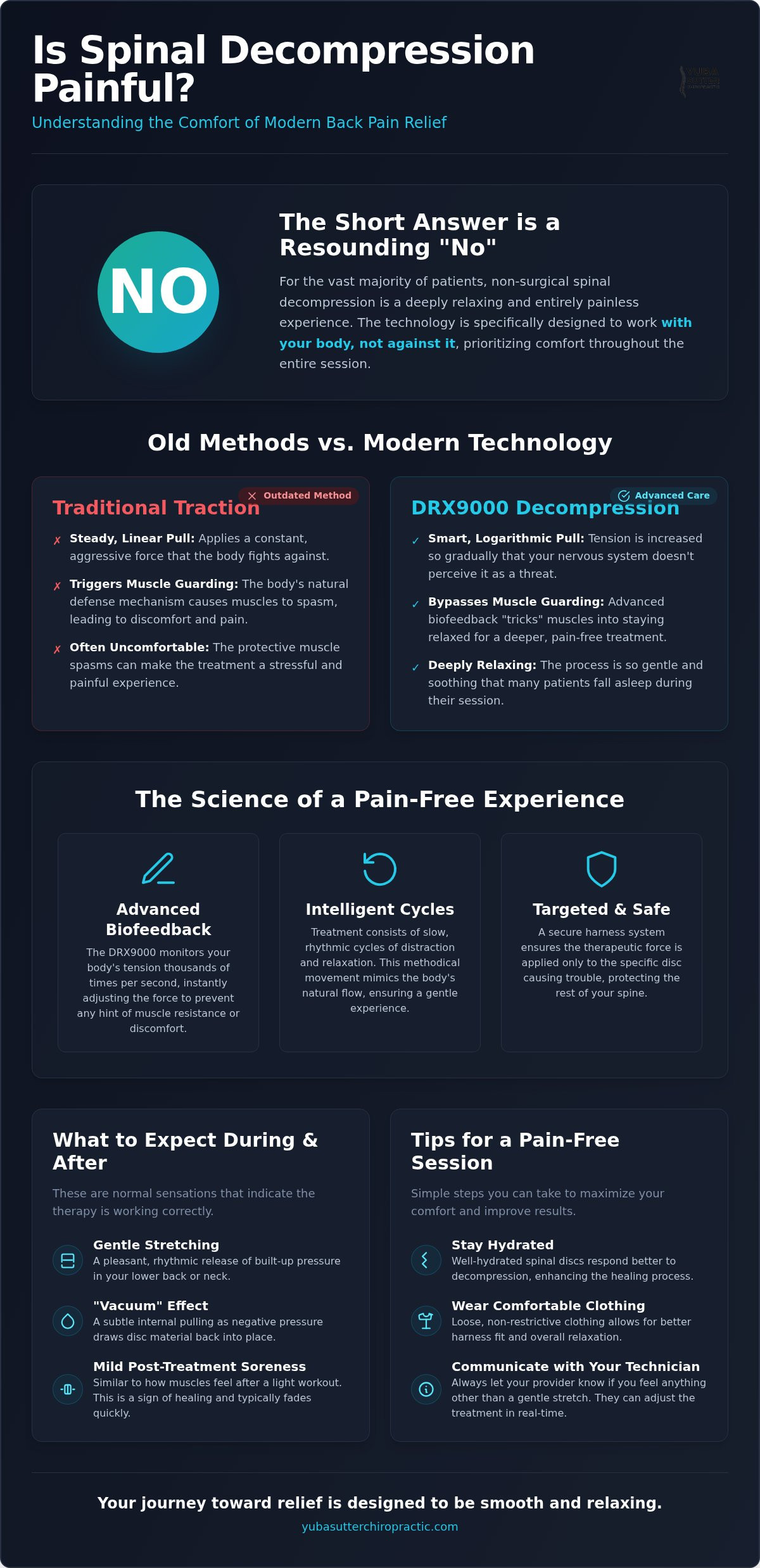
It is important to distinguish between generic traction and high-tech decompression. Many people ask is spinal decompression painful because they have had bad experiences with old-fashioned traction. Standard traction applies a steady, linear pull that often triggers “muscle guarding.” When your body senses a forceful stretch, your muscles naturally spasm to protect the spine, which can be quite uncomfortable. Modern decompression tables, like the DRX9000 we use at Yuba Sutter Chiropractic, are much smarter. They use sensors to “trick” your muscles into staying relaxed. By bypassing the body’s natural resistance, we can achieve a deeper stretch without causing the painful spasms associated with older methods.
What You Will Feel During the Session
When you visit our Yuba City clinic, the process begins with a precise harnessing system. We ensure the fit is secure yet comfortable, anchoring your body so the machine can target the specific disc that’s causing your trouble. Once the session starts, you will feel a slow, rhythmic cycle of distraction and relaxation. This isn’t a constant, aggressive pull; it’s a methodical movement that mimics the natural flow of your body. In fact, the experience is so soothing that many of our patients actually fall asleep during their DRX9000 session. When we pair this with MLS Laser Therapy to reduce local inflammation, the result is a treatment that feels more like a specialized spa session than a medical intervention.
The Science of Comfort: How the DRX9000 Prevents Pain
Many people ask is spinal decompression painful because they imagine a machine simply pulling their spine apart. The reality is far more sophisticated. The DRX9000 uses a specialized biofeedback system to monitor your body’s reaction to the treatment. This is crucial because of a reflex called “muscle guarding.” When your body feels a sudden or forceful stretch, your muscles automatically tighten to protect the spine. Such tightening is what makes traditional traction uncomfortable. The technology behind non-surgical spinal decompression is designed to bypass this reflex entirely.
Instead of a linear pull, the DRX9000 follows a logarithmic curve. This means it increases tension so gradually that your nervous system doesn’t perceive it as a threat. By the time the full therapeutic force is applied, your muscles have already relaxed; this allows the machine to target the disc directly without pain. Throughout the session, a trained technician is right there with you. They monitor your comfort levels in real-time and can make manual adjustments if you feel any unease.
Bypassing the Body’s Defense Mechanisms
To achieve this high level of comfort, the DRX9000 computer monitors your body’s tension and adjusts the pull thousands of times per second. If the system detects even a hint of muscle resistance, it instantly modifies the force. This rapid-fire adjustment ensures you never feel that sharp, jarring sensation often feared by those with disc injuries. Each session also includes a critical relaxation phase. During this time, the tension is eased to allow the disc to rehydrate and absorb nutrients. It’s this rhythmic cycle that makes the process feel so restorative.
Customizing the Pull for Your Specific Injury
Comfort also comes from precision. A herniated disc in the neck requires a completely different approach than sciatica in the lower back. We calibrate the machine based on your specific diagnosis, adjusting the poundage and the exact angle of the pull. This level of customization ensures that the force is directed exactly where it’s needed. When the angle is perfectly aligned with your injury, the stretch feels natural and relieving rather than forced. If you’re curious about how this tailored approach might feel for your condition, you can learn more about our personalized care plans. Our individual focus is why we can confidently say the answer to “is spinal decompression painful” is almost always no.
Normal Soreness vs. Abnormal Pain: What to Watch For
It is common for patients to feel a bit tender after their first few sessions. If you are asking is spinal decompression painful, you might have read online forums where people complain about “flares” after treatment. It is vital to understand that a temporary dull ache is actually a normal part of the healing process. When we decompress a disc that has been compressed for years, we are moving tissues and fluids that have been stagnant. This movement can trigger a mild inflammatory response, which feels less like an injury and more like a deep, dull pressure.
This sensation is very similar to the soreness you feel after starting a new exercise routine. Your spinal muscles have likely been in a state of “guarding” or contraction to protect your injured disc. During a DRX9000 session, we are finally allowing those muscles to lengthen. This structural change is positive, but it does mean those muscles might feel tired or achy for a short window of time. Typically, this “good” soreness should fade within 24 to 48 hours as your body adapts to its new alignment.
The “Workout” Effect on Spinal Muscles
Because your deep spinal stabilizers haven’t been stretched this way in a long time, they need time to recover. We recommend using ice packs for 15 to 20 minutes after your session rather than heat. Heat can actually increase the inflammatory response in the early stages of care; whereas ice helps calm the nerves and reduces that “workout” tenderness. This simple step often makes the difference between a restless evening and a comfortable recovery. Remember, these sensations are signs that your body is finally moving away from a state of chronic compression.
When to Alert Your Chiropractor
While a dull ache is expected, you should always keep us informed about what you are feeling. Sharp, “lightning-like” pains or a sudden increase in numbness are considered red flags. These sensations usually indicate that the settings on the table need a slight adjustment to better suit your body’s current state. We place a high priority on open communication, especially during your first three sessions. If you experience a temporary flare-up, our team can easily modify the protocol or use MLS Laser Therapy to soothe the area and ensure your path to relief stays on track.
Tips for a Pain-Free and Relaxing Decompression Experience
Ensuring your session is as comfortable as possible starts before you even step into our office. While many ask is spinal decompression painful, the answer often depends on how well you prepare your body for the treatment. Hydration is the most critical factor. Your spinal discs are primarily made of water. When you are well-hydrated, these discs become more resilient and responsive to the gentle stretching of the DRX9000. Conversely, dehydrated discs can feel stiff, which might lead to more noticeable pulling sensations. We also recommend wearing loose-fitting, comfortable clothing like gym wear or leggings. This ensures that the specialized harness fits snugly and securely without any uncomfortable pressure points from belts or heavy denim.
What you do after your appointment is just as important as the treatment itself. After we create that therapeutic vacuum in your spine, your discs and supporting muscles are in a state of transition. It’s essential to avoid lifting heavy weights or performing high-impact activities for at least a few hours following your session. Giving your body time to settle into its new, decompressed state helps prevent the temporary flare-ups mentioned earlier. Think of it as protecting the progress you just made during your time on the table.
Preparing Your Body for Success
To get the best results, aim to drink 8 to 10 glasses of water the day before your appointment. This ensures your tissues are primed for the distraction process. We also suggest arriving about ten minutes early. This gives you a chance to decompress mentally and lower your stress levels before getting on the table. A relaxed mind leads to relaxed muscles, which makes the biofeedback system’s job much easier. Always share your recent pain levels with our Yuba City team during check-in so we can fine-tune your session settings immediately.
- Drink plenty of water to keep your spinal discs hydrated and “slippery.”
- Wear flexible, soft clothing to ensure a perfect harness fit.
- Avoid strenuous activity immediately following your treatment.
- Communicate any changes in your symptoms to our staff before each session.
The Synergy of MLS Laser Therapy
At Yuba Sutter Chiropractic, we often pair decompression with FDA-cleared MLS Laser Therapy. This advanced light therapy works synergistically to “pre-treat” the area by reducing local inflammation and swelling. By calming the nerves before the stretching begins, we make the entire process even more comfortable for patients with acute disc injuries. This combination significantly reduces the risk of post-treatment soreness and speeds up the overall recovery timeline. If you’re ready to experience this high-tech approach to relief, you can schedule your consultation today to see how we can help.
Why Yuba City Residents Trust Yuba Sutter Chiropractic for Relief
Choosing a healthcare provider is a personal decision, especially when you’re dealing with the vulnerability of chronic back pain. In Yuba City, we’ve seen many patients delay treatment because they were worried: is spinal decompression painful? At Yuba Sutter Chiropractic, our mission is to remove that barrier of fear. We don’t believe in just masking symptoms with temporary fixes. Instead, we focus on root cause healing. By using the DRX9000, we offer the gold standard in non-surgical care. This technology provides a level of precision that generic traction tables simply cannot match. It allows us to target the specific disc causing your discomfort while you remain completely relaxed.
Our clinic is designed to be a sanctuary for those who have struggled with failed treatments in the past. We maintain a welcoming, community-focused environment that intentionally reduces patient anxiety. From the moment you walk through our doors, you’ll notice a difference in how we approach your care. We combine clinical authority with a warm, personal touch, ensuring you feel like a partner in your recovery rather than just another patient on a schedule. This supportive atmosphere is a primary reason why so many of our neighbors trust us with their spinal health.
A Local Partner in Your Recovery
We’re proud to serve our neighbors from Plumas Lake and Marysville to Colusa and Live Oak. Our team understands that recovery is about more than just a single machine. That’s why we integrate decompression into a total wellness plan. This might include nutritional guidance or MLS Laser Therapy to ensure your body has the raw materials it needs to repair damaged discs. We want you to feel completely confident in your choice. If you’re nervous, we invite you to come into the clinic and see the DRX9000 in person. Meeting our team and seeing the technology often turns anxiety into optimism.
Your First Step Toward a Pain-Free Life
The fear of pain shouldn’t be the thing that keeps you from a life of mobility. Modern spinal decompression has a high safety profile and a high success rate for conditions like herniated discs and sciatica. Our technology is designed to work with your body’s natural mechanics. This ensures that your sessions are restorative rather than stressful. You deserve a partner who’s as invested in your progress as you are. If you’re tired of living with limitations, it’s time to explore what’s possible. Schedule a consultation with us today to find out if you’re a candidate for this life-changing care. Let’s take that first step toward your recovery together.
Take the First Step Toward Lasting Relief
You now have a clearer picture of how modern technology protects your comfort during recovery. The question is spinal decompression painful is answered by the sophisticated biofeedback of the DRX9000. This gold standard technology ensures your treatment is a gentle, relaxing process rather than a stressful one. By choosing a non-surgical and drug-free path, you’re prioritizing a long term solution that targets the root cause of your disc pain without the risks of invasive procedures.
Yuba Sutter Chiropractic has served the Yuba City and Marysville communities for years. Our experts are dedicated to providing a supportive environment where your recovery is the top priority. You don’t have to let the fear of discomfort hold you back from the activities you love. Our team is here to guide you through every step of the journey with personalized attention and proven results. Schedule Your Spinal Decompression Consultation in Yuba City Today and discover how comfortable true healing can be. We look forward to helping you live a life free from the limitations of back pain.
Frequently Asked Questions
Can spinal decompression make a herniated disc worse?
No, when performed by experts using the DRX9000, the process is extremely safe and controlled. The goal is to create negative pressure that pulls herniated material away from the nerve. Unlike high-impact movements, this is a slow and methodical distraction. If you’ve been asking is spinal decompression painful or dangerous, rest assured that the system’s precision is designed to protect your spine while facilitating natural retraction and healing of the disc.
How many sessions will I need before I feel relief?
While every patient’s journey is unique, most people begin to notice a decrease in their symptoms within the first 6 to 10 sessions. A full course of treatment typically involves 20 to 30 sessions to ensure the disc has fully rehydrated and stabilized. Consistency is the key to long term success. We monitor your progress at every visit to ensure your specific recovery timeline is moving in the right direction.
Is it normal to feel more pain after the first session?
It is quite common to feel a dull ache or mild tenderness after your initial visit. This is often referred to as the “workout effect” because your spinal muscles are being stretched in a way they haven’t experienced in years. This sensation usually dissipates within 24 to 48 hours. However, if you experience sharp or radiating pain, you should notify our team immediately so we can adjust your next session’s settings for better comfort.
Can I go back to work immediately after a decompression treatment?
Most patients can return to their normal daily activities, including work, immediately following a session. If your job involves sitting at a desk or light activity, you should have no issues. However, we strongly advise against heavy lifting, intense gym workouts, or high-impact sports for several hours after treatment. Your spine needs a little time to settle into its newly decompressed state to maximize the healing benefits of the session and prevent unnecessary strain.
What happens if I have a muscle spasm while on the table?
If your muscles begin to spasm, the DRX9000 biofeedback system will detect the resistance in milliseconds. The machine instantly relaxes the tension to prevent the spasm from becoming painful or counterproductive. This is a major safety feature that distinguishes the DRX9000 from generic traction tables. Our technicians also monitor you closely throughout the entire process, ensuring you can signal for assistance at any time during your therapeutic session using a safety stop button.
Are there any people who should NOT have spinal decompression?
While highly effective for most, certain conditions are contraindications for this therapy. Individuals with spinal fusion hardware like screws or rods, severe osteoporosis, or spinal cord tumors should avoid decompression. Pregnant women are also generally excluded from lumbar treatments. During your initial consultation in Yuba City, we perform a thorough screening of your medical history and imaging to confirm that this approach is both safe and appropriate for your specific spinal condition.
Does insurance cover DRX9000 spinal decompression in Yuba City?
Insurance coverage varies significantly between providers and specific plans. Most major insurance companies don’t cover the decompression portion of the treatment directly, though they may cover associated services like the initial orthopedic exam, diagnostic x-rays, or chiropractic adjustments. We recommend bringing your insurance information to your first appointment. Our staff can help you understand your benefits and discuss flexible payment options to ensure your care remains accessible and fits within your budget.
How is decompression different from a standard chiropractic adjustment?
A standard chiropractic adjustment involves a quick, manual thrust to realign a joint. In contrast, spinal decompression is a slow, computer-controlled pull that lasts about 20 to 30 minutes. While adjustments focus on joint mechanics, decompression specifically targets the health of the intervertebral disc. Many patients wonder is spinal decompression painful compared to an adjustment; however, most find the rhythmic, gentle stretch of the DRX9000 to be even more relaxing than traditional manual therapy.