

What Disqualifies You From a DOT Physical? A Driver’s Guide to 2026 Requirements
Could a single high blood pressure reading or a shift in vision standards suddenly end your career behind the wheel? For most commercial drivers in Yuba City, the medical exam feels less like a routine health check and more like a direct threat to their livelihood. It’s completely normal to feel anxious about what disqualifies you from a dot physical, especially with the 2026 National Registry II requirements now changing how your results are transmitted to the state. You deserve a clear path forward that protects both your health and your CDL.
We understand the pressure you’re under and want to ensure you walk into the exam room feeling prepared and calm. You’ll learn exactly which medical conditions could impact your certification and how to proactively prepare for a successful DOT physical exam on your first try. We’ll walk through the current vision and hearing thresholds, explain the 2026 blood pressure categories, and outline how the new electronic filing system affects your motor vehicle record. By understanding the rules and managing your health early, you can stay on the road with total confidence.
Key Takeaways
- Understand the 2026 shift to electronic reporting and how it impacts your ability to prove medical certification to the state.
- Review the specific vision, hearing, and heart health standards to know exactly what disqualifies you from a dot physical before you book your appointment.
- Get a clear list of “no-go” medications and substances, including insights on how the FMCSA views prescription treatments for chronic conditions.
- Learn how to prepare your medical documentation and manage exam-day anxiety to increase your chances of passing on the first try.
- Explore the benefits of working with a local, community-focused examiner who understands the unique challenges of the trucking lifestyle in the Yuba-Sutter area.
Understanding the DOT Physical: Why Drivers Are Disqualified
The DOT physical isn’t just another box to tick on your to-do list. It’s a federally mandated safety exam designed to ensure every commercial driver can safely operate heavy vehicles. The Federal Motor Carrier Safety Administration (FMCSA) sets these medical standards to protect you and everyone else on the road. By 2026, these regulations have become even more streamlined, focusing on real-time data and consistent health monitoring. If you’re wondering what disqualifies you from a dot physical, it’s usually a condition that poses a risk of sudden physical failure or loss of consciousness.
To perform these exams, a provider must be part of the National Registry of Certified Medical Examiners (NRCME). This registry is vital because it guarantees your examiner has the specific training to evaluate the unique stresses of the trucking industry. They aren’t just looking for reasons to stop you from working; they’re looking to confirm that you’re physically capable of the job’s demands. Working with a certified examiner ensures your results are transmitted accurately and quickly to the national registry.
The Goal of the FMCSA Medical Examination
Driving a commercial vehicle requires more than just skill. It demands high levels of stamina and quick reflexes. Long-haul routes often mean irregular sleep and limited access to healthy food, which can take a toll on your body over time. The FMCSA exam evaluates whether your cardiovascular and neurological systems can handle these specific pressures. The primary goal is to minimize the risk of a medical emergency, such as a heart attack or seizure, occurring while you’re behind the wheel. For those of us driving through the Yuba-Sutter community or navigating the heavy traffic on Highway 99, these standards keep our local roads safer for everyone.
Temporary vs. Permanent Disqualification
Many drivers fear that a medical issue means their career is over. That’s rarely the case. Most issues that arise during an exam lead to a temporary disqualification or a shorter certification period. For instance, if your blood pressure is slightly elevated, you might receive a 3-month or 1-year certificate instead of the standard 2-year version. This gives you time to work with a healthcare provider to manage the condition through lifestyle changes or medication. Sometimes, an examiner will “defer” your certification, which means they need more documentation from a specialist before they can sign off. A disqualification is simply a safety pause that allows you to address a health concern before it becomes a danger on the road.
Top 5 Medical Conditions That Disqualify You from a DOT Physical
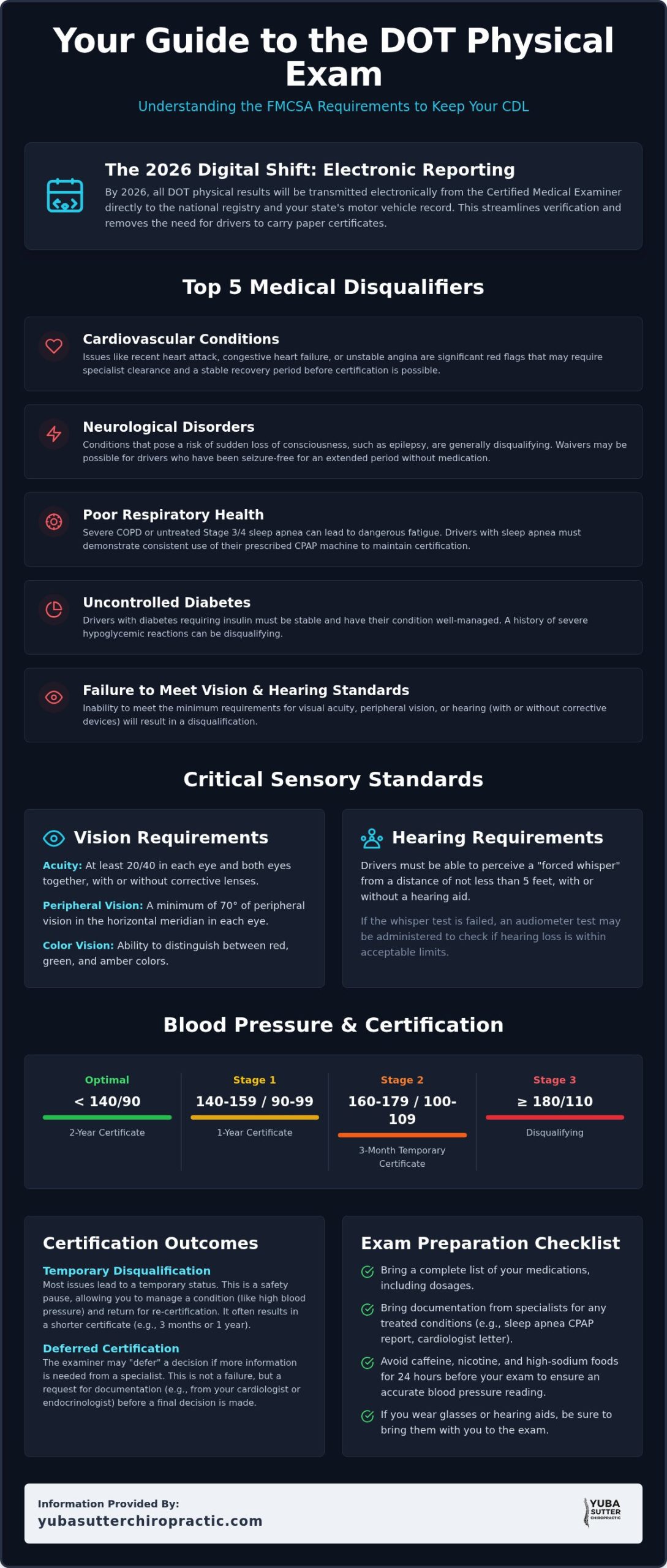
Understanding what disqualifies you from a dot physical is the first step toward protecting your career. The primary focus of the exam is to identify conditions that might cause a sudden loss of control or physical impairment. Cardiovascular health is a major priority for examiners. Conditions like congestive heart failure, recent heart attacks, or unstable angina are significant red flags. These issues often require a stable recovery period and specific clearance from a cardiologist before you can return to the road. Neurological disorders also carry strict rules. Epilepsy is generally disqualifying because of the risk of seizures, though some drivers may qualify for a waiver if they’ve been seizure-free for a specific number of years without medication.
Respiratory health is another critical area. Severe COPD or untreated Stage 3 and 4 sleep apnea can stop a certification in its tracks. These conditions interfere with your oxygen levels and sleep quality, leading to dangerous levels of fatigue. To stay compliant with FMCSA medical requirements, drivers with sleep apnea must show they’re consistently using their CPAP machine as prescribed. By addressing these concerns early, you can often find a path to certification rather than a permanent “no.”
Vision and Hearing Standards for 2026
Your ability to perceive your surroundings is vital for safety on Highway 99 and beyond. The 2026 standards require sharp focus and clear hearing to manage the daily challenges of the road. You must meet these specific thresholds:
- Vision: You need at least 20/40 vision in each eye and both eyes together, with or without corrective lenses.
- Peripheral Vision: A minimum of 70 degrees of peripheral vision in each eye is required to ensure you can see merging traffic and hazards.
- Color Vision: You must be able to distinguish between the red, green, and amber colors used in traffic signals.
- Hearing: You must pass a “forced whisper” test in your better ear from a distance of 5 feet. If you use a hearing aid, you can wear it during this test.
High Blood Pressure and Diabetes Management
Managing chronic conditions like hypertension and diabetes is one of the most common challenges for modern drivers. Blood pressure readings are taken during every exam, and the results determine how long your certificate will last. If your pressure is below 140/90, you’ll typically receive a full 2-year certification. Readings between 140/90 and 159/99 (Stage 1) usually result in a 1-year certificate. If your blood pressure reaches Stage 3 levels (180/110 or higher), it’s considered disqualifying until you can bring those numbers under control with treatment.
For drivers with insulin-treated diabetes, the 2026 process is more collaborative. You’ll need to have your treating physician complete the Insulin-Treated Diabetes Mellitus (ITDM) Assessment Form, MCSA-5870, before your physical. This form confirms that your blood sugar is well-managed and you haven’t had any severe hypoglycemic episodes. At Yuba Sutter Chiropractic, we support our local drivers by offering wellness guidance and programs like Blueprint Metabolics to help manage these vital numbers. If you have questions about your health history, you can schedule a consultation with our local experts to prepare for your next exam.
Medications and Substance Use: What’s Off-Limits for CDL Drivers?
The medications you take every day can significantly impact your ability to remain certified. While many treatments are perfectly safe for the general public, the federal government maintains a strict list of substances that are considered incompatible with operating a commercial motor vehicle. If you’re concerned about what disqualifies you from a dot physical, you should start by reviewing your current prescriptions and any over-the-counter supplements. Any Schedule I controlled substance is an automatic disqualification. This includes a wide range of narcotics and stimulants that could impair your judgment or reaction time while on the road.
For medications that aren’t on the automatic “no-go” list, the medical examiner still has to determine if the drug’s side effects pose a safety risk. Many drivers find it helpful to research what to expect in a DOT exam before their appointment to avoid surprises. If you take a medication that could cause drowsiness, you’ll likely need a clearance letter from your prescribing physician. This letter must state that you can safely operate a commercial vehicle while taking the medication. Having this documentation ready before you arrive at our Yuba City clinic can prevent delays in your certification.
The Marijuana and CBD Dilemma
There’s often confusion regarding marijuana use because California state law differs from federal regulations. Even if you have a valid medical marijuana card, federal law still classifies it as a Schedule I substance. This means any use of marijuana is disqualifying for CDL holders. The FMCSA makes no exceptions for state-level legalization. This strict stance extends to CBD oil as well. Many CBD products claim to be “THC-free,” but they’re often unregulated. Traces of THC can accumulate in your system and lead to a positive result on a DOT drug screen. A failed drug test doesn’t just stop your physical; it triggers a mandatory return-to-duty process that can be costly and time-consuming.
Managing Prescriptions for Anxiety and Pain
Certain classes of prescription drugs are viewed as high-risk by medical examiners. Benzodiazepines, often prescribed for anxiety, and opioids for pain management are the most common culprits. These medications can significantly impair motor skills and cognitive function. If you’re struggling with chronic pain, you don’t have to rely solely on high-risk prescriptions. Many drivers in the Yuba-Sutter area find that Chiropractic Care offers a drug-free way to manage discomfort and stay compliant with federal rules. For those taking stimulants for ADHD, you’ll need to provide detailed medical records showing that your condition is stable and that the medication doesn’t cause side effects like heart palpitations or tremors. Being transparent about your health journey helps us find the best path to keep you working safely.
How to Prepare for Your Exam: A Step-by-Step Guide
Preparing for your appointment shouldn’t feel like a high-stakes gamble. When you know what disqualifies you from a dot physical, you can take concrete steps to manage those risks before you ever step into the clinic. Start by gathering your complete medical history. If you’ve had recent surgeries or are managing a chronic condition like sleep apnea, bring your compliance logs and specialist clearance letters with you. Having these documents ready prevents the examiner from having to “defer” your certification while they wait for paperwork to arrive. This proactive approach shows the examiner that your condition is stable and well-managed.
Many drivers struggle with “White Coat Syndrome,” where the stress of the exam causes a temporary spike in blood pressure. This can be frustrating if your levels are normally healthy at home. To combat this, give yourself plenty of time to get to the clinic. Rushing through traffic on Highway 99 will only elevate your heart rate. Arriving ten or fifteen minutes early allows you to sit quietly, breathe deeply, and relax before the medical assistant calls you back. We prioritize a calm, welcoming environment to help you feel at ease from the moment you walk through our doors.
The Driver’s Pre-Exam Checklist
The 48 hours leading up to your test are critical for ensuring your vitals are within the required ranges. Small lifestyle choices can make a big difference in your results. Follow this checklist to set yourself up for success:
- Hydrate and Eat Clean: Avoid high-sodium foods and processed snacks for two days before the exam. Salt causes water retention and can temporarily raise your blood pressure.
- Limit Stimulants: Skip the energy drinks and extra cups of coffee on the morning of your test. Caffeine is a known trigger for elevated heart rates and blood pressure readings.
- Bring Your Gear: If you use glasses, contacts, or hearing aids, make sure they’re with you and in good working order. You’ll need them to pass the 20/40 vision and forced whisper tests.
- Medication List: Bring a complete list of your current prescriptions, including the dosage and the name of the prescribing doctor.
Navigating the Waiver and Exemption Process
A disqualifying condition doesn’t always mean the end of your driving career. The FMCSA provides pathways for drivers who don’t meet the standard requirements but can still operate a vehicle safely. For example, if you don’t meet the vision or hearing thresholds, you may qualify for a federal exemption. Drivers with missing limbs or certain physical impairments can apply for a Skill Performance Evaluation (SPE) certificate. This process involves a specialized driving test to prove you can handle the equipment safely despite your physical limitations. It’s important to remember that a waiver or exemption can take 30 to 90 days to process, so you should start the application long before your current medical card expires.
If you’re ready to get back on the road with a certified medical examiner who understands the driver’s lifestyle, schedule your stress-free DOT physical in Yuba City today. We’re here to help you navigate the regulations and keep your career moving forward.
Why Yuba Sutter Chiropractic is the Choice for Yuba City Drivers
Choosing the right location for your medical exam can make the difference between a stressful day and a smooth certification process. At Yuba Sutter Chiropractic & Wellness, our NRCME certified medical examiners do more than just run through a checklist. We understand the specific challenges of the trucking industry and the physical toll that long hours on the road can take. While many national chains offer a cold, clinical experience, we provide a welcoming environment designed to reduce the anxiety that often leads to elevated blood pressure. We’re proud to serve as a trusted resource for drivers coming from Marysville, Sutter, and Plumas Lake.
Our team is committed to transparency and accessibility. We know that your livelihood depends on your medical card, so we focus on clear communication throughout the entire process. If you have concerns about what disqualifies you from a dot physical, we take the time to explain the current FMCSA regulations and how they apply to your specific health history. Our goal is to help you navigate these requirements with confidence, ensuring you have the documentation and health support needed to stay compliant and safe on the road.
Beyond the Physical: Keeping You on the Road
We believe that supporting a driver’s career goes beyond a once-every-two-years exam. Long-haul driving often leads to chronic back pain, neck stiffness, and circulation issues. To help you stay comfortable in the cab, we offer advanced therapeutic options like SoftWave therapy for sports injuries in Yuba City and MLS Laser Therapy. These non-invasive treatments are excellent for managing the aches and pains that come with the job without relying on high-risk medications. Additionally, we provide Customized Orthotics to improve your posture and comfort during those long stretches behind the wheel. For drivers looking to manage their blood pressure or weight naturally, our Blueprint Metabolics Program offers a structured path toward long-term wellness and easier future certifications.
Schedule Your DOT Physical in Yuba City Today
We make it easy to stay current with your medical certification. Whether you’re an independent owner-operator or a fleet manager overseeing multiple drivers, our booking process is straightforward and efficient. We also understand the needs of the wider community, offering Sports Physicals For Students to help local athletes get ready for their upcoming seasons. While we recommend scheduling an appointment to ensure the fastest service, we strive to accommodate the busy and often unpredictable schedules of the transportation industry. Don’t let your medical card expire or let exam-day stress get the better of you. Book Your Stress-Free DOT Physical at Yuba Sutter Chiropractic and experience the benefit of working with a team that truly values your health and your career.
Stay on the Road with Confidence
The 2026 medical standards don’t have to be a barrier to your career. By understanding what disqualifies you from a dot physical, you’ve already taken the most important step toward staying compliant and safe. Remember that most medical issues are manageable safety pauses rather than permanent career ends. Whether it’s bringing the right documentation for your prescriptions or managing your blood pressure through lifestyle shifts, being proactive puts you in the driver’s seat. We’ve seen how preparation and clarity can turn a stressful appointment into a routine check-in.
At Yuba Sutter Chiropractic & Wellness, we’re proud to be a trusted partner for Yuba-Sutter CDL holders. Our NRCME certified medical examiners provide a stress-free local clinic environment where your health and livelihood are the top priorities. We’re here to help you navigate the FMCSA’s latest requirements with clinical expertise and community-focused warmth. Schedule Your DOT Physical in Yuba City Now to ensure your certification is handled with care and precision. Your journey toward a successful exam starts with the right support, and we look forward to helping you keep your career moving forward.
Frequently Asked Questions
Can I pass a DOT physical if I have high blood pressure?
You can pass with high blood pressure, but the reading determines how long your certificate lasts. A reading below 140/90 usually allows for a full two-year certification. If your blood pressure is between 140/90 and 159/99, you’ll likely receive a one-year certificate. Readings higher than that may result in a temporary three-month card to give you time to manage the condition with your primary doctor.
Does sleep apnea automatically disqualify me from driving?
Sleep apnea won’t automatically disqualify you if you’re actively managing the condition. Drivers with this diagnosis must provide a compliance report showing they use their CPAP machine as prescribed. Usually, this means using the device for at least four hours a night. Staying compliant ensures you meet the safety standards and helps you avoid what disqualifies you from a dot physical during your appointment.
What happens if I fail my DOT physical?
If you fail your physical, you cannot legally drive a commercial vehicle until the medical issue is addressed. However, a failure is often a temporary hurdle rather than a permanent career end. You can work with your doctor to stabilize your health or gather the necessary documentation for a re-exam. Once you meet the FMCSA standards, you can return to a certified examiner for a new test.
Can a chiropractor perform a DOT physical in California?
Yes, chiropractors are authorized to perform DOT physicals in California as long as they are NRCME certified. Our examiners in Yuba City have completed the federal training and testing required to be on the national registry. This allows us to provide valid exams and transmit your results directly to the FMCSA. We focus on making the process as smooth and stress-free as possible for local drivers.
Is medical marijuana allowed for CDL drivers if they have a prescription?
No, medical marijuana is strictly prohibited for CDL holders under federal law. Even though California has legalized it for medical use, the FMCSA still considers it a Schedule I controlled substance. Using marijuana is a major factor in what disqualifies you from a dot physical. Testing positive on a drug screen will lead to immediate disqualification and a mandatory return-to-duty process.
How long is a DOT medical certificate valid in 2026?
A standard DOT medical certificate is valid for 24 months. If you have a health condition that needs regular monitoring, such as high blood pressure or diabetes, your examiner may issue a shorter certificate. These can last for 12 months, 6 months, or even 3 months. This shorter duration allows us to ensure you remain safe and healthy while you’re working on the road.
Do I need to disclose my full medical history to the examiner?
You must disclose your entire medical history to the examiner during your physical. The MCSA-5875 form requires you to be honest about past surgeries, chronic conditions, and current medications. Failing to disclose this information is a serious violation. It can result in the loss of your CDL or create significant legal liability if you are involved in a traffic accident while driving a commercial vehicle.
What is the 2026 vision requirement for a DOT physical?
The 2026 vision standards require at least 20/40 acuity in each eye and both eyes together. You can meet this requirement with or without the help of corrective lenses. Additionally, you must have at least 70 degrees of peripheral vision in each eye. You also need to demonstrate that you can distinguish between the red, green, and amber colors used in traffic signals.