

What to Expect After Spinal Decompression Therapy: A Complete Recovery Guide
Is that mild soreness you feel after your session a sign of progress or a reason to worry? It’s a question we hear often, and the answer is usually much more encouraging than you might think. Many patients walk out of our office feeling a sense of lightness, yet they still harbor a lingering fear that one wrong move could undo all the work. You’ve likely spent months or even years dealing with the frustration of a herniated disc, so it’s natural to feel protective of your spine as it finally begins to heal.
We’re here to clear up the confusion and help you navigate your journey toward lasting relief. Understanding exactly what to expect after spinal decompression therapy is the first step in becoming an active partner in your own recovery. While the DRX9000 technology does the heavy lifting by creating space for your discs to rehydrate, your habits at home determine how well that healing takes hold. This guide provides a clear roadmap for your first 48 hours, explains the difference between “good” and “bad” pain, and outlines a realistic timeline for returning to the activities you love. You will gain the confidence to move again without the constant shadow of re-injury.
Key Takeaways
- Experience the immediate feeling of “lightness” that occurs when the DRX9000 precision technology creates space within your spinal discs.
- Learn exactly what to expect after spinal decompression therapy during the critical first 48 hours, including specific hydration needs and the “no-twist” rule.
- Understand the difference between normal muscle adaptation soreness and a flare-up so you can navigate your recovery with confidence.
- Discover why a “healing crisis” during the second phase of treatment is often a sign that your body is successfully moving toward stabilization.
- Find out how combining decompression with MLS Laser Therapy accelerates the reduction of inflammation and speeds up the healing of damaged disc tissue.
Immediate Sensations: What You’ll Feel Right After Your Session
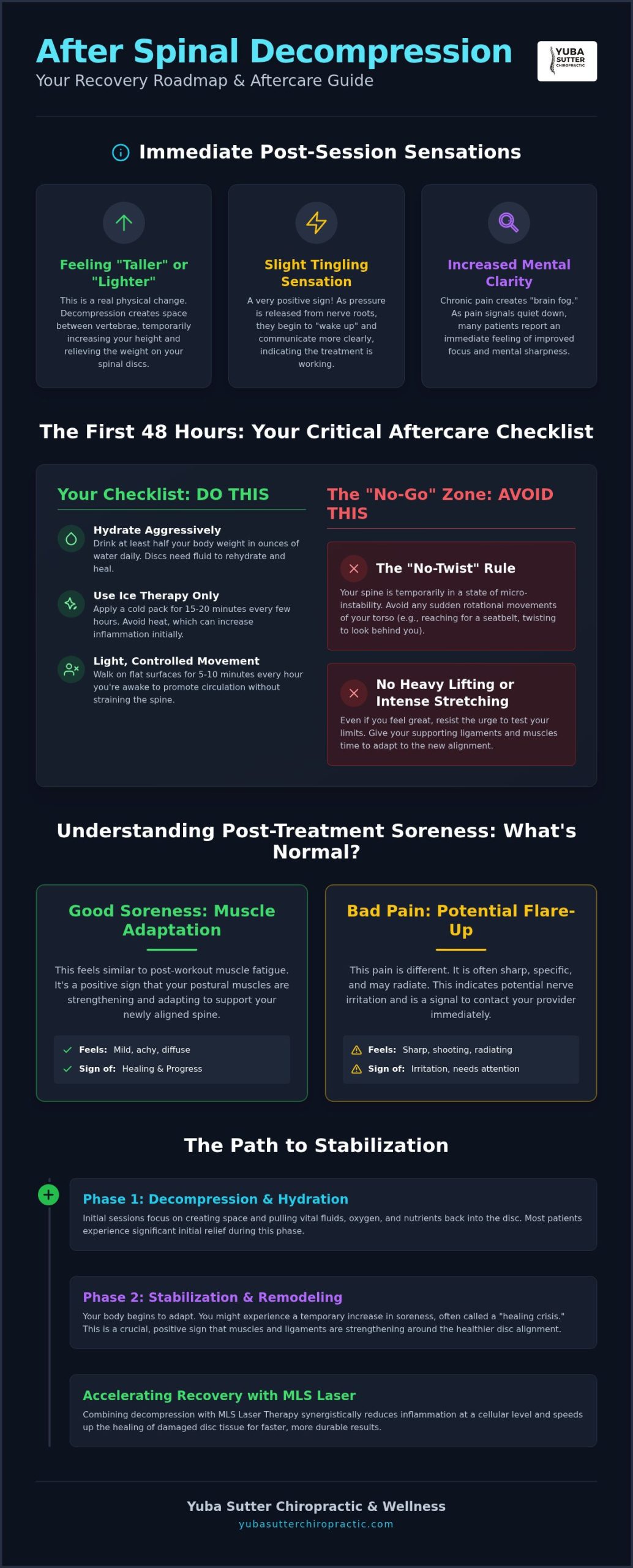
Walking away from the DRX9000 table for the first time is a unique experience that often surprises patients. Many people report feeling “taller” or “lighter” immediately. This isn’t just an illusion. Spinal decompression works by gently stretching the spine to create space between the vertebrae. This physical expansion can temporarily increase your height by a fraction of an inch as the compressed discs are relieved of the weight they’ve been carrying. It’s a physical relief that many of our Marysville and Yuba City neighbors describe as a heavy weight finally being lifted off their shoulders.
You might also notice a slight tingling sensation in your legs or arms. This is usually a very positive sign. As the DRX9000 releases pressure from the nerve roots, the nerves begin to communicate more clearly. Think of it like a limb “waking up” after it has fallen asleep. While this sensation is temporary, it indicates that the treatment is successfully reaching the source of your discomfort. When you understand what to expect after spinal decompression therapy, these small shifts feel like milestones rather than mysteries.
Chronic back pain often causes a subtle “brain fog” because the brain is constantly processing pain signals. When those signals finally quiet down, many patients report an immediate sense of mental clarity. To help your body process these changes, we always include a “cool down” period. We often use cold packs or a short period of rest immediately following the table time. This helps settle the surrounding tissues and prevents minor inflammation from the stretching process.
The Role of Disc Rehydration
The DRX9000 creates a specific vacuum effect known as negative intradiscal pressure. This vacuum pulls essential nutrients, oxygen, and fluids back into the disc space. You might feel a strange sensation of “fullness” in your lower back as this rehydration begins. It’s a sign that the biological environment of your spine is shifting from a state of decay to a state of repair. This fluid exchange is vital for the long term health of your spinal discs.
Initial Mobility Gains vs. Limitations
It’s tempting to test your range of motion when the sharp pain subsides. You might feel more flexible than you have in years, but you must resist the urge to overdo it. Micro-instability is the temporary state of the spine post-decompression where the supporting ligaments and muscles haven’t yet adapted to the new, healthier alignment. Even if you feel great, you should avoid heavy lifting or intense stretching immediately after your session. Your spine needs time to stabilize in its corrected position to ensure the results last.
The First 48 Hours: Your Critical Aftercare Checklist
The first two days following your treatment are the most important for setting the foundation of your recovery. During this window, your spinal discs are actively absorbing fluids and nutrients. Knowing what to expect after spinal decompression therapy during this period helps you avoid common pitfalls that could stall your progress. Your primary goal is to protect the space created by the DRX9000 while managing the natural inflammatory response that occurs when tissues begin to heal.
Hydration is a biological requirement for success. Because the decompression process creates a vacuum within the disc, your body needs a surplus of water to fill that space and rehydrate the nucleus pulposus. We recommend drinking at least half your body weight in ounces of water daily. To manage inflammation, stick strictly to ice therapy. Apply a cold pack to the treated area for 15 to 20 minutes every few hours. Avoid heat during these first 48 hours, as it can increase swelling in the newly decompressed joint space.
Movement is necessary, but it must be controlled. We suggest light walking for 5 to 10 minutes every hour while you’re awake. For our Yuba City patients, a gentle stroll on a flat surface like a sidewalk or a hallway is perfect. Avoid uneven terrain or hills. You must also follow the “No-Twist” rule. This means avoiding any sudden rotational movements of your torso, such as reaching for a seatbelt or twisting to look behind you. If you’re unsure about specific movements, our team at Yuba Sutter Chiropractic & Wellness can provide a personalized movement plan.
Sleep Positions for Spinal Support
How you rest is just as important as how you move. If you’re a back sleeper, place a pillow under your knees to maintain the natural curve of your lower back and reduce tension. Side sleepers should place a firm pillow between their knees to keep the hips level and prevent the pelvis from tilting, which can put pressure on the lumbar discs. Stomach sleeping is strictly prohibited during this phase. It forces your neck into a sharp turn and arches your back, which can immediately undo the decompression achieved during your session.
Daily Activities and Workplace Adjustments
Your daily routine needs minor tweaks to protect your spine. When sitting, choose a supportive, high-back chair rather than a soft couch that allows you to slump. If you work in the Yuba-Sutter agricultural sector or perform manual labor, transition to light duty immediately. Don’t lift anything heavier than a gallon of milk, which is about 8 pounds. For those in the fields or orchards, avoid climbing onto tractors or bending repeatedly at the waist. These small adjustments ensure that the “micro-instability” mentioned earlier doesn’t lead to a setback.
For remote professionals or entrepreneurs in the Sacramento area who need a more ergonomic and professional environment during their recovery, you can explore Private Offices at Citizens Business Center to ensure your workspace supports your health goals.
The Healing Timeline: From First Session to Stabilization
Healing your spine isn’t a single event; it’s a cumulative process that requires consistency. While the DRX9000 provides immediate pressure relief, your body needs time to rebuild the structural integrity of the disc and surrounding tissues. Understanding what to expect after spinal decompression therapy across several weeks helps you stay committed to the process, even on days when progress feels subtle. Most patients follow a three phase timeline that moves from crisis management to long term stabilization.
Phase 1 typically covers sessions one through five. During this initial stage, the primary goal is reducing acute inflammation and relieving the mechanical pressure on your nerves. You might notice that the sharp, “electric” pains begin to dull. Phase 2, which usually occurs between sessions six and twelve, is often characterized by the “Healing Crisis.” As your spine begins to realign and the discs rehydrate, the muscles that have been “guarding” the area for years must finally adapt to a new position. This can lead to temporary muscle soreness, which is a normal sign of structural change.
Phase 3 occurs during sessions thirteen through twenty and beyond. This is the stabilization phase where the focus shifts to strengthening the spinal ligaments. By this point, the vacuum effect created by the table has helped the disc material move away from the nerve root, and your body is working to “lock in” these changes. Skipping sessions during this phase is the most common cause of relapse, as the tissues haven’t yet reached full permanent stability.
Biological Milestones of Disc Repair
The transition from temporary relief to permanent structural support happens in stages. Nerve fiber repair is a slow biological process, and you’ll likely notice your radiating sciatica pain receding from the foot toward the calf, then the thigh, and finally the lower back. We encourage you to track your progress using functional goals. Instead of just focusing on a pain scale of one to ten, celebrate milestones like being able to sit through a 20 minute dinner or walking to the mailbox without hesitation. These functional gains are the true markers of disc rehydration and repair.
When to Expect Lasting Results
There is a significant difference between feeling better and being healed. Many patients feel 50 percent better after just a few sessions, but the underlying disc injury still requires the full protocol to stabilize. 2026 clinical standards emphasize structural stabilization over temporary symptom relief, meaning we don’t stop when the pain stops. Completing the full course of treatment ensures that the disc remains hydrated and the surrounding ligaments are strong enough to support your daily activities in Marysville or Yuba City without the risk of the injury returning.
Managing Post-Treatment Soreness: What’s Normal?
It is a common misconception that feeling any discomfort after a session means the treatment didn’t work. In reality, many patients experience a specific type of ache as their body adjusts to its new alignment. Knowing what to expect after spinal decompression therapy helps you distinguish between the “good” soreness of a changing spine and the sharp pain of a flare-up. This distinction is especially important for our active Yuba City neighbors who may be returning to physical tasks in the orchards or local job sites.
Your back muscles have likely been in a state of “muscle guarding” for months or even years. When a disc is injured, the surrounding muscles lock into a spasm to protect the area. As the DRX9000 gently creates space and stretches these tissues, those “locked” muscles are finally forced to lengthen. This reset often results in a dull, heavy ache similar to what you feel after a new gym workout. While sedentary patients might feel this less intensely, those with higher baseline muscle tension often notice it more during the first few weeks of care.
To manage this naturally, we prioritize ice therapy and hydration over anti-inflammatory drugs. While it’s tempting to reach for a pill, the body’s natural inflammatory response is a necessary part of the disc healing process. If you’re feeling tight, a short walk or a 15 minute ice session is usually all you need to settle the tissues. If you have questions about your specific recovery path, you can always contact our Yuba City team for a quick check-in.
The “Good” Kind of Soreness
Normal post-treatment soreness usually peaks about four to six hours after your session. It typically feels like a deep muscle ache rather than a sharp, localized pain. Because the DRX9000 is stretching ligaments and tendons that haven’t moved properly in a long time, this sensation is a sign of structural progress. Most patients find that this feeling fades completely by the next morning after a good night’s rest in a supportive sleep position.
Red Flags: When to Contact Yuba Sutter Chiropractic
While soreness is normal, we want you to watch for “peripheralization.” This is when pain moves further away from your spine and down into your legs or feet. Conversely, “centralization”—where pain moves out of your leg and stays in your lower back—is a major sign of healing. You should call our office immediately if you experience any of the following:
- Sudden, unexplained weakness in your legs or “foot drop.”
- A loss of bowel or bladder control.
- Sharp, stabbing spikes of pain that don’t subside with ice.
- A significant increase in numbness that doesn’t go away after 24 hours.
Our team is here to support you through every stage of this transition. We prefer that you call us with a concern rather than worrying at home; your peace of mind is a vital part of the healing environment we strive to create.
Maximizing Your Results at Yuba Sutter Chiropractic & Wellness
At Yuba Sutter Chiropractic & Wellness, we don’t just treat symptoms; we focus on root-cause healing. When you understand what to expect after spinal decompression therapy, you realize that the DRX9000 is only one part of a larger success story. This system is the gold standard used by specialized clinics like Coral Way Disc Center because it uses high-speed computer sensors to bypass the body’s natural muscle guarding response. Unlike standard traction tables that can cause muscles to spasm, the DRX9000 is precise and gentle, ensuring the vacuum effect reaches the specific disc that needs it most.
MLS Laser Therapy is a game changer for post-session comfort. It helps flush out the metabolic waste that causes that “workout” soreness in your back muscles. By combining this with Softwave Shockwave Therapy and Customized Orthotics, we create a comprehensive environment where your spine can thrive. This multi-layered approach is why so many of our patients see results even when other treatments have failed.
The Yuba City Community Approach
We are deeply committed to helping our Marysville and Sutter neighbors stay active and avoid the operating room. Your recovery is a marathon, not a sprint, and we’re here to guide you every step of the way. Staying on track with your personalized recovery plan is easy with our local team. We encourage you to schedule your follow-up sessions consistently to maintain the momentum of your healing journey. You have the power to reclaim your health, and we have the tools to help you get there.
Your Path to Lasting Spinal Health
Recovery from a herniated disc or sciatica doesn’t happen by accident. It’s the result of combining advanced DRX9000 technology with the proactive steps you take at home. By prioritizing hydration, following the “no-twist” rule, and staying consistent with your treatment timeline, you’re giving your body the best possible chance to heal from the root cause. We focus on healing the whole person, not just the spine, to ensure your results are permanent.
Understanding exactly what to expect after spinal decompression therapy empowers you to take charge of your health. Whether you live in Yuba City, Marysville, or the surrounding Sutter County area, our team is dedicated to providing the non-surgical relief you deserve. We look forward to being your partners in this journey from chronic discomfort to total wellness.
Schedule your DRX9000 consultation at Yuba Sutter Chiropractic & Wellness today and start your journey toward a stronger, healthier spine. You don’t have to navigate this recovery alone; we’re here to support you every step of the way.
Frequently Asked Questions
Is it normal to feel more pain after spinal decompression?
It is common to feel a dull ache or mild muscle soreness after your initial sessions. This happens because the DRX9000 stretches ligaments and muscles that have been tight or in spasm for a long time. However, you should not feel a significant increase in sharp or radiating pain. If you experience new weakness or a sudden spike in intensity, contact our office immediately. Most post-session discomfort is temporary and settles within 24 hours.
How many sessions of spinal decompression do I need before I see results?
While every patient is unique, most people begin to feel noticeable relief within 5 to 10 sessions. A complete treatment plan typically consists of 15 to 30 sessions to achieve long term stabilization. Understanding what to expect after spinal decompression therapy involves knowing that healing is cumulative. Even if you feel better after just a few visits, finishing the full protocol is necessary to ensure the disc remains hydrated and the surrounding tissues stay strong.
Can I go back to work immediately after my spinal decompression treatment?
Most patients can return to sedentary office work immediately after a session. If your job involves heavy lifting or repetitive twisting, we recommend transitioning to light duty during the first few weeks of care. Protecting your spine during the micro-instability phase is vital for success. We can provide specific guidance for Yuba City agricultural workers or manual laborers to ensure your workplace habits don’t interfere with the disc rehydration process and your overall recovery.
What should I avoid doing after a spinal decompression session?
You should strictly avoid heavy lifting, high impact activities, and any sudden twisting of your torso. Don’t test your range of motion just because you feel less pain. Avoid sitting on soft, unsupportive couches for long periods. These activities can put undue stress on the newly created space in your spine. Staying mindful of your posture and following the “no-twist” rule ensures the negative pressure created during your session remains effective for your long term healing.
How much water should I drink after my DRX9000 session?
We recommend drinking at least half your body weight in ounces of water daily to support the rehydration of your discs. For example, if you weigh 180 pounds, aim for 90 ounces of water. This is a critical part of what to expect after spinal decompression therapy because the vacuum effect created by the DRX9000 requires a surplus of fluids to effectively plump up the disc material and flush out inflammatory toxins from the surrounding tissues.
Can I exercise between spinal decompression appointments?
Light walking is the best form of exercise between your appointments. It encourages blood flow and helps nutrients reach the healing disc without putting excessive strain on the spine. You should avoid weightlifting, running, or intense yoga classes until our team clears you for these activities. We gradually introduce specific stabilization exercises later in your protocol once the initial inflammation has subsided and your spinal structure has reached a higher level of permanent stability.
How should I sit or sleep after my treatment to protect my discs?
Use firm, supportive chairs with your feet flat on the floor and avoid slumping. For sleep, back sleepers should place a pillow under their knees to maintain the lumbar curve. Side sleepers should place a pillow between their knees to keep the pelvis neutral. Avoid sleeping on your stomach at all costs. These positions help maintain the alignment achieved during your session and prevent the discs from being compressed while your body rests and repairs.
What happens if I miss a session in my decompression protocol?
Missing a session can slow down your overall progress because the treatment is cumulative. Each DRX9000 session builds on the negative pressure created by the previous one. When gaps occur in your schedule, the discs may begin to lose some of the hydration and space gained during earlier visits. If you must miss an appointment, try to reschedule as soon as possible to keep your recovery timeline on track and maintain healing momentum.