

Custom Orthotics in Yuba City: Find the Right Fit in 2026
Could the right foot support make everyday movement more comfortable without promising to fix every ache or alignment concern? If you’re exploring custom orthotics Yuba City, you may be weighing a personalized option against store-bought inserts. The best place to start is with your feet, your footwear, and the activities you want support for.
Custom orthotics are considered around an individual’s needs, while retail inserts are made for general cushioning or support. Either option may take some adjustment, and neither is a guaranteed solution for every concern. Understanding what you want the support to do, and how it fits in your shoes, can help you make a more informed choice.
This guide explains what custom orthotics can and can’t be expected to do, what to consider when assessing fit, and how foot support relates to movement without correcting spinal conditions. It also covers Yuba Sutter Chiropractic & Wellness’s custom-scanned Pedics Sensori Orthotics, a local option for personalized foot support.
Key Takeaways
- Consider personalized foot support when your needs, footwear, or activities call for more than general cushioning, while keeping expectations realistic.
- Discuss your goals and footwear, and use custom scanning as one part of the orthotics conversation.
- Compare custom orthotics with store-bought inserts by personalization, intended use, selection, and fit.
- Prepare for a fitting by bringing commonly worn shoes and describing your daily activities and comfort concerns.
- Explore custom orthotics Yuba City through Yuba Sutter Chiropractic & Wellness’s custom-scanned Pedics Sensori Orthotics.
What Are Custom Orthotics, and Who May Consider Them in Yuba City?
If your feet feel uncomfortable during a typical day, or your usual shoes don’t seem to offer the support you need, custom orthotics may be worth discussing. The right option depends on your needs, footwear, and reason for seeking support.
Custom orthotics are foot-support devices selected or made with an individual’s needs and intended use in mind. They differ from general inserts, but they aren’t a guaranteed cure for pain or a substitute for diagnosing its cause. The broader field of Orthotics includes devices intended to support or influence how parts of the body function.
How Are Custom Orthotics Different From Regular Shoe Inserts?
A ready-made insert is designed for general use and may suit someone looking for basic cushioning or support. Custom orthotics take an individualized approach, with the person’s needs and intended use helping guide the option. Customization alone doesn’t make an insert the right choice for everyone.
Fit matters in the shoes you actually wear. Shoe shape and interior space, how long you wear the shoes, and the activities you do in them can all affect comfort. An insert that fits everyday shoes, for example, may not fit a narrower pair. Consider the design, footwear, and purpose together rather than assuming that a more personalized option will always work better.
What Concerns Might Lead Someone to Explore Custom Orthotics?
Foot discomfort is one reason to look into support options. You may also find your shoes uncomfortable during extended wear, or notice that foot comfort affects walking, standing, or other daily activities. These are useful details to share when seeking guidance, but they don’t identify a cause or point to one solution on their own.
Foot mechanics contribute to movement, so support may be discussed in the wider context of posture and mobility. That doesn’t mean an orthotic diagnoses or corrects a spinal condition. A conversation about your concerns can help clarify what foot support may reasonably address.
For people exploring custom orthotics Yuba City, Yuba Sutter Chiropractic & Wellness offers custom-scanned Pedics Sensori Orthotics. Custom scanning is part of a personalized discussion about foot support, with your footwear and activities in view. The practice serves Yuba City and nearby communities, including Marysville, Live Oak, Gridley, Sutter, Colusa, Plumas Lake, Olivehurst, and Wheatland.
How Custom-Scanned Orthotics Are Considered and Fitted
A scan is one part of an orthotics conversation, not a decision by itself. When considering custom orthotics Yuba City, start by describing what you need, then discuss whether custom support may suit those needs. Scanning can inform the conversation, while fit and intended use should be considered in relation to your footwear and activities.
What Information Helps Guide an Orthotics Assessment?
Useful context goes beyond where your feet feel uncomfortable. Describe the shoes you wear most, what a typical day involves, and which activities bring on or ease discomfort. Work shoes worn for long periods of standing may raise different fit considerations from walking or exercise shoes. Your goals matter too: you may be looking for support during daily routines, in a particular pair of shoes, or during an activity you want to continue comfortably.
Relevant health history can add context. Symptoms alone don’t identify their cause or determine whether orthotics are appropriate. An individualized discussion helps keep the decision focused on your situation and your expectations grounded.
What Does Custom Scanning Contribute to the Process?
Custom scanning gathers information about the feet to inform a personalized orthotics discussion. It contributes to the process, but it doesn’t diagnose the cause of discomfort or guarantee that a particular device will address every concern. Yuba Sutter Chiropractic & Wellness offers custom-scanned Pedics Sensori Orthotics.
Fit and intended use matter because an orthotic needs to work with the shoes and activities you have in mind. Support for everyday footwear may need to be considered differently from support for work or exercise. Bring the shoes you wear most often and explain how you plan to use the orthotics.
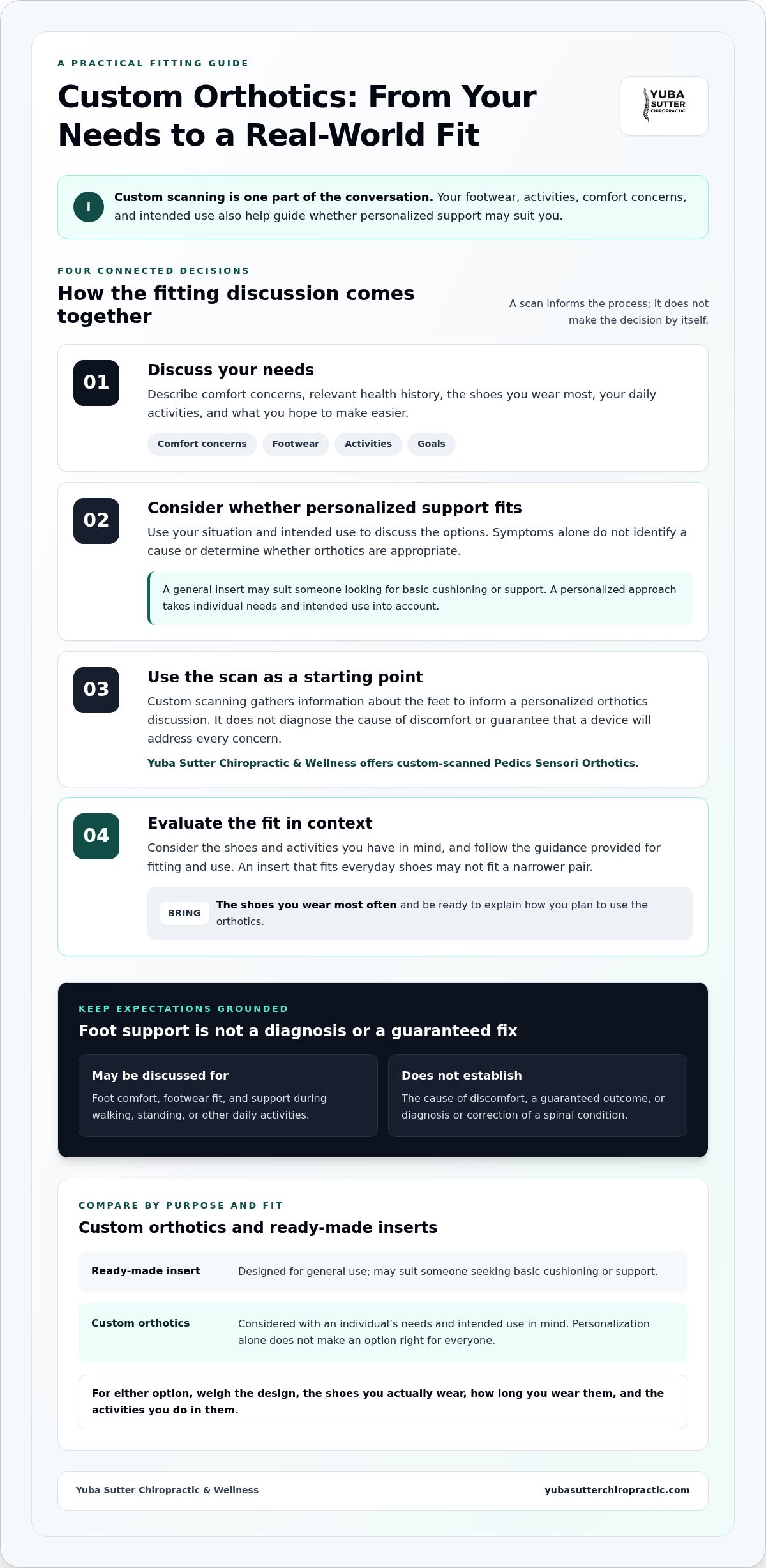
Think of the process as a set of connected decisions:
- Discuss your needs. Describe comfort concerns, relevant health history, footwear, daily activities, and what you hope to make easier.
- Consider the option. Use that context to discuss whether personalized support may suit you, rather than choosing based on symptoms alone.
- Use the scan as a starting point. Custom scanning contributes information to the orthotics discussion, but doesn’t establish a diagnosis or guarantee an outcome.
- Evaluate the fit in context. Consider the intended shoes and activities, and follow the guidance provided for fitting and use.
This approach keeps the focus on the practical decisions that shape a good fit. To learn about the local custom-scanned option, explore custom orthotics at Yuba Sutter Chiropractic & Wellness.
Custom Orthotics vs. Store-Bought Inserts: How to Compare Your Options
Choosing between a ready-made insert and a custom option isn’t a contest with one winner for everyone. A general insert may meet a straightforward comfort preference, while a recurring fit challenge or a specific activity may make individualized guidance useful. Compare the options against your shoes, routine, and reason for seeking support.
| Consideration | Store-bought insert | Custom orthotics |
|---|---|---|
| Personalization | Designed for general use rather than one person’s specific needs. | Selected or made with an individual’s needs in mind. |
| Selection process | You choose among ready-made options based on comfort and footwear. | A personalized discussion and custom scanning can inform the option. |
| Intended use | May suit a general cushioning or support preference. | May be considered for particular footwear, activities, or support needs. |
| Fit considerations | Check whether it fits the shoe and feels comfortable during use. | Consider how its fit relates to the shoes and activities it’s intended for. |
When Might an Off-the-Shelf Insert Be a Reasonable Starting Point?
If you’re looking for a general comfort change or prefer a certain feel in your shoes, a ready-made insert may be a reasonable place to start. Check that it sits properly in the shoe, leaves enough room for your foot, and feels comfortable during the activities you have in mind. Notice how it feels with use rather than assuming it’s suitable just because it fits on the shelf.
Persistent, worsening, or unexplained symptoms deserve qualified guidance. Choosing an insert can’t identify what’s causing discomfort, and symptoms alone don’t establish that custom orthotics are needed.
When Is It Worth Discussing a Custom-Scanned Option?
If inserts repeatedly feel mismatched with your usual footwear, or you have a distinct support need related to work, walking, or exercise, a personalized conversation may be useful. That doesn’t mean custom is automatically the better choice. Your needs, the purpose of support, and how the option fits together all matter. Bring specific examples of when a fit problem arises so the discussion reflects your routine.
For people exploring custom orthotics Yuba City, Yuba Sutter Chiropractic & Wellness offers custom-scanned Pedics Sensori Orthotics. Scanning can inform a discussion about personalized foot support without promising a particular result or suggesting that everyone needs custom devices.
The appropriate choice depends on your fit, needs, and professional guidance, not a blanket rule that custom or store-bought inserts are best. Consider what you want support for, how your footwear accommodates an insert, and whether your concerns call for an individualized discussion.
How to Prepare for Custom Orthotics and Judge the Fit
A little preparation can make an orthotics conversation more useful. Think about when and where you wear your shoes, what you want support to help with, and what feels comfortable or uncomfortable during the day. These details help the care team understand your routine without requiring you to diagnose the cause yourself.
What Should You Bring to an Orthotics Conversation?
Bring the shoes you wear most often, along with footwear for the activity where you’re interested in support. That might include your everyday shoes and a pair you use for work, walking, or exercise. Having the shoes on hand keeps fit considerations connected to how you’ll actually use the orthotics.
Before the conversation, note when discomfort tends to occur and whether anything changes it. You might notice a difference after standing for a long time, during a particular activity, or when switching shoes. Share relevant health history and bring questions about daily use. For example, ask how the orthotics are intended to fit into your routine and what instructions to follow when you begin using them.
- Bring commonly worn shoes and footwear for your main activity.
- Describe your usual work, walking, exercise, or standing routine.
- Note when discomfort occurs and what seems to affect it.
- Share relevant health history and questions about use and fit.
How Can You Tell Whether the Fit Needs Attention?
As you use an orthotic, pay attention to how it feels in the shoe and during ordinary movement. Notice whether the shoe still fits comfortably, whether walking feels easy, and whether you experience rubbing, pressure, or new discomfort. These observations are useful to report, but they don’t identify a fit problem or its cause by themselves.
Follow the fitting and use instructions provided by your care team rather than relying on a generic break-in schedule. Guidance should be specific to your situation. If rubbing, pressure, or discomfort persists, worsens, or feels new, contact the care team to discuss it. Don’t trim, reshape, or otherwise alter the orthotics yourself unless your care team directs you to do so.
A brief note about the shoes you wore, the activity, and what you noticed can help you describe a pattern. You don’t need a formal tracking system. A few clear details are often more useful than a general impression that the fit feels “off.”
If you’re considering custom orthotics Yuba City, Yuba Sutter Chiropractic & Wellness offers custom-scanned Pedics Sensori Orthotics. Discuss custom-scanned orthotics as a way to explore foot support in the context of your footwear and daily activities.
Explore Custom-Scanned Orthotics at Yuba Sutter Chiropractic & Wellness
Whether to explore orthotics depends on your needs, the shoes you wear, and the activities you want support for. A store-bought insert may suit a general comfort preference; a recurring fit challenge or a specific use may make an individualized conversation worthwhile. Neither option is automatically right for everyone, and foot support shouldn’t be treated as a guaranteed fix for pain or alignment concerns.
A Local Option for Yuba City Residents
Yuba Sutter Chiropractic & Wellness is located in Yuba City and serves nearby communities, including Marysville, Live Oak, Gridley, Sutter, Colusa, Plumas Lake, Olivehurst, and Wheatland. The practice offers custom-scanned Pedics Sensori Orthotics, with scanning contributing to a personalized discussion about foot support. Bring your footwear, activities, and comfort needs into the conversation.
Foot support can be part of a broader conversation about posture, movement, and spinal alignment. That doesn’t mean orthotics correct spinal conditions. Instead, it can be useful to discuss how your feet fit into everyday movement and what you hope to address, without assuming the device will produce a particular outcome.
Make the Next Conversation Useful
If you’re considering custom orthotics Yuba City, bring the shoes you wear most, describe the activities you have in mind, and share your comfort concerns and questions. Those practical details help keep the conversation grounded in your routine. You don’t need to arrive with a diagnosis or a conclusion about which option you need. Start with what you notice and what you want to understand.
For a broader look at how chiropractic care may fit into ongoing wellness, explore the practice’s article on long-term chiropractic adjustments. Orthotics and chiropractic care are distinct topics, but both can be discussed in relation to your individual needs and movement goals.
Learn about the practice’s custom-scanned orthotics and consider whether personalized foot support suits your needs. Explore custom orthotics at Yuba Sutter Chiropractic & Wellness.
Take the Next Step Toward a Better-Informed Fit
Your next step doesn’t have to be a commitment to custom support. Start with a conversation about what you want your footwear to help you do and whether an individualized option makes sense. Keep expectations practical: the goal is to explore support suited to your needs, not to expect one device to resolve every concern.
For people considering custom orthotics Yuba City, Yuba Sutter Chiropractic & Wellness offers custom-scanned Pedics Sensori Orthotics at its Yuba City practice. The practice serves nearby communities, including Marysville, Live Oak, Gridley, Sutter, Colusa, Plumas Lake, Olivehurst, and Wheatland. Bring your questions and the activities you want to discuss.
Explore custom orthotics at Yuba Sutter Chiropractic & Wellness and take a practical next step toward understanding your foot-support options.
Frequently Asked Questions
Are custom orthotics worth it?
Custom orthotics may be worth exploring if your support needs are specific, but their value depends on fit, footwear, and intended activities. A retail insert is designed for general use, while a custom option is considered around an individual’s needs. For example, someone whose work shoes differ from their walking shoes may want to discuss both pairs. If concerns persist, an appropriate assessment can help clarify next steps without promising symptom relief.
Can custom orthotics help with foot pain?
Custom orthotics may be considered as part of an individualized approach to foot support, but they don’t identify or address every cause of pain. Discomfort can have different explanations, so the right response depends on your symptoms and overall needs. If you’re researching custom orthotics Yuba City, Yuba Sutter Chiropractic & Wellness serves Yuba City and communities including Marysville, Live Oak, Gridley, Sutter, Colusa, Plumas Lake, Olivehurst, and Wheatland. Discuss persistent, worsening, or unexplained pain with a qualified clinician.
How long does it take to get used to custom orthotics?
Getting used to custom orthotics varies from person to person and can depend on the footwear and orthotic design. There isn’t one break-in schedule that fits everyone. Follow the fitting and use instructions provided for your situation. If you notice persistent discomfort, rubbing, or pressure, contact your care team to discuss what you’re experiencing. Don’t try to trim, reshape, or otherwise modify the device on your own.
Are custom orthotics better than store-bought inserts?
Neither option is universally better; the suitable choice depends on your goals, symptoms, shoes, and activities. A ready-made insert may meet a general comfort preference, while custom orthotics involve individual assessment and fit considerations. For instance, a person seeking a different feel in one everyday shoe may have different needs from someone exploring support for a specific activity. Compare options based on your circumstances, not on an assumption that customization guarantees a better result.
Do custom orthotics work in every pair of shoes?
No single orthotic should be assumed to fit every pair of shoes. Shoe shape, available interior space, and the orthotic’s design all affect how the combination feels. A roomy walking shoe and a close-fitting dress shoe, for example, may accommodate support differently. Bring the shoes you use most to a fitting conversation, and follow the care team’s footwear guidance. Don’t alter the device to make it fit without professional direction.
Can children use custom orthotics?
Whether custom orthotics are appropriate for a child depends on the child’s needs, activities, footwear, and development. A child who finds a particular activity uncomfortable may need a different discussion from one whose concerns arise during everyday routines. There’s no blanket recommendation that every child needs orthotics. Parents can share specific observations with an appropriate clinician, especially if symptoms persist or interfere with walking, play, school, or other daily activities.
Does insurance cover custom orthotics?
Insurance coverage for custom orthotics depends on the individual plan, clinical circumstances, and applicable requirements. Don’t assume that a device will be covered or reimbursed based on another person’s experience. Review your plan documents and contact your insurer to ask about benefits, eligibility criteria, and any documentation they require. Coverage decisions are separate from whether orthotics may be suitable for your needs, which can be discussed with a qualified clinician.