

DOT Physical Exams Near You: Prices and What to Expect
A DOT physical is more than a form to complete: it assesses whether a commercial driver is medically fit to drive safely. If you’re searching for a DOT physical exam near me, the exam must be performed by a medical examiner listed on the FMCSA National Registry for that examiner to sign your medical card. Knowing what the exam covers can make the appointment more straightforward.
It’s reasonable to want clear answers before booking, especially about what to bring, how the exam works, and what affects the price. This guide explains the main checks, how to prepare, and what to expect at an appointment. It also describes how exam scope and any additional services can affect the price, without treating one cost as right for every situation.
You’ll learn what the medical examiner reviews, how vision and blood pressure checks fit into the process, and what can affect how long your certificate remains valid. With some preparation, you can arrive ready to discuss your health history and complete the exam with greater confidence.
Key Takeaways
- Identify the vehicle and work situations that can make a DOT physical necessary, and understand why examiner listing status matters.
- Learn how vision and blood pressure results fit into the medical certification process.
- Use a practical packing list to arrive ready, including health records and any vision aids you use.
- Choose an appointment approach that suits your schedule and understand what can influence the exam’s price.
- See how to plan for the exam and what to expect from the process, so you can make your next step with more confidence.
How do I find top-rated, certified DOT exam providers?
Start by confirming that a certified medical examiner listed on the FMCSA National Registry performs the exam. An urgent care, clinic, or pharmacy can provide a DOT physical if a listed examiner conducts it and signs the medical card.
FMCSA Medical Certification
FMCSA medical certification connects a commercial driver’s exam results with the medical card used to document qualification. Only a medical examiner listed on the FMCSA National Registry can sign a driver’s medical card. Before booking a DOT physical exam near me, check the examiner’s Registry listing, not just the clinic’s general medical services.
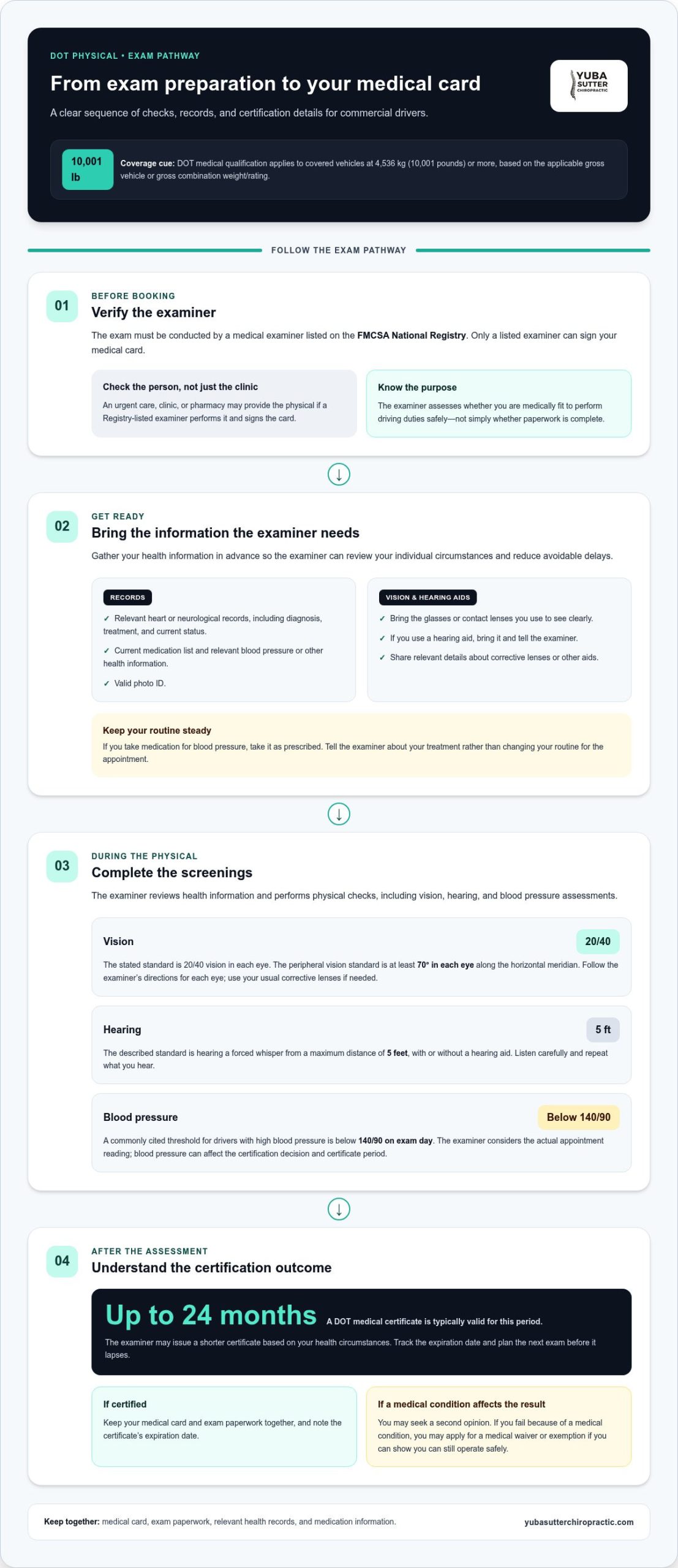
According to the Federal Motor Carrier Safety Administration, a DOT medical certificate is typically valid for up to 24 months. The examiner may issue a shorter certificate based on the driver’s health circumstances. Keep track of the certificate’s expiration date so you can plan the next exam before it lapses.
Medical Qualification and Exam Purpose
A DOT physical assesses whether a commercial driver can safely perform driving duties. The examiner reviews health information and completes the physical examination to evaluate medical qualification. According to the Federal Motor Carrier Safety Administration, covered vehicles include those with a gross vehicle weight rating or gross combination weight rating, or gross vehicle weight or gross combination weight, of 4,536 kg (10,001 pounds) or more, whichever is greater.
The exam assesses safe operation, not simply paperwork. Bring relevant medical records if you have a heart or neurological condition. Records describing your diagnosis, treatment, and current health status can give the examiner useful context during the assessment.
Prepare your records before the appointment. Include information about heart conditions, such as treatment history, and neurological conditions, such as a history of seizures or other relevant care. The examiner reviews your individual health information as part of the physical.
If you fail because of a medical condition, you may apply for a medical waiver or exemption if you can show that you can still operate a motor vehicle safely. You may also seek a second opinion. Keep your exam paperwork and relevant records together for any follow-up evaluation or application.
Use a simple booking checklist: confirm the examiner is listed on the FMCSA National Registry, identify the appointment as a DOT physical, and gather relevant medical records. Bring a valid photo ID and current medication list, too. These steps help the examiner review your information and reduce avoidable delays.
Vision and blood pressure checks
Vision, hearing, and blood pressure checks are key parts of the transportation physical examination. Knowing what to expect and bringing your usual vision aids and medication list can help you follow each step.
Vision Screening and Requirements
According to the Federal Motor Carrier Safety Administration, the DOT physical vision test checks for 20/40 vision in each eye. The screening evaluates each eye, so be ready to follow the examiner’s instructions during both checks. The stated peripheral vision standard is at least 70º in each eye along the horizontal meridian.
Bring the glasses or contact lenses you use to see clearly. If you wear them while driving, having them available lets you complete the vision screening with your usual aids. Share relevant details about your vision, including whether you use corrective lenses, so the examiner has context for the results.
Hearing is assessed separately from vision. According to the Federal Motor Carrier Safety Administration, the hearing standard described for commercial drivers is hearing a forced whisper from a maximum distance of 5 ft, with or without a hearing aid. Tell the examiner if you use a hearing aid, and have it with you for the test.
Follow the examiner’s directions for each eye and the hearing test. If you’re asked to cover one eye, keep the other open and follow the instructions. During the whisper test, listen carefully and repeat what you hear. This helps the examiner record the screening accurately.
Blood Pressure Checks
The examiner measures blood pressure as part of the physical examination. A high reading can affect the certification decision and the certificate period. A commonly cited threshold for drivers with high blood pressure is below 140/90 on the day of the DOT exam. The examiner considers the actual reading taken during your appointment.
If you manage blood pressure with medication, bring your current medication list and relevant health records. Take medications as prescribed, and tell the examiner about your treatment rather than changing your routine for the appointment. Share any recent blood pressure information you have, as it can provide context alongside the exam-day measurement.
Before your appointment, prepare these details:
- Pack your glasses, contact lenses, or hearing aid if you use them.
- Bring your current medication list and relevant records about vision, hearing, or blood pressure.
- Follow the examiner’s instructions during each screening and mention any aids you use.
Walk-ins and appointments
Walk-in access may suit a driver with a flexible schedule, while an appointment provides a planned arrival time for a DOT physical. Choose based on how firmly you need to coordinate the exam with work, travel, or employer paperwork.
Walk-In Availability
Some clinics accept walk-ins for DOT physicals, but an unscheduled visit does not reserve a place in the day’s queue. An appointment is a steadier option if your work schedule leaves little room for waiting. For example, a driver with a shift starting soon may prefer a booked visit over arriving without a set time.
Prepare your documents before leaving for an unscheduled exam. Bring photo identification, your current medication list, relevant medical records, and glasses or hearing aids if you use them. Having these items together helps you answer the examiner’s questions and reduces interruptions while your health history is reviewed.
Allow time for more than the drive to the clinic. A DOT physical includes paperwork, a health-history review, and physical screening, so arrival time alone doesn’t determine the visit’s length. A driver who needs to find medication details or records during the appointment may have extra steps to complete.
Walk-in timing depends on the clinic’s schedule and the patients ahead of you. If your employer has set a deadline, plan for possible waiting and paperwork. A walk-in means seeking an exam without a reserved time, not guaranteed immediate service or same-day completion.
Appointment and Same-Day Availability
Booking an appointment gives you a scheduled arrival time and can make it easier to fit the exam around work. Clinics may also accept walk-ins, and a medical examiner’s certificate can often be issued the same day when the driver passes the physical. The examination and required paperwork must still be completed before certification.
Organize your health records before the visit, then choose a time that allows for the exam and any follow-up steps. If the examiner needs more information about a health condition, that review can affect when the process is complete. Keep employer deadlines in mind as you plan.
Use this simple plan for your visit:
- Book an appointment if a scheduled arrival time matters to your workday.
- Choose a walk-in only if you can allow for a wait and the clinic accepts unscheduled DOT exams.
- Bring identification, medication details, relevant medical records, and any vision or hearing aids you use.
- Set aside time for both the examination and any paperwork your employer requires.
Arriving prepared gives you a clearer path through the appointment, whether you have a reserved time or are visiting as a walk-in.
Blood pressure and diabetes preparation
Blood pressure, diabetes history, and urinalysis can raise questions during a DOT physical. Prepare a clear account of your health, treatment, and recent concerns so you can discuss them directly during the appointment.
For drivers with high blood pressure, a commonly cited qualifying reading is below 140/90 on the day of the exam. The reading taken at the appointment matters, so bring your current medication list and relevant records. Tell the examiner which treatments you use and whether you have recent readings from your usual care.
Don’t change a prescribed medication routine to try to affect an exam result. Follow your clinician’s instructions and note any questions about dose timing before you arrive. If you take medication for blood pressure, bring its name and explain how it fits into your regular routine.
Prepare for questions about diabetes with accurate health details. Bring records describing your diagnosis, treatment, and current management, along with your medication list. If you track glucose readings as part of your care, organize that information so you can explain your routine and answer questions clearly.
Some drivers with diabetes or high blood pressure may receive a DOT medical certificate valid for only 12 months. The shorter period can mean preparing for certification more often than drivers who receive a longer certificate. Keep the expiration date with your driving paperwork and plan ahead for the next examination.
A urine test may be part of the physical examination. Follow the clinic’s appointment instructions about providing a sample, and share relevant health information if you have concerns about urinalysis. Don’t assume the urine check is a drug test: a typical DOT physical does not test for drugs, though a separate urine drug test may occur during pre-employment screening.
For blood pressure and pulse assessment, be ready to discuss your health history and treatment plainly. Mention symptoms or concerns that could affect driving, and describe any recent changes in care. If an urgent care visit led to a new diagnosis or medication, bring the related paperwork and explain when the change occurred.
- Bring medication details and relevant records about diabetes or blood pressure.
- Keep recent health information organized, including glucose readings if you track them.
- Follow appointment instructions for urinalysis and explain any related concerns.
- Record your certificate’s expiration date, especially if it is valid for 12 months.
DOT physical exam price
The price of a DOT physical varies by location and what the examination includes. Yuba Sutter Chiropractic & Wellness offers DOT Physicals in Yuba City; the price depends on the case and is provided after a quote request. Before planning your appointment or employment paperwork, understand what the quoted fee covers.
Several details can affect the work involved in an exam. The medical examiner reviews your health history, completes the physical examination, and records the outcome. If your history includes a condition that needs additional documentation, organizing and reviewing those records can affect the appointment’s scope. Bring relevant records and a medication list to provide a clear picture.
Ask what the quoted amount includes, such as the examination, required paperwork, and any follow-up visit. A separate service, such as a drug test for pre-employment screening, is different from a typical DOT physical. Knowing whether your employer or carrier requires another service helps distinguish the physical exam from other screening costs.
Timing can also shape your plans. If the medical examiner needs additional information, allow time for follow-up. For example, a driver asked to provide records related to a health condition may need to wait for those records to be reviewed. This is a scheduling consideration, not a reason to assume a particular fee.
To understand a quote, consider these practical points:
- Confirm that the quote is for a DOT physical examination, not a different occupational exam.
- Ask whether paperwork and the medical examiner’s certificate are part of the quoted service.
- Identify whether a separate employer-requested screening is included or billed separately.
- Have your health history and relevant records ready, especially if a condition needs documentation.
For a clear estimate for your situation, request a DOT physical quote. Sharing the type of exam you need and any employer paperwork requirements can help clarify what the quoted service covers. Avoid basing your budget on a price from another city, since location and exam details can differ.
Plan around the full appointment, not just the exam fee. Bring identification, medication details, and relevant medical records so the examiner can review your history efficiently. If your carrier or employer has a form or deadline, bring that information too. A prepared visit makes it easier to understand the quoted service and the next step in your certification process.
Yuba Sutter Chiropractic & Wellness: Auto Injury Relief
Yuba Sutter Chiropractic & Wellness offers DOT Physicals for drivers preparing for a medical examination. If a vehicle collision has also affected your comfort or movement, Auto Injury Relief and Chiropractic Care address a different need from driver certification. These concerns may call for separate appointments and conversations about your health.
For ongoing back concerns, DRX9000 Decompression is another care option offered by the practice. It does not replace a DOT physical or determine medical certification. Consider the service that matches your current need: a DOT exam for required driver paperwork, or care related to an auto injury or back concern.
Contact Yuba Sutter Chiropractic & Wellness or visit yubasutterchiropractic.com to take the next step.
Take the Next Step Toward Staying Work-Ready
A search for a DOT physical exam near me can start a broader plan for managing your health alongside work demands. Keep certification needs separate from care for pain or movement concerns. A DOT physical addresses medical qualification, while symptoms after a collision may call for a separate conversation about your well-being.
Yuba Sutter Chiropractic & Wellness offers Auto Injury Relief and Chiropractic Care for people seeking care after an auto injury. DRX9000 Decompression is another option for specific back concerns. These services address care needs, not DOT certification, so consider them when your next step involves injury-related discomfort rather than exam paperwork.
Give yourself room to act on both priorities: prepare for the work-related examination and seek appropriate care for concerns affecting daily life. Contact Yuba Sutter Chiropractic & Wellness to discuss a suitable next step. A thoughtful plan can help you move forward with greater clarity and confidence.
Frequently Asked Questions
What is a DOT physical?
A DOT physical is a medical examination used to assess whether a commercial driver can safely operate a vehicle. A medical examiner reviews health information and evaluates areas relevant to driving, including vision, hearing, and mobility. If the driver qualifies, the examiner may issue a medical certificate. The Federal Motor Carrier Safety Administration says a DOT medical certificate is typically valid for up to 24 months.
Who should get a DOT exam?
Drivers may need a DOT exam based on the vehicle they operate and the work they perform. According to the Federal Motor Carrier Safety Administration, qualifying situations include operating a vehicle designed to carry more than 15 people, or being paid to operate one designed for more than eight people. Covered vehicles can also meet specified weight thresholds. Check how your vehicle and driving duties fit these criteria.
What categories does the physical exam cover?
The examination reviews your health history and physical ability to perform commercial driving duties. It can include vision and hearing screening, blood pressure measurement, urinalysis, and checks of mobility, gripping ability, and cognitive state. Bring a medication list and relevant records so you can accurately describe your health and treatment. The examiner uses the full evaluation to assess medical qualification.
What happens if my physical reveals I have a medical problem?
A medical concern doesn’t automatically mean you have no next step. The examiner may need relevant records to understand your diagnosis, treatment, and current condition. If you fail because of a medical condition, you may apply for a waiver or exemption by showing you can still operate safely. You may also seek a second opinion. Keep your examination paperwork and supporting records organized for follow-up.
Where can I get a DOT physical exam near me?
Yuba Sutter Chiropractic & Wellness offers DOT Physicals in Yuba City. Drivers in Marysville, Live Oak, Gridley, Sutter, Colusa, Plumas Lake, Olivehurst, and Wheatland can consider this local option. The exam must be performed by a medical examiner listed on the FMCSA National Registry for the examiner to sign a driver’s medical card. Bring your identification and health information to the appointment.
How do I find an FMCSA-certified medical examiner nearby?
Use the FMCSA National Registry to find a listed medical examiner near your location. Search by location and review the examiner’s listing before booking, since only an examiner on the Registry can sign a driver’s medical card. For example, a driver arranging an exam in Yuba City can search for nearby examiners, then choose a suitable appointment location.
How much does a DOT physical exam cost near me?
The price depends on the case and is provided after a quote request. Cost factors include the examination’s scope, the records that need review, and whether an employer requires a separate screening. A typical DOT physical doesn’t test for drugs, while pre-employment processes may include a separate urine drug test. Clarify which services are part of your requested exam before budgeting.
Do I need an appointment for a DOT physical, and what should I bring?
Appointments are recommended during busy periods, although clinics may accept walk-ins. Bring a valid photo ID, your current medication list, relevant medical records, and glasses or contacts if you use them. A driver with diabetes, for example, can bring records explaining current management. If your employer has provided forms, take those too, so the clinic can account for the required paperwork during your visit.