

Hip Alignment Chiropractic in Sutter: What a Visit Involves
Hip pain doesn’t always come from the hip joint itself. A visit with a hip alignment chiropractor in Sutter typically starts with a discussion of your symptoms and health history, followed by an examination of posture, spinal and pelvic movement, and hip range of motion. These findings help shape a care plan around factors that may be contributing to your discomfort.
If your hip feels stiff, uneven, or sore, it’s natural to wonder whether the joint, surrounding muscles, spine, or sacroiliac (SI) joint is involved. The source of pain isn’t always clear from how it feels, so an assessment considers how these areas move and work together. Knowing what to expect from a hip alignment chiropractor in Sutter can make your visit more straightforward.
This guide explains how spinal or SI joint issues may relate to hip pain, what movement tests can reveal, and what treatment planning may involve. Understanding the process can help you feel informed about the next steps in your care.
Key Takeaways
- Hip discomfort can involve more than the joint itself, so consider how the spine, SI joint, muscles, and movement patterns may contribute.
- A chiropractic assessment looks at your symptoms and how your hips, pelvis, and spine move before care is planned.
- Adjustments and mobilization are approaches a chiropractor may consider based on the findings and your comfort.
- Treatment planning can also include movement guidance and exercises to support mobility and function.
- Understanding what’s driving the discomfort helps make the next steps more relevant to your needs and daily activities.
Causes of hip pain, including spinal and SI joint referral
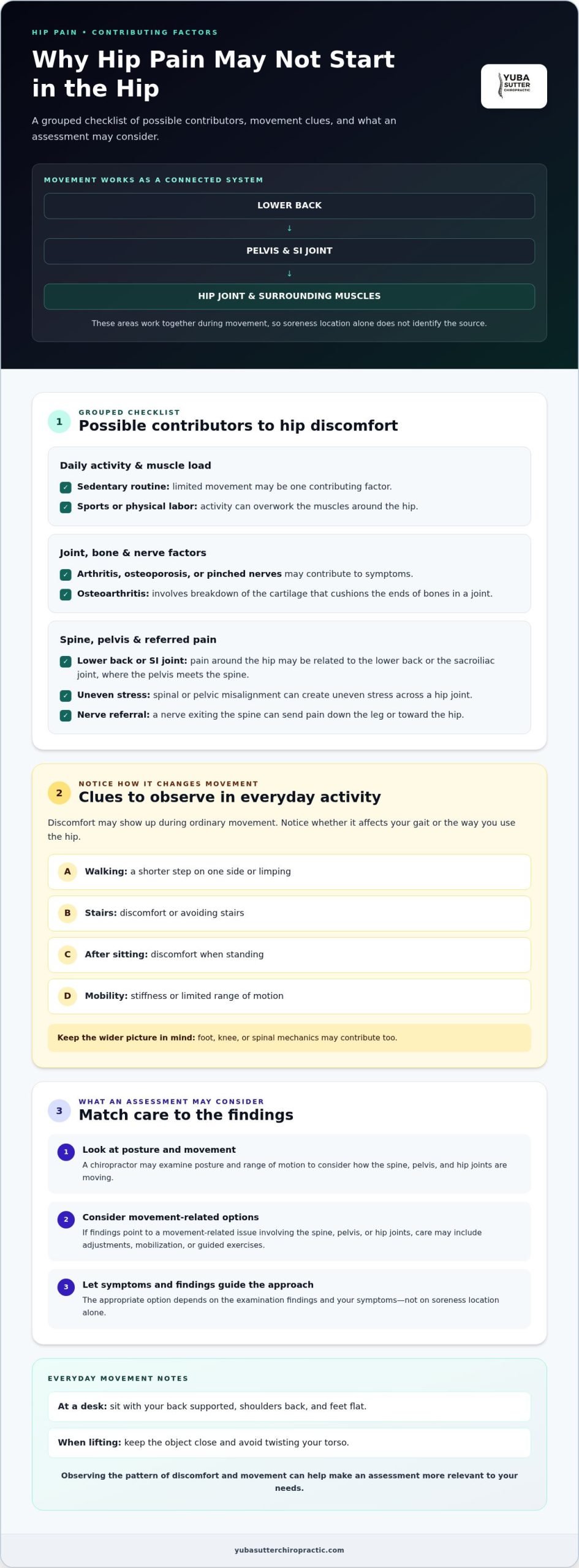
Hip alignment describes how the pelvis, hip joints, and surrounding muscles work together during movement. If their motion is uneven, symptoms may include hip pain, stiffness, or limited range of motion. Discomfort might appear while walking, climbing stairs, or standing after sitting.
Several factors may contribute. A sedentary routine can limit movement, while sports or physical labor can overwork the muscles around the hip. Arthritis, osteoporosis, and pinched nerves are other possible factors. Osteoarthritis involves breakdown of the cartilage that cushions the ends of bones in a joint.
Pain felt around the hip may also be related to the lower back or sacroiliac (SI) joint, where the pelvis meets the spine. Spinal or pelvic misalignment can create uneven stress across a hip joint. A nerve exiting the spine can also send pain down the leg or toward the hip, so the location of soreness alone doesn’t identify its cause.
Notice how discomfort affects your gait and movement. A shorter step on one side, limping, or avoiding stairs can indicate that pain is changing how you use the hip. Foot, knee, or spinal mechanics may contribute, too. At a desk, sit with your back supported, shoulders back, and feet flat. When lifting, keep the object close and avoid twisting your torso.
Chiropractic care may be an option when an assessment points to a movement-related issue involving the spine, pelvis, or hip joints. A chiropractor may examine posture and range of motion, then consider adjustments, mobilization, or guided exercises. These approaches may support joint function and mobility. The appropriate option depends on the findings and your symptoms.
When should hip pain be evaluated by a doctor instead of a chiropractor? Seek medical evaluation when symptoms may have a non-musculoskeletal cause, such as a hernia or urinary tract infection, or when severe pain limits daily activities. If pain is severe or substantially restricts everyday function, a new hip joint may be considered.
How do I find an in-network chiropractor near Sutter, CA? Use your health insurer’s provider directory or member services to identify in-network chiropractic care near Sutter. Before scheduling, review the provider’s listed location and your plan’s chiropractic benefits.
What are the risks or side effects of chiropractic adjustments for hip problems? A movement that isn’t suited to the underlying problem can aggravate discomfort. Share relevant history, including osteoporosis or a previous hip injury, and describe any change in symptoms during an adjustment.
For chronic hip pain, treatment planning can take the cause, walking tolerance, and range of motion into account. If everyday activities remain difficult, discuss medical evaluation and options such as hip replacement rather than assuming alignment treatment alone is the answer.
Chiropractic adjustments and mobilization
Chiropractic care may use hands-on adjustments to address movement in the spine, pelvis, and hip. The technique and force depend on the joint being treated and the examination findings.
Spinal Manipulation and Adjustments
Spinal manipulation is a hands-on technique that applies a controlled movement to a spinal joint. If an examination identifies a joint movement problem, a chiropractor may use a quick, controlled thrust. The aim is to address joint motion and related muscle tension, not simply make the pelvis look level. For example, restricted lower-back movement can affect how freely a person moves their hip.
Chiropractic adjustments may be paired with stretching or exercise recommendations. These options matter because joint movement is only one part of walking, bending, and maintaining balance. A chiropractor can compare posture and mobility before and after care, then consider how well the approach fits your response. An adjustment is not a substitute for understanding the examination findings.
Manual Hip Adjustments
A manual hip adjustment is a hands-on technique directed at the hip joint or surrounding pelvic joints. The chiropractor positions your body to target a specific area, then uses a controlled movement suited to the examination. This may address stiffness and support hip mobility. Your position, comfort, and ability to relax affect how the movement is applied.
Not every hip problem calls for the same technique. A clinician can assess whether restriction appears to involve the hip, pelvis, or spine, and whether gentler mobilization is more suitable than a quick thrust. That distinction matters when pain, limited movement, or muscle guarding makes a larger movement uncomfortable.
A leg pull is one example of a manual approach. You lie down while the chiropractor holds your ankle and pulls your leg in a straight line. This controlled traction may reduce muscle tightness and improve hip mobility. Unlike a thrust, it uses a steady pull rather than a quick force to the joint.
Adjustments to the pelvis and spine may also be considered together, since these areas contribute to hip movement. Afterward, the chiropractor may recommend stretches or exercises to support mobility. For example, a gentle stretch can address tightness, while a strengthening movement can help muscles support balance during walking. The choice should reflect movement findings, not a one-size-fits-all routine.
If you’re exploring hands-on chiropractic care, discuss which movements cause pain and what positions feel comfortable. Clear feedback helps guide the technique and supports a care plan focused on your mobility needs.
Chiropractic assessment of hip range of motion
A chiropractic assessment considers your health history, symptoms, physical examination, and diagnosis. For hip pain, a hip alignment chiropractor in Sutter may check how the hip moves, how the pelvis and spine contribute, and which movements reproduce symptoms. For example, difficulty turning the thigh inward can offer a different clue from pain that occurs only while walking. These findings help connect your reported discomfort with observable movement.
Be ready to describe when the problem began, where you feel it, and what changes it. Mention whether pain appears while sitting, climbing stairs, or getting out of a car. The chiropractor can compare those details with your posture and movement during the examination. If your hip feels stiff in the morning but loosens while walking, mention that. Specific examples are more useful than simply saying the hip feels “off.”
Range-of-motion checks assess how far and smoothly your hip moves in different directions. The chiropractor may compare both sides, noting pain, stiffness, or guarding. A movement that stops early can reflect discomfort or restriction, while a movement that feels normal may help narrow the assessment. The goal isn’t to force extra motion. Comfort matters, so report sharp pain or a sense of instability as your hip moves.
Some examinations include a clinical test for femoroacetabular impingement. The hip is flexed to 90 degrees, then rotated inward while the thigh moves toward the body. This position can reproduce symptoms associated with the test, but it is one part of an assessment, not a conclusion by itself. The chiropractor considers the response alongside your history and other physical findings.
Examination findings can guide a care plan. If movement is limited, the chiropractor may consider techniques such as mobilization, stretching, or exercises suited to your comfort and goals. Gentle hip stretches may address tightness, while strengthening exercises can support control during walking. The aim is to support mobility and restore useful movement, not to realign body parts based on appearance alone.
Describe what you can and cannot do, such as walking your usual route or putting on shoes. If an exercise or stretch is part of your plan, explain how it feels during and after practice. A hip alignment chiropractor in Sutter can use your feedback to refine recommendations and track meaningful changes in function, such as easier stair climbing or smoother hip movement.
A chiropractor may assess your hip’s range of motion before performing an adjustment. Comfort remains important during this check, so describe any pain, stiffness, or guarding as your hip moves. The findings can be considered alongside your health history and physical examination.
Chiropractic care and joint alignment
The hip joint, pelvis, and lower spine work together during walking, sitting, and standing. Chiropractic care considers how their movement and support relate to discomfort and everyday function.
Joint Mobility and Stability
Mobility is a joint’s ability to move through useful directions, while stability is its ability to stay supported during movement. Both matter when you take a step, rise from a chair, or turn your leg. Limited hip flexibility, for example, may shorten your stride, while reduced muscle support can make standing on one leg feel less steady.
The hip is a ball-and-socket joint: the rounded top of the thighbone moves within the pelvis. Muscles and ligaments around it help guide movement and provide support. A chiropractor may assess how the hip, pelvis, and spinal area move together, then consider whether gentle adjustments or exercises fit the findings.
Hip Joint Dysfunction
Hip joint dysfunction describes impaired movement or function that may contribute to pain, stiffness, or difficulty with daily activities. It doesn’t identify one specific cause. For instance, discomfort when turning your leg may differ from pain during a long walk, so the movement that triggers symptoms helps guide the assessment.
Hip dysplasia is a distinct condition in which the hip socket doesn’t fully cover the ball at the top of the thighbone. Symptoms may include groin or side-of-hip pain, limited range of motion, or a feeling that the hip is slipping. Chiropractic care doesn’t cure dysplasia, but may help manage symptoms and daily function.
Changes in one area can influence another. If hip movement feels restricted, your body may adjust how it bends or walks, shifting demands to the lower back or knees. A chiropractic examination can consider these connected movements rather than treating the hip as an isolated joint.
Care planning depends on the pattern of discomfort and which movements remain difficult. A chiropractor may use specific adjustments to the spine or pelvis and recommend exercises that support pelvic muscles and stability. For pelvic tilt, stretching and strengthening may help improve posture and reduce tension. These approaches focus on movement and function, not simply making the hips appear level.
Hip dysplasia may also contribute to compensatory problems in the lower back or knees. Describe where discomfort travels and which activities bring it on. For example, note whether groin pain appears while walking or back discomfort increases when you change your stride. These details can help distinguish local hip symptoms from effects elsewhere.
When stiffness is the concern, a practical aim is to improve comfortable movement and support daily tasks. A care plan may combine spinal or pelvic adjustments with exercises that strengthen supporting muscles. Progress can be assessed through function, such as smoother walking or easier transitions from sitting to standing, rather than posture alone.
Chiropractic visit and treatment planning
A first visit connects your symptoms with examination findings and daily goals. Your plan should explain which movements or activities it aims to address, such as walking, sitting, or climbing stairs.
The discussion usually starts with your health history and the pattern of discomfort. Describe where symptoms occur, what brings them on, and how they affect your routine. For example, mention whether sitting for a long time makes standing uncomfortable, or whether a walk changes your stride. Share past injuries and conditions such as arthritis, since they can affect how movement and treatment are considered.
The chiropractor evaluates your condition, spine, and overall posture, then considers how those findings relate to hip movement. Restricted motion, muscle tension, or discomfort during a particular activity can help identify priorities. The aim is to connect the examination to a practical concern, such as difficulty getting out of a chair, rather than treating an image of “alignment” alone.
A customized plan may combine chiropractic adjustments with soft tissue therapy, exercises, posture guidance, or lifestyle changes. Each has a different role: adjustments address joint movement, while soft tissue work can target tight muscles around the hip. Gradual strengthening may help support hip and core stabilizers. The approach should reflect the findings and the activities you want to resume.
Home recommendations should fit your routine. If prolonged sitting aggravates symptoms, posture changes and regular movement breaks may be included. If your plan includes a stretch or exercise, it should have a clear purpose, such as improving flexibility or building support around the pelvis. Track how it feels during and after practice, and share your response at follow-up.
Discuss progress through specific changes in function. You might compare how comfortably you climb stairs, walk across a room, or stand after sitting. If those tasks remain difficult, the care plan can be reviewed against the original examination findings. This keeps treatment focused on movement and daily activity, without assuming a fixed schedule or promising a particular result.
Arthritis and persistent symptoms may call for additional consideration. Osteoarthritis involves cartilage breakdown at the ends of bones, so treatment planning should distinguish joint changes from muscle tightness or movement restrictions. Chiropractic approaches may be part of a broader plan for comfort and function, but they don’t rebuild damaged cartilage. The type and severity of symptoms, walking ability, and personal goals all matter.
A useful plan explains what each technique is intended to address, which home activities support it, and how progress will be assessed. Ask how a recommended exercise relates to your symptoms. Connecting the examination, treatment choice, and everyday movement makes the next steps easier to follow.
Yuba Sutter Chiropractic & Wellness: Auto Injury Relief
Yuba Sutter Chiropractic & Wellness offers Auto Injury Relief for people managing discomfort after a vehicle collision. If hip or back symptoms began after an accident, chiropractic care can provide an opportunity to discuss your movement concerns and care needs. The practice also offers DRX9000 Decompression for herniated discs and sciatica, which may be relevant when symptoms involve the spine or radiate into the hip or leg. These services address different concerns, so the nature and location of your symptoms help guide the conversation. Share what movements feel difficult, when discomfort started, and how it affects daily activities. Contact Yuba Sutter Chiropractic & Wellness to discuss your concerns and next steps.
Take the Next Step Toward Easier Movement
Make your next step practical: note which movements feel limited, what activities bring on discomfort, and how symptoms affect your routine. Sharing those details can focus the conversation on goals that matter to you, whether that means walking more comfortably or returning to a familiar activity. A hip alignment chiropractor in Sutter can discuss how an assessment may guide care and whether chiropractic treatment fits your concerns.
Yuba Sutter Chiropractic & Wellness offers Chiropractic Care and Auto Injury Relief, and DRX9000 Decompression for spinal decompression. These options address different needs, so a conversation about your symptoms and history can help clarify a suitable direction. If pain followed a collision or involves the back and leg, mention that context when you reach out.
Contact Yuba Sutter Chiropractic & Wellness to discuss your concerns and possible next steps. A clear conversation can help you move forward with greater confidence.
Frequently Asked Questions
Can a chiropractor help with hip alignment or hip pain?
Chiropractic care may help address hip pain when movement restrictions or related spinal and pelvic mechanics contribute to symptoms. The goal is to support comfortable movement and daily function, not promise a permanent structural change. Track whether walking, standing from a chair, or getting into a car becomes easier. Hip dysplasia requires separate expectations: chiropractic care doesn’t cure it, though it may help manage symptoms.
What treatments do chiropractors use for hip alignment issues?
Options may include hands-on adjustments, gentle joint mobilization, soft-tissue techniques, exercises, or stretches. The choice depends on which movements provoke discomfort and how your hip responds during examination. For example, a chiropractor may use a gentler approach when a position feels sensitive, or focus on guided movement when stiffness limits an everyday task. Treatment planning should connect each technique to a specific functional goal.
What should I expect at a first chiropractic appointment for hip pain?
Expect to discuss your health history, symptoms, and the activities you want to manage more comfortably. The chiropractor will assess movement and posture, then explain the findings and possible care options. Before your visit in Sutter or nearby Yuba City, note when the pain started, what worsens it, and any previous injuries or relevant diagnoses. Naming a goal, such as getting into a car more easily, can help focus the conversation.