

Can a Chiropractor Help with a Pinched Nerve? Science-Backed Relief in 2026
What if a pinched nerve doesn’t automatically mean surgery, or that every spinal adjustment is right for you? If sharp, radiating pain is keeping you awake, it’s understandable to wonder: can a chiropractor help with a pinched nerve without making it worse? The answer depends on what’s causing the compression, your symptoms, and the care approach used.
A careful evaluation comes first. A chiropractor can assess your movement and symptoms, then consider whether conservative care may be appropriate. Treatment should be tailored to the source of nerve irritation, not applied as a one-size-fits-all adjustment. If you’re worried that surgery is your only option, there may be non-surgical approaches to discuss, though the right plan varies from person to person.
This article explains how chiropractic care may help relieve pressure and support mobility, what to expect from an assessment, and when medical evaluation is important. We’ll also look at options such as DRX9000 spinal decompression and SoftWave therapy, offered at Yuba Sutter Chiropractic & Wellness, and how they may fit into a personalized care plan. The goal is to help you understand your options and choose an informed next step toward relief.
Key Takeaways
- Learn how nerve compression can cause radiating pain and which spinal changes may contribute to it.
- Find out how a chiropractor can tailor care, including approaches beyond forceful adjustments, to your symptoms and examination.
- Explore how DRX9000 decompression and SoftWave therapy may fit into a non-surgical care plan.
- Compare conservative care with surgery by considering potential benefits, risks, and alternatives.
- Understand what to expect from an evaluation at Yuba Sutter Chiropractic & Wellness and how a personalized plan can support your goals.
What is a Pinched Nerve and Why Does it Cause Radiating Pain?
A “pinched nerve” usually means a nerve root is irritated or compressed as it leaves the spine. The medical term for symptoms caused by an affected spinal nerve root is radiculopathy. Pressure may come from a nearby disc or bone, while inflammation around the nerve can intensify pain. This overview of pinched nerve causes and symptoms describes how compression can affect sensation and movement.
Common contributors include a herniated disc, bone spurs, and changes in spinal alignment or joint mechanics that narrow the space around a nerve. The nerve may also react to inflammatory chemicals released by irritated tissues. This “chemical soup” can make the nerve more sensitive, so even modest pressure may produce sharp, burning, or electric-like pain. That’s one reason symptoms don’t always match the apparent size of a disc change.
Symptoms can travel along the nerve’s route. A compressed nerve in the neck may cause pain or tingling into the shoulder, arm, or hand. Irritation in the lower back may send symptoms through the buttock and leg. If you’re asking can a chiropractor help with a pinched nerve, identifying the source and checking nerve function are important first steps in deciding what care is appropriate.
Common Symptoms: Beyond the Sharp Pain
Paresthesia is the medical term for unusual sensations such as pins and needles, numbness, or a crawling feeling. Some people also notice muscle weakness or reduced reflexes, which can signal that nerve function is affected. Track where symptoms travel, what triggers them, and whether weakness or numbness is changing. That pattern can help a clinician assess which nerve may be involved.
Why “Waiting it Out” Can Lead to Permanent Damage
Some nerve irritation improves, but persistent or worsening compression can injure nerve fibers and, in severe cases, contribute to lasting numbness, weakness, or chronic neuropathic pain. Nerve ischemia means reduced blood flow and oxygen supply to a nerve caused by prolonged pressure. To cope with discomfort, you may lean, limp, or avoid certain movements. These compensations can strain other areas and limit mobility.
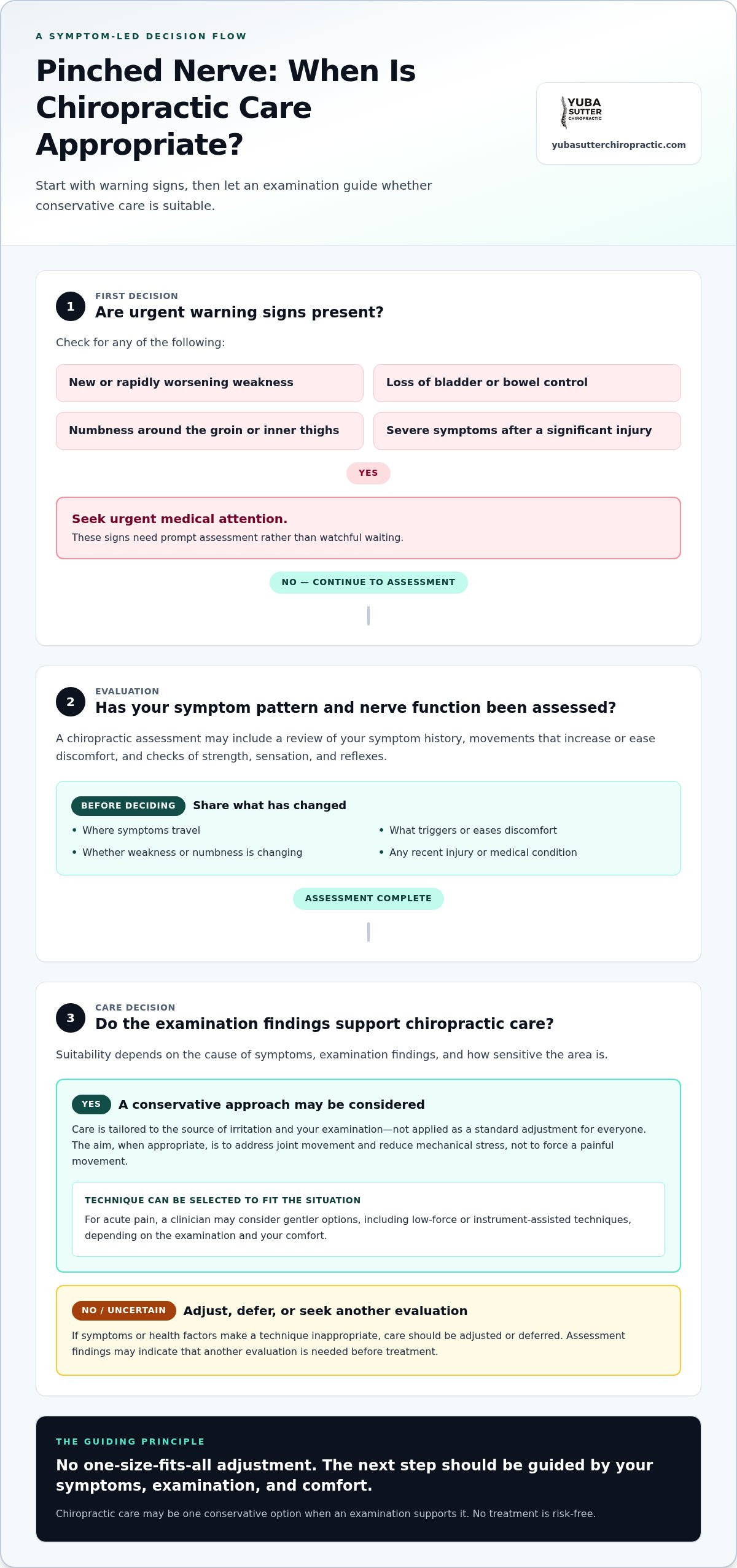
Seek urgent medical attention for new or rapidly worsening weakness, loss of bladder or bowel control, numbness around the groin or inner thighs, or severe symptoms after a significant injury. These warning signs need prompt assessment rather than watchful waiting.
The Myth vs. Reality: Is Chiropractic Safe for Pinched Nerves?
If you’re worried that an adjustment could press on an already irritated nerve, that concern deserves a clear answer. Chiropractic care isn’t limited to forceful “cracking.” Techniques vary, and the appropriate approach depends on the cause of your symptoms, examination findings, and how sensitive the area is. The goal, when appropriate, is to address joint movement and reduce mechanical stress, not to force a painful movement or promise that a nerve will be “put back.”
At Yuba Sutter Chiropractic & Wellness, an assessment helps guide that decision. It may include a review of your symptom history, movements that increase or ease discomfort, and checks of strength, sensation, and reflexes. The findings help determine whether chiropractic care is suitable, which areas to address, and whether another evaluation is needed before treatment. Share any recent injury, medical condition, or change in symptoms so your plan can account for your individual needs.
Busting the “Bone on Nerve” Cliché
A nerve isn’t always squeezed by bone. A disc bulge, swollen soft tissue, or changes in the space around a spinal joint can also contribute to irritation. Chiropractic care aims to improve movement and reduce mechanical strain when appropriate, rather than simply “cracking” a bone. Some people find that an appropriately selected adjustment helps ease muscle guarding and lets them move more comfortably. Learn more about the benefits of regular chiropractic adjustments.
The Safety Profile of Modern Chiropractic Care
No treatment is risk-free, and the possible risks of spinal manipulation differ from those of medication. NSAIDs and opioids have their own potential adverse effects, which vary by drug and patient. Don’t stop or change prescribed medication without medical guidance. The Mayo Clinic overview of pinched nerves discusses treatment options and why care should be matched to the individual.
For acute pain, a clinician may consider gentler approaches, including low-force or instrument-assisted techniques, rather than a quick, high-force movement. The choice depends on the examination and your comfort. Chiropractors are trained to assess whether symptoms or health factors make a particular technique inappropriate. If they do, care should be adjusted or deferred. For Yuba City residents, a personalized plan can account for symptom location, daily activities, and response to treatment.
So, can a chiropractor help with a pinched nerve? Chiropractic may be one conservative option when an examination supports it. The safest next step is a plan based on your specific symptoms, rather than a standard adjustment for everyone.
Advanced Technology: DRX9000 and SoftWave for Nerve Recovery
Care for a pinched nerve may need to address both mechanical pressure and irritated tissue. Yuba Sutter Chiropractic & Wellness offers non-surgical options including DRX9000 spinal decompression, SoftWave shockwave therapy, and MLS Laser Therapy as part of individualized care. These technologies have different purposes, and none is a guaranteed fix. Whether one is suitable depends on the source of your symptoms and your clinical assessment.
For leg pain associated with a herniated disc, learn more about herniated disc leg pain relief in Yuba City. A clinician can explain how decompression or other options may fit your situation, including if you’re traveling from Marysville or nearby communities.
Spinal Decompression: Creating Negative Pressure
The DRX9000 is a computer-controlled system for non-surgical spinal decompression. It applies carefully controlled traction intended to reduce pressure on spinal discs. In some disc-related cases, the goal is to create negative pressure within the disc, which may encourage herniated material to move away from an irritated nerve. This “vacuum effect” describes a treatment aim, not a promise that a disc fragment will shift or symptoms will resolve.
Treatment is performed while you lie on the system, and the equipment delivers the force rather than a manual thrust. Your comfort and response matter, so the approach should be guided by an evaluation and adjusted to your needs. For sciatica, decompression may be considered when findings suggest disc-related pressure, but it isn’t appropriate for every cause of leg pain.
Regenerative Healing with SoftWave and MLS Laser
Mechanical pressure is only part of the picture. SoftWave uses acoustic waves to stimulate tissue repair and support blood circulation in musculoskeletal conditions. It’s sometimes described as encouraging the body’s natural repair response, but specific results for an individual pinched nerve can’t be assumed. MLS Laser Therapy is used to help address inflammation, which may contribute to tenderness and sensitivity around affected tissues.
These approaches offer targeted, non-surgical options that a clinician may consider alongside other care. They don’t directly “heal the nerve” in every case, and persistent or worsening neurological symptoms still need timely evaluation. The right combination depends on what’s driving the compression and how your body responds. Comparing each therapy’s purpose with your assessment findings can help clarify whether it belongs in your plan.
So, can a chiropractor help with a pinched nerve? A tailored plan may include spinal decompression or therapies aimed at supporting the surrounding tissues, when appropriate. A thorough assessment helps match the treatment to the problem rather than applying technology by default.
Chiropractic vs. Surgery: Comparing Your Options
Choosing between conservative care and spinal surgery depends on the cause of nerve compression, symptom severity, and whether nerve function is changing. A conservative approach may include chiropractic care and other non-surgical strategies, with progress monitored over time. Surgery is more invasive and involves a procedure and postoperative recovery, while non-surgical care avoids that surgical recovery period. Neither path guarantees a specific outcome, and recovery timelines vary by person and treatment.
Some people have ongoing or returning symptoms after back surgery, sometimes called failed back surgery syndrome. The term doesn’t mean surgery always fails. It describes persistent pain after an operation. Careful diagnosis and a clear discussion of likely benefits, risks, and alternatives can help people make informed decisions before surgery. Conservative care may be a reasonable starting point when there are no urgent warning signs, but it shouldn’t delay necessary medical treatment.
The “Chiropractic First” Philosophy
Starting with a less invasive option can help avoid surgical risks when conservative treatment is appropriate. Chiropractic care may focus on movement, function, and reducing mechanical stress, rather than promising to correct every cause of nerve pain. The approach should be tailored to your examination and goals. In broader musculoskeletal rehabilitation, multidisciplinary centers like ABI Promedical similarly emphasize comprehensive, non-surgical protocols to restore movement and relieve nerve strain. If other medical input is needed, coordination among the clinicians involved helps keep decisions focused on your overall health.
Cost-effectiveness also depends on the individual. A non-surgical plan may avoid procedure-related and recovery expenses, but a fair comparison includes the recommended care, likely duration, coverage, and consequences of delaying needed treatment. Discuss those factors before deciding.
When to Seek Immediate Medical Intervention
Emergency symptoms require urgent medical assessment, not a trial of routine care. Cauda equina syndrome is a rare but serious condition involving compression of nerves at the base of the spine. Seek emergency care for new loss of bladder or bowel control, numbness in the saddle area, or rapidly worsening leg weakness. Progressive weakness or expanding numbness also needs prompt evaluation, even without severe pain. Pain that is stable and manageable is different from a growing loss of strength or sensation.
Use this symptom checklist and note any changes:
- Is weakness getting worse or affecting walking, balance, or grip?
- Is numbness spreading or becoming more constant?
- Have bladder or bowel control or sensation around the groin changed?
- Is pain preventing usual activities or worsening despite care?
If you’re weighing options and wondering can a chiropractor help with a pinched nerve, an assessment can help clarify whether conservative chiropractic care fits your situation. Explore chiropractic care in Yuba City as one step toward understanding a non-surgical plan.
Your Path to Relief at Yuba Sutter Chiropractic & Wellness
Understanding the source of nerve symptoms is the first step toward choosing appropriate care. At Yuba Sutter Chiropractic & Wellness, your evaluation begins with a conversation about where pain travels, what makes it better or worse, and how it affects daily activities. A physical examination may assess movement, strength, sensation, and reflexes. These findings help guide next steps. No single test can answer every question, and further medical evaluation may be appropriate when symptoms call for it.
For people in Yuba City, Marysville, Live Oak, and surrounding Yuba-Sutter communities, care is planned around individual symptoms and goals. Depending on the assessment, a plan may combine chiropractic care with technology such as DRX9000 spinal decompression, SoftWave shockwave therapy, or MLS Laser Therapy. Treatment choices can be adjusted as your symptoms and function change. The aim is steady, thoughtful progress, not a one-size-fits-all routine.
What to Expect During Your First Visit
Bring a clear account of when symptoms began, where they travel, and whether you’ve noticed changes in strength or sensation. The clinician uses your history and examination findings to assess the likely source of irritation and whether chiropractic care may be suitable. If nerve pain followed a vehicle collision, care can be tailored to the injury and your presentation. Learn more about the practice’s auto injury recovery care.
You’ll have the opportunity to discuss the findings and understand the proposed approach before proceeding. Raise your concerns and take part in decisions about your treatment so the plan reflects your needs and goals.
Long-Term Wellness and Prevention
Daily habits can influence how your spine and surrounding tissues handle repeated strain. At a desk, adjust your screen so you can work without continually bending your neck, keep frequently used items within easy reach, and change positions regularly. When lifting, keep the load close and avoid twisting under strain. These practical steps can support comfortable movement, though they can’t guarantee that nerve symptoms won’t return.
Follow-up visits can help review your progress and adapt your plan if symptoms or activity needs change. Periodic check-ups aren’t a promise of prevention. They’re an opportunity to address new concerns early and reinforce helpful movement strategies.
If you’re still asking, can a chiropractor help with a pinched nerve, a personalized evaluation can help clarify whether chiropractic care and non-surgical options suit your situation. Schedule an evaluation for pinched nerve symptoms and take an informed first step toward improved comfort and mobility.
Take the Next Step Toward Lasting Relief
A pinched nerve can disrupt sleep, movement, and everyday routines, but surgery isn’t the only option to explore. Whether chiropractic care may help depends on what’s causing the nerve pressure and what your evaluation shows. A personalized plan may combine hands-on care with non-surgical technology, including DRX9000 spinal decompression and SoftWave therapy.
So, can a chiropractor help with a pinched nerve? For some people, chiropractic care and related therapies may support relief and improved mobility. The first step is understanding the source of your symptoms and choosing care that fits your needs. Yuba Sutter Chiropractic & Wellness provides care in Yuba City and Marysville with a community-focused approach.
Take an informed step toward feeling and moving better. Schedule an evaluation for pinched nerve symptoms in Yuba City. A clear plan can help you move forward with confidence.
Frequently Asked Questions
How long does it take for a chiropractor to fix a pinched nerve?
There’s no set timeline, and care can’t guarantee a “fix.” Recovery depends on what’s irritating the nerve, how long symptoms have been present, and whether strength or sensation is affected. Some people notice changes sooner, while others need a longer plan or further medical assessment. Your chiropractor should track symptoms and function over time, then adjust the approach if progress stalls or symptoms worsen.
Can a chiropractor make a pinched nerve worse?
Symptoms can sometimes feel temporarily more tender after treatment, and an unsuitable technique could aggravate discomfort. That’s why an examination and discussion of your health history matter before care begins. Tell your chiropractor if pain, tingling, numbness, or weakness increases during or after treatment. Care should be adapted to your response, and progressive weakness, spreading numbness, or loss of bladder or bowel control needs urgent medical attention.
Will I need X-rays or an MRI before starting treatment?
Not everyone needs imaging before care. The decision depends on your symptoms, examination findings, health history, and whether a scan would change the treatment plan. A clinician may recommend further medical evaluation or imaging if symptoms suggest a more serious problem, follow an injury, or include worsening weakness. Mention previous imaging and any new changes in sensation, strength, or bladder and bowel function.
Is chiropractic care for a pinched nerve covered by insurance?
Coverage varies by insurer and plan. Some plans cover medically necessary chiropractic care for musculoskeletal conditions, but may limit visits or exclude certain therapies. Spinal decompression and other technologies may be treated differently from an adjustment. Before starting care, review your policy or contact your insurer to ask about chiropractic benefits, visit limits, referrals, deductibles, and coverage for the specific treatment being considered.
What is the difference between a pinched nerve and sciatica?
A pinched nerve describes irritation or compression of a nerve, often near where it exits the spine. Sciatica describes pain and related symptoms that travel along the sciatic nerve, typically from the lower back or buttock into the leg. A pinched nerve in the lower back can cause sciatica, but not every pinched nerve causes it. An evaluation helps identify the likely source and whether other conditions need consideration.
Can a pinched nerve heal on its own without professional help?
Some mild nerve irritation improves over time, but it’s difficult to know the cause or severity from symptoms alone. Seek professional assessment if pain persists, keeps returning, or interferes with sleep or daily activities. Don’t wait for it to pass if you develop worsening weakness, spreading numbness, or bladder or bowel changes. Those symptoms need prompt medical attention rather than home monitoring.
How many sessions of spinal decompression are typically needed?
The number depends on the diagnosis, symptoms, and response to care. A general treatment protocol may involve 20 to 24 sessions over 6 to 8 weeks, but that’s not a prescription for every person or a promise of results. At Yuba Sutter Chiropractic & Wellness, DRX9000 decompression should be considered in light of an individual assessment, with progress reviewed as treatment continues.
Is SoftWave therapy painful when treating a sensitive nerve?
Sensation varies from person to person. SoftWave uses acoustic waves to support tissue repair in musculoskeletal conditions, and treatment may feel noticeable or uncomfortable in a sensitive area. Tell your clinician what you feel so the approach can be adjusted to your comfort and clinical needs. SoftWave isn’t appropriate for every cause of nerve symptoms, so an assessment helps determine whether it belongs in your care plan.
Yuba Sutter Chiropractic & Wellness serves people across Yuba City, Marysville, Live Oak, Gridley, Sutter, Colusa, Plumas Lake, Olivehurst, and Wheatland. Seek urgent medical attention for emergency warning signs wherever you live.