

Herniated Disc Treatment in Yuba City: Your 2026 Guide to Non-Surgical Care
What if the best starting point for a herniated disc isn’t choosing a treatment, but understanding what your symptoms and assessment show? Back or leg discomfort can disrupt work, sleep, and everyday routines. It’s understandable to wonder whether you need imaging or whether surgery is the only path. This guide to herniated disc treatment Yuba City explains common symptoms, outlines non-surgical options, and offers practical points to consider when planning your next step.
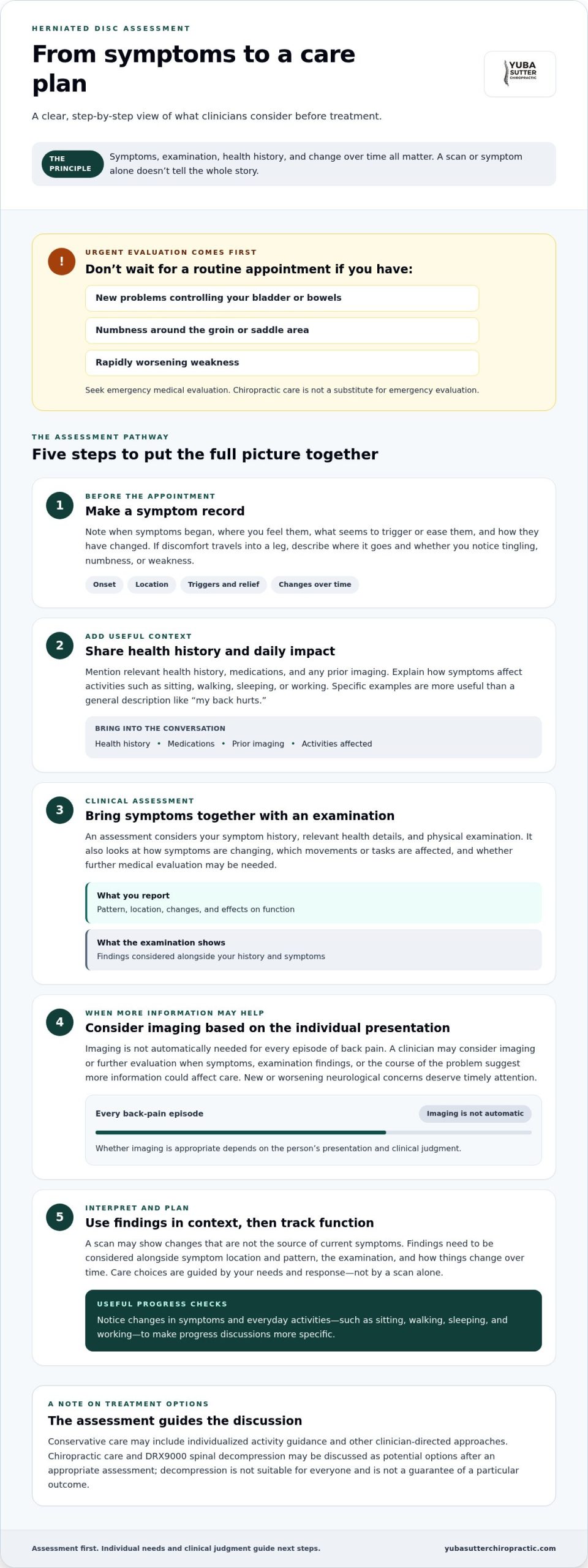
A herniated disc may irritate nearby nerves, causing pain, tingling, numbness, or weakness. Some symptoms need prompt medical attention, including new loss of bladder or bowel control, numbness around the groin or saddle area, or rapidly worsening weakness. This guide covers when to seek urgent evaluation, how clinicians may assess symptoms and imaging needs, and what conservative care can involve. Yuba Sutter Chiropractic & Wellness provides chiropractic care and DRX9000 spinal decompression in Yuba City. An individualized assessment can help determine whether these options may fit your needs, without promising a particular result.
Key Takeaways
- A herniated disc and the symptoms it may cause don’t tell the whole story; assessment considers your health history and physical exam.
- Imaging decisions depend on your individual presentation and clinical judgment, not symptoms alone.
- Herniated disc treatment Yuba City may include conservative options, with choices guided by your needs and response over time.
- Track changes in everyday activities and function to make progress discussions more useful.
- Yuba Sutter Chiropractic & Wellness offers chiropractic care and DRX9000 decompression for discussion as potential options after an individualized assessment.
Herniated Disc Symptoms in Yuba City: What They Can, and Cannot, Tell You
Back pain, leg symptoms, or numbness can be worrying, especially when they interfere with work, sleep, or daily activities. They deserve attention, but they don’t point to one diagnosis on their own. Knowing how a disc relates to nearby nerves can help you understand why an assessment matters.
A disc herniation occurs when material from a spinal disc pushes through a weakened area in its outer layer. Discs sit between the bones of the spine and help cushion them. Nearby nerves carry signals between the spine and the body, so irritation around a nerve may contribute to symptoms in the back, buttock, or leg. The overview of spinal disc herniation explains the condition and related terminology in more detail.
Which symptoms may accompany a herniated disc?
Some people notice back pain; others may have pain that travels into a leg, tingling, numbness, or weakness. Symptoms can vary depending on the disc’s location and whether nearby nerves are irritated. Back pain and tingling can also have causes other than a herniated disc. Symptoms alone can’t confirm which spinal structure is involved or establish a diagnosis.
When should back or leg symptoms be treated as urgent?
Seek emergency medical evaluation for new problems controlling your bladder or bowels, numbness around the groin or saddle area, or rapidly worsening weakness. These symptoms can signal a serious problem and shouldn’t wait for a routine appointment. Chiropractic care isn’t a substitute for emergency evaluation.
If symptoms are worsening or persist without these emergency warning signs, arrange a timely clinical assessment. Before your appointment, note when symptoms began, where you feel them, and how they affect movement or daily tasks. This gives the clinician useful context for considering next steps. If you’re exploring herniated disc treatment Yuba City, an assessment can help determine whether conservative care is appropriate for your presentation instead of assuming one treatment fits everyone.
How a Herniated Disc Is Assessed Before Treatment
Choosing a care approach starts with the full picture, not one symptom or a scan alone. An assessment typically brings together your symptom history, relevant health details, and a physical examination. It also considers how symptoms are changing, which movements or tasks are affected, and whether there are signs that call for further medical evaluation.
This process helps connect what you feel with what an examination shows. Imaging can provide useful information in some situations, but a finding on a scan doesn’t automatically explain a person’s symptoms. It needs to be interpreted alongside the location and pattern of symptoms and the examination. For a general overview of symptoms of a herniated disk, Mayo Clinic describes common presentations and causes.
What information helps clarify the cause of symptoms?
Before an appointment, note when symptoms began, where you feel them, what seems to trigger or ease them, and how they’ve changed. Mention relevant health history, medications, and any prior imaging. Describe how symptoms affect activities such as sitting, walking, sleeping, or working. If discomfort travels into a leg, explain where it goes and whether you notice tingling, numbness, or weakness. Specific examples are more useful than a general description such as “my back hurts.”
When might imaging or additional medical evaluation be considered?
Imaging isn’t automatically needed for every episode of back pain. Whether it’s appropriate depends on the individual presentation and clinical judgment. A clinician may consider imaging or further evaluation when symptoms, examination findings, or the course of the problem suggest that more information could affect care. New or worsening neurological concerns also deserve timely attention.
Online descriptions and scan results can’t establish a diagnosis for an individual. A scan may show changes that aren’t the source of current symptoms, so findings need to be considered alongside your symptoms and examination. If you’re considering herniated disc treatment Yuba City, Yuba Sutter Chiropractic & Wellness can discuss conservative options, including chiropractic care and DRX9000 spinal decompression, in the context of your presentation and goals. Learn about local chiropractic care as a practical next step.
Herniated Disc Treatment Options: Comparing Conservative Care and Surgery
There isn’t one treatment path for every herniated disc. Choices depend on the symptom pattern, examination findings, health history, personal preferences, and how symptoms and function change over time. The aim is to discuss appropriate options and reassess them, rather than assume that a scan or a particular treatment determines the answer. MedlinePlus offers a general overview of a herniated or slipped disc and treatment approaches.
What can conservative care involve?
Conservative care may include individualized guidance on activity and other clinician-directed approaches. After an appropriate assessment, chiropractic care may be considered as part of the discussion. Yuba Sutter Chiropractic & Wellness provides chiropractic care and DRX9000 spinal decompression in Yuba City. Decompression may be discussed as a potential component of care, but it isn’t suitable for everyone and shouldn’t be presented as repairing a disc or guaranteeing that surgery can be avoided.
Progress matters. Review a care plan in light of symptom changes, tolerability, and daily function. For example, consider whether sitting, walking, sleeping, or work tasks are changing, as well as whether pain or other symptoms are changing. If an approach isn’t helping or symptoms change, that’s useful information for reassessing next steps rather than a reason to continue without review. For a closer look at leg symptoms and related options, read about herniated disc leg pain relief in Yuba City.
When may a surgical opinion enter the discussion?
Persistent, severe, or worsening symptoms may prompt discussion of additional options, including surgical evaluation. That doesn’t mean surgery is inevitable. A surgical decision is based on individual findings, the impact of symptoms, and the potential benefits and risks considered with a qualified medical professional.
Urgent neurological warning signs, such as new bowel or bladder control problems, saddle-area numbness, or rapidly worsening weakness, call for prompt emergency medical evaluation. They shouldn’t be managed by starting or continuing a conservative treatment plan.
For people exploring herniated disc treatment Yuba City, an individualized assessment can help frame a balanced discussion of conservative care, including chiropractic care or DRX9000 decompression when appropriate, and whether further medical evaluation is needed. No option guarantees a particular outcome; the right next step depends on the person and how their condition evolves.
Planning Herniated Disc Care in Yuba City: Questions and Progress Checks
A clear plan starts with useful information and continues with regular check-ins. Whether you live in Yuba City, Marysville, Live Oak, Gridley, Sutter, Colusa, Plumas Lake, Olivehurst, or Wheatland, prepare to describe what’s changed, discuss options after assessment, and revisit the plan based on your response. This can make conversations about herniated disc treatment Yuba City more focused and practical.
How can you prepare for a first assessment?
Gather what you already know. Bring relevant imaging reports and a current medication list if available. A short symptom timeline can help you explain when the problem began, where you feel it, and how it has changed. Note what seems to aggravate or ease symptoms, along with specific limits, such as difficulty sitting through work, walking comfortably, or sleeping.
Write down questions in advance. You might ask what the assessment suggests, which options fit your goals, what risks or alternatives to consider, and how progress will be reviewed. Sharing concerns openly helps keep the discussion centered on your needs and preferences.
How should you track whether a care plan is helping?
Pain ratings can be useful, but they don’t tell the whole story. Keep brief notes on function and symptoms over time, such as:
- Changes in walking, sitting, work tasks, or other daily activities
- Sleep quality and ease of movement
- Whether radiating pain, tingling, or numbness changes in location or intensity
- Any new symptoms or difficulty with activities that were manageable before
Bring these observations to progress discussions. Review the plan based on how you’re responding and whether it remains tolerable. Timelines vary, so avoid judging progress against a promised recovery date. If symptoms worsen, new weakness appears, or you’re concerned about how care feels, raise it promptly rather than waiting for a routine check-in. New bowel or bladder control problems or numbness around the saddle area require emergency medical evaluation.
Residents of Yuba City and nearby communities can take a measured next step by discussing their concerns and goals in an individualized assessment. Discuss your herniated disc care options with Yuba Sutter Chiropractic & Wellness.
Discuss Non-Surgical Herniated Disc Care with Yuba Sutter Chiropractic & Wellness
For people considering non-surgical care, the next step is a conversation grounded in their symptoms, assessment findings, and goals. Yuba Sutter Chiropractic & Wellness provides chiropractic care and DRX9000 spinal decompression in Yuba City, serving people from nearby communities as well. These options can be discussed in relation to your needs, rather than assumed to be a fit for every herniated disc.
What does an individualized care discussion cover?
An individualized discussion connects your symptom history and assessment findings with possible next steps. It can include what you hope to do more comfortably, what concerns you have, and which alternatives may be relevant. Chiropractic care or DRX9000 decompression may be discussed when appropriate to your presentation. Decompression is one potential non-surgical option, not a guarantee of relief or a promise that surgery can be avoided.
Good decisions leave room to reassess. Ask how progress will be reviewed, what changes to watch for, and what to do if symptoms worsen or the approach isn’t tolerable. Care can be revisited as your symptoms and function evolve. For broader context on the practice’s approach, read about advanced chiropractic technology and root-cause care.
What is a practical next step for local residents?
Residents of Yuba City and surrounding communities, including Marysville, Live Oak, Gridley, Sutter, Colusa, Plumas Lake, Olivehurst, and Wheatland, can explore local chiropractic and decompression care through an individualized assessment. Bring questions about suitability, goals, potential benefits, limitations, and follow-up. Considering these points in the context of your symptoms can help make the discussion practical and specific to you.
If you’re exploring herniated disc treatment Yuba City, take an informed next step by learning more about care options with Yuba Sutter Chiropractic & Wellness. Explore care options with Yuba Sutter Chiropractic & Wellness.
Take an Informed Next Step Toward Care
Back or leg symptoms can be unsettling, but they don’t identify the cause by themselves. A careful assessment considers your symptoms, health history, examination findings, and how daily function is affected. From there, you can discuss options that fit your presentation and goals, then review progress over time. Seek emergency evaluation for serious warning signs such as new bowel or bladder control problems, saddle-area numbness, or rapidly worsening weakness.
For people exploring herniated disc treatment Yuba City, Yuba Sutter Chiropractic & Wellness provides chiropractic care and DRX9000 spinal decompression in Yuba City. The practice also serves nearby communities, including Marysville, Live Oak, Gridley, Sutter, Colusa, Plumas Lake, Olivehurst, and Wheatland. No approach is right for everyone, so an individualized discussion can help clarify potential benefits, limitations, and next steps without promising a particular result.
Explore care options with Yuba Sutter Chiropractic & Wellness and discuss your concerns and goals. A thoughtful plan can be guided by your needs and progress.
Frequently Asked Questions
Can a herniated disc heal without surgery?
Symptoms from a herniated disc may improve over time for some people, but outcomes vary. Conservative care is one possible pathway after an appropriate assessment, and the plan should reflect your symptoms, health history, and goals. No particular treatment can be promised to heal or repair every disc. If symptoms worsen or you develop neurological warning signs, seek medical evaluation. A clinician can discuss whether non-surgical care fits your situation.
What is the best treatment for a herniated disc?
There isn’t one best treatment for everyone. Choices depend on your symptoms, examination findings, health history, goals, and response to care. Conservative approaches and surgical evaluation are different pathways, not competing guarantees, and the appropriate option depends on individual findings. An assessment can help you discuss what may fit your needs. General information about herniated disc treatment Yuba City can’t diagnose you or replace a personalized care plan.
How do I know if my back pain is from a herniated disc?
Back pain, radiating leg pain, tingling, or numbness can occur with disc problems, but these symptoms aren’t specific to a herniated disc. Symptoms alone can’t confirm the cause. Assessment typically includes reviewing your health and symptom history and conducting a physical examination. Imaging may be considered when clinically appropriate. Don’t rely on an online symptom list to diagnose yourself, and seek urgent evaluation for serious warning signs.
When should I seek urgent care for a herniated disc?
Seek immediate emergency medical evaluation for new bowel or bladder control problems, numbness around the groin or saddle area, or rapidly worsening weakness. Don’t wait for a routine appointment or chiropractic care if these symptoms occur. Persistent back or leg symptoms without these emergency signs still deserve timely clinical assessment, especially if they’re worsening or affecting daily activities. Describe new changes clearly so the clinician can determine the appropriate next step.
Can spinal decompression help a herniated disc?
Non-surgical spinal decompression may be discussed as an option for some people, but suitability and response vary. It shouldn’t be described as guaranteed to heal a disc or prevent surgery. Yuba Sutter Chiropractic & Wellness offers DRX9000 decompression in Yuba City. An individualized assessment can help determine whether it may be appropriate alongside other care options, based on your symptoms, examination, health history, and goals.
Do I need an MRI to diagnose a herniated disc?
An MRI isn’t automatically necessary for every episode of back pain. A clinician considers your symptoms, examination, how they’re changing, warning signs, and whether imaging could affect care decisions. Avoid seeking imaging without an assessment to guide that choice. If a scan is obtained, its findings should be interpreted alongside your symptoms and examination, not treated as a diagnosis by themselves. Discuss questions about imaging with a clinician familiar with your presentation.
How long does non-surgical treatment for a herniated disc take?
Recovery and care timelines vary with symptoms, health history, and response to treatment, so a fixed schedule or promise of rapid relief isn’t appropriate for everyone. Follow-up discussions can review changes in daily function, sleep, mobility, and symptoms, then consider whether the plan remains appropriate. Yuba Sutter Chiropractic & Wellness serves Yuba City and nearby Marysville, Live Oak, Gridley, Sutter, Colusa, Plumas Lake, Olivehurst, and Wheatland. Report worsening symptoms or new weakness promptly.