

Understanding the Blueprint Metabolics Program: A Guide to Root-Cause Wellness in 2026
When pain keeps returning, fatigue persists, or recovery feels slower than expected, it can be frustrating not to have a clear explanation. The blueprint metabolics program offers a way to discuss the bigger picture, including how metabolic wellness may relate to energy, inflammation, and recovery. It is a wellness approach, not a medical diagnosis or a replacement for prescribed care.
At Yuba Sutter Chiropractic & Wellness, the program is part of a broader approach to wellness alongside chiropractic care and other therapies. It uses health information to guide a more individual discussion, rather than relying only on general diet advice or a standard visit. This guide explains what the program considers, how to prepare for a wellness discussion, and how to keep metabolic wellness in perspective alongside medical care.
Key Takeaways
- Learn how the blueprint metabolics program uses a personalized, data-informed approach to explore factors that may affect energy, inflammation, and recovery.
- See which metabolic systems may be part of a wellness discussion, including blood sugar regulation and hormonal balance.
- Understand why a lab result within a standard reference range may not answer every question about how you feel.
- Get an overview of the program in Yuba City, from reviewing your health history to considering relevant testing.
- Explore how metabolic wellness can complement chiropractic care and advanced therapies as part of a broader approach to health.
What is the Blueprint Metabolics Program?
The blueprint metabolics program is a structured wellness framework that uses health information and specialized testing to explore metabolic factors that may relate to how you feel and recover. Rather than beginning with a one-size-fits-all plan, it builds an individual picture of your health to help guide practical next steps.
Metabolic wellness involves connected processes, including how the body regulates blood sugar and uses energy. Metabolic Syndrome refers to a cluster of risk factors associated with increased health risks. A wellness program is not the same as diagnosing that condition. The Blueprint Metabolics Program supports a broader conversation about wellness and does not replace medical evaluation, diagnosis, or prescribed care.
The Philosophy of Root-Cause Healing
A symptom is useful information, but it may not explain the whole picture. Pain, low energy, or slow recovery can have multiple contributing factors. A root-cause approach looks for patterns that may be relevant and considers them when discussing care, rather than focusing only on short-term symptom management—a philosophy shared by functional wellness clinics like 5280 Restorative Medicine that focus on identifying underlying factors behind fatigue and low vitality.
This does not mean stopping medication or expecting a condition to reverse. Medication and other medical care may be important, and any changes should be discussed with the clinician who manages them. The goal is to consider whether metabolic wellness is one relevant part of your overall care. Factors such as nutrition and blood-sugar regulation may be worth discussing alongside physical treatment. Learn more about how metabolic health affects healing in Yuba City and why recovery involves more than treating a painful area alone.
Who is a Candidate for the Program?
The program may suit people who want a more individualized look at their wellness, especially when progress has stalled or their goals have changed. It is intended to support understanding and planning, not to guarantee an outcome or replace medical diagnosis.
- Stubborn weight or a plateau: If familiar efforts no longer seem to help you move forward, a personal review may help identify factors to discuss and shape a more considered plan.
- Persistent pain or neuropathy: People managing ongoing discomfort or inflammatory concerns may want to discuss metabolic health as one part of a wider wellness picture, alongside appropriate clinical care.
- Proactive wellness goals: If you want to understand your health patterns and make informed choices, a data-informed approach can give you a starting point for a focused conversation.
At Yuba Sutter Chiropractic & Wellness in Yuba City, the program is part of a whole-person approach to pain and wellness. If physical treatment alone has not brought the progress you hoped for, a metabolic wellness discussion can offer another perspective on possible contributing factors while keeping expectations grounded in individual assessment.
The Core Systems Evaluated in Your Metabolic Blueprint
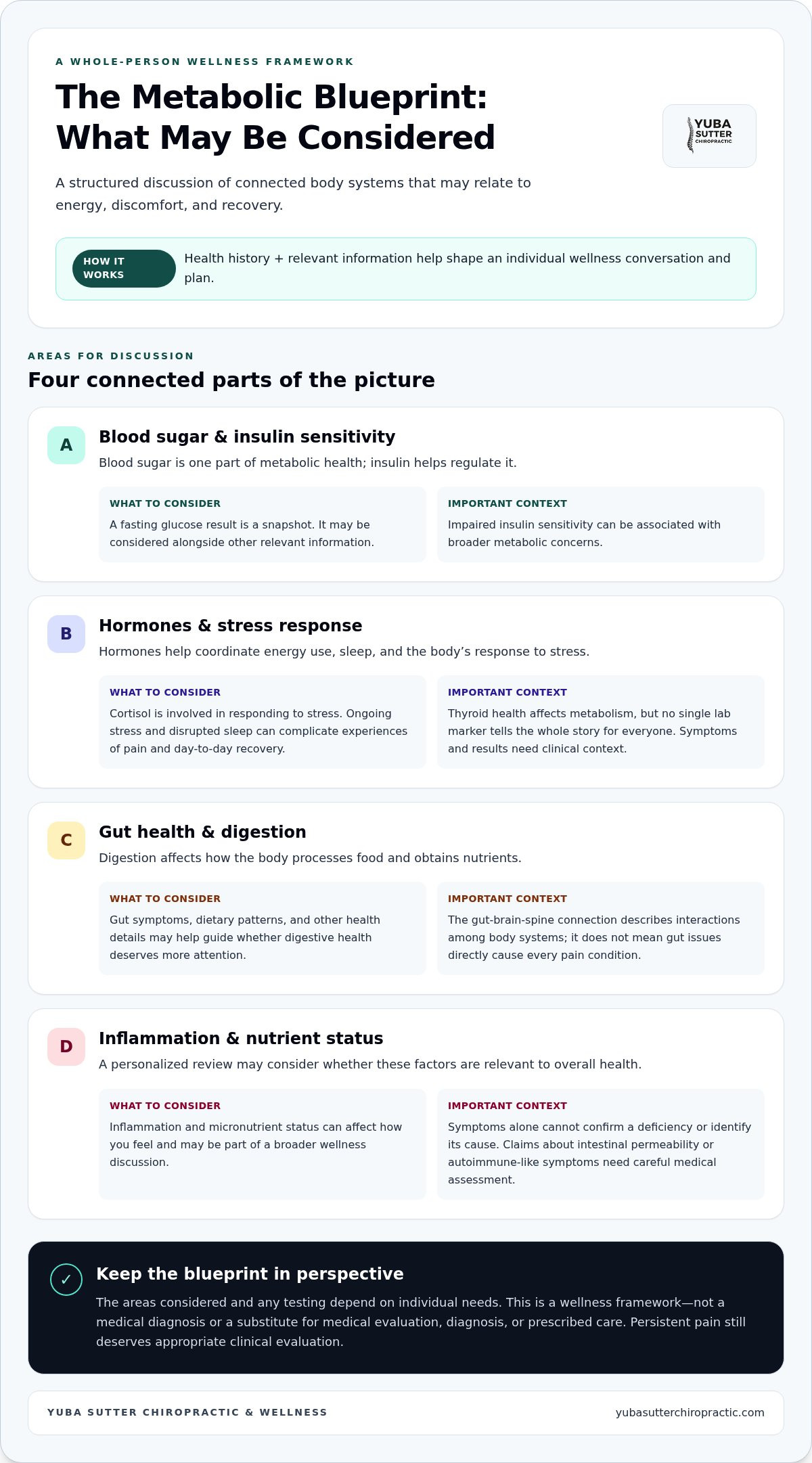
Metabolic health includes the body processes that sustain life and help maintain tissue. These processes connect blood sugar regulation, hormones, digestion, inflammation, and nutrient use. The blueprint metabolics program takes a whole-person view, using health history and relevant information to help shape a personal wellness plan.
The areas considered and any testing used depend on individual needs. A wellness assessment is not a medical diagnosis or a substitute for medical care. It can help organize questions about how internal factors may relate to energy, discomfort, or recovery.
Blood Sugar and Insulin Sensitivity
Blood sugar is one part of the picture. A fasting glucose result is a snapshot, so it may not explain every pattern in how the body handles energy. A clinician may consider it alongside other relevant information rather than treating one result as a complete measure of metabolic health. Insulin helps regulate blood sugar, and impaired insulin sensitivity can be associated with broader metabolic concerns.
Why bring this up in a wellness discussion? The body needs energy and nutrients for ordinary tissue maintenance and repair. Healthy daily habits may support overall wellbeing, but they do not guarantee faster healing or resolve an injury. Persistent pain still deserves appropriate clinical evaluation.
Hormonal Balance and Stress Response
Hormones help coordinate processes such as energy use, sleep, and the stress response. Cortisol is involved in responding to stress, while ongoing stress and disrupted sleep can complicate a person’s experience of pain and day-to-day recovery. Thyroid health also affects metabolism, but no single lab marker tells the whole story for everyone. Symptoms and results need to be interpreted in context by a qualified clinician.
Hormonal context can also matter when considering peptide therapy in Yuba City. Peptides are not a substitute for evaluating health concerns, and suitability depends on the individual. A broader wellness conversation can help put potential therapies in perspective.
Gut Health, Inflammation, and Nutrient Status
Digestion affects how the body processes food and obtains nutrients. Gut symptoms, dietary patterns, and other health details may help guide whether digestive health deserves more attention. The “gut-brain-spine” connection is one way to think about interactions among body systems, but it does not mean gut issues directly cause every pain condition. Claims about intestinal permeability or autoimmune-like symptoms also require careful medical assessment.
A personalized review may consider whether inflammation or micronutrient status is relevant to your overall health. These factors can affect how you feel, but symptoms alone cannot confirm a deficiency or identify its cause. Rather than assuming every system needs testing, use your health history and concerns to guide a focused conversation.
If you’re considering metabolic wellness as part of a broader care plan, learn about Yuba Sutter Chiropractic & Wellness and its whole-person approach.
Why “Normal” Labs Aren’t Enough for True Healing
A lab result marked “within range” can be reassuring, but it may not explain persistent fatigue, discomfort, or slow recovery. Reference ranges help clinicians identify results outside expected limits. They are not a complete measure of how you feel, and they do not automatically answer every question about your health or wellness goals.
It is also important to be precise about “functional ranges.” The phrase is sometimes used for narrower targets intended to support wellness, but there is no single universal set of optimal ranges for everyone. Results need to be interpreted alongside symptoms, health history, medications, and other clinical findings. A borderline value alone does not prove dysfunction or explain pain, and a wellness approach should not replace medical evaluation when symptoms persist.
The Functional Range Advantage
A broader review can put a result in context and identify patterns to discuss with a qualified clinician. For example, a value within a laboratory’s reference interval may still be worth reviewing if it has shifted over time or appears alongside relevant symptoms. The aim is thoughtful follow-up, not labeling every variation as a problem or predicting a future diagnosis.
This perspective can complement chiropractic care. Adjustments address musculoskeletal concerns, while broader wellness habits and health factors may also matter to an individual’s comfort and progress. Neither approach guarantees a particular result, but considering both can make the care conversation more complete. Explore the benefits of regular chiropractic adjustments as one part of ongoing health support.
Moving Beyond Symptom Management
A lab report is one piece of information, not a treatment plan. Useful care connects results to the person: what they are experiencing, what else is happening with their health, and which next steps are appropriate. In chronic pain, dismissing a concern because one number is “normal” can leave important questions unanswered. Treating a borderline result as a diagnosis, however, can create unnecessary worry.
The blueprint metabolics program offers a structured way to consider wellness information alongside your health history and goals. It can help organize relevant findings and guide an individualized discussion about possible next steps, without promising to reverse a condition. If results raise medical concerns, diagnosis and treatment decisions belong with an appropriately qualified medical professional.
To make an appointment more useful, bring relevant lab reports, a list of symptoms and when they occur, and notes about changes you have noticed. Ask how each finding relates to your overall picture and what follow-up may make sense. This keeps the focus on you, not just the numbers, and supports informed decisions about metabolic wellness and pain care.
Your Journey Through the Blueprint Metabolics Program in Yuba City
The process starts with your story, not a preset checklist. In Yuba City, the blueprint metabolics program begins with a conversation about your health history, current concerns, and goals. This gives the care team a starting point for understanding what you have tried, what affects your daily life, and which questions you want to answer. The program focuses on metabolic wellness and does not replace diagnosis or treatment from your healthcare provider.
The Discovery Phase: Consultation and Testing
For a more useful first discussion, bring any recent lab results, a current list of medications and supplements, and notes about symptoms or changes you have noticed. Include relevant diagnoses and previous treatments. You do not need to interpret the information yourself. The aim is to give the team a clear starting point for understanding your concerns and deciding what may warrant further review.
Testing should be guided by your history and symptoms, rather than assuming everyone needs the same panels or measurements. The specific tests and preparation depend on the individual plan. If testing or a body-composition or metabolic-rate measurement is part of your assessment, follow the instructions provided for that appointment. Do not fast, stop medication, or change supplements unless a qualified clinician directs you to do so.
The Implementation Phase: Your Personalized Plan
After relevant information has been reviewed, the next step is to discuss how it relates to your wellness goals. A useful plan turns findings into manageable actions, such as meal-planning priorities, daily routines, or questions to raise with your medical provider. Recommendations should reflect your health context and be explained clearly, so you understand the purpose of each step.
Nutrition and lifestyle habits may be part of an individual approach. If supplements are considered, discuss them in light of your medications, health history, and other care. No single protocol fits everyone, and a wellness plan should not promise to diagnose, treat, or reverse disease. Bring questions to your planning discussion and explain what feels practical for your everyday routine.
Progress is best reviewed over time. Follow-up conversations can help you discuss what is manageable, revisit goals, and consider whether the plan needs adjustment. Keep notes on relevant changes in energy, symptoms, sleep, or daily habits. These observations are not a substitute for clinical testing, but they can make progress discussions more specific.
Yuba Sutter Chiropractic & Wellness incorporates the program into a broader approach to pain and wellness, alongside services such as chiropractic care and SoftWave therapy. To explore how the process may fit your goals, learn about the Blueprint Metabolics Program at the Yuba City clinic.
Integrating Metabolic Health with Advanced Chiropractic Care
Musculoskeletal treatment focuses on the area causing pain, while metabolic wellness considers internal factors that may relate to energy, inflammation, and the body’s general capacity to maintain and repair tissue. These perspectives can complement one another, but one does not guarantee the results of the other. At Yuba Sutter Chiropractic & Wellness, the Blueprint Metabolics Program is part of a broader approach that may include chiropractic care and advanced therapies, based on individual needs.
For example, advanced chiropractic technology can address specific musculoskeletal concerns, while attention to overall wellness may bring other factors into the care discussion. Daily habits and general health can contribute to wellbeing, but no metabolic plan can promise that adjustments will be more effective or that pain will resolve.
Metabolism and Tissue Repair
Tissue maintenance relies on interconnected processes, including the delivery and use of nutrients and the creation of proteins. Nutrition, sleep, overall health, and medical conditions can all be relevant to recovery. These factors do not determine a person’s outcome on their own, but considering them alongside physical care may help create a more complete plan.
SoftWave shockwave therapy is one of the services offered at Yuba Sutter Chiropractic & Wellness. The Blueprint Metabolics Program can complement a broader conversation about wellness, but it should not be described as switching on repair mechanisms or as a requirement for therapy to work. Your care plan should reflect your health history and be discussed with the appropriate clinician. The same principle applies to disc-related symptoms: explore herniated disc leg pain relief in Yuba City as a treatment discussion, not a promise of permanent relief.
Long-Term Wellness in Yuba City
For people in Yuba City and the wider Sutter County community, an integrated approach can bring metabolic wellness and physical care into the same conversation. The aim is not to treat every symptom as metabolic or replace medical diagnosis. It is to consider whether a factor beyond the painful area may also deserve attention, particularly when progress has been difficult to sustain.
If you’d like to discuss whether the Blueprint Metabolics Program fits your wellness goals, schedule a Blueprint Metabolics consultation with Yuba Sutter Chiropractic & Wellness.
Take the Next Step Toward a More Personal Wellness Plan
Progress can start with a practical question: what information would help you make your next health decision with confidence? The blueprint metabolics program offers a structured way to explore that question and consider steps aligned with your individual goals. It is a wellness approach, not a substitute for medical diagnosis or treatment.
At Yuba Sutter Chiropractic & Wellness, the program can be discussed as part of a broader approach to care and your personal wellness goals. If you are weighing whether it is a good fit, consider what you hope to understand, which symptoms or patterns concern you, and what information you can bring to the conversation.
Ready to take the next step? Start your Blueprint Metabolics journey at Yuba Sutter Chiropractic & Wellness in Yuba City.
Frequently Asked Questions
Is the Blueprint Metabolics program just for weight loss?
No, weight loss is not its only focus. The blueprint metabolics program is a wellness option for people interested in understanding factors that may relate to energy, pain, or progress toward health goals. Someone whose weight is stable but who feels persistently tired, for example, may have different questions from someone working through a weight plateau. Goals and next steps should be based on the individual, not a target number on the scale.
How long does it take to see results from the Blueprint Metabolics program?
There is no single timeline for results, and no specific outcome can be guaranteed. Progress depends on your health, goals, plan, and how your body responds. Rather than judging success by one day or measurement, track relevant changes over time, such as sleep, energy, daily function, or symptoms. Share persistent or worsening concerns with your healthcare provider so they can guide appropriate evaluation and care.
Do I have to stop seeing my regular doctor while on this program?
No. A wellness program should not replace your regular doctor or other medical care. Keep scheduled appointments, follow the treatment advice you have been given, and do not stop or change prescribed medication without discussing it with the clinician who prescribed it. Sharing relevant health information across your care team can help prevent conflicting recommendations. The program can be considered alongside medical care, but it does not provide a substitute medical diagnosis.
Does insurance cover the testing for Blueprint Metabolics?
Coverage depends on your insurance plan, the type of test, and how the service is billed, so do not assume testing will be covered. Before proceeding, review your plan’s benefits and ask your insurer how it handles the specific testing being considered, including whether you may have out-of-pocket responsibility. Keep any explanation of benefits for your records. Coverage decisions are separate from whether a test may be useful for your wellness goals.
How is this different from a standard nutrition plan?
A standard nutrition plan may offer general meal guidance, while this program is intended to connect wellness recommendations to an individual’s health information and goals. For example, someone with a demanding work schedule may need practical habits that fit their routine, not a rigid menu that is difficult to maintain. The distinction is personalization, though recommendations should be realistic and account for medical needs and clinician guidance.
Can Blueprint Metabolics help with chronic neuropathy pain?
It may offer a way to discuss metabolic wellness as one part of a broader approach, but it is not a cure for neuropathy or a guaranteed pain treatment. Neuropathy has different possible causes, so diagnosis and management should involve an appropriate medical professional. If you have numbness, tingling, burning, or changes in sensation, keep your clinician informed and ask how wellness care can fit safely alongside your existing treatment.
What kind of support will I receive during the program in Yuba City?
Support centers on discussing your individual goals and how wellness recommendations relate to your situation. Bring questions and note any challenges as you work on your plan, so you can discuss what feels practical and what may need adjustment. Yuba Sutter Chiropractic & Wellness serves people in Yuba City and nearby communities, including Marysville, Live Oak, Gridley, Sutter, Colusa, Plumas Lake, Olivehurst, and Wheatland.
Are there specific supplements I am required to take?
No, do not assume supplements are required. Recommendations should depend on your individual situation, and supplements are not automatically appropriate for everyone. Before adding one, share your current medication and supplement list with a qualified clinician, since products can have side effects or interact with medicines. Do not start, stop, or change supplements based only on a general wellness article; discuss the reason and suitability with a clinician familiar with your health history.